Skip to content Accessibility statement

Engineering disease resistance to fungal pathogens in lettuce

Context

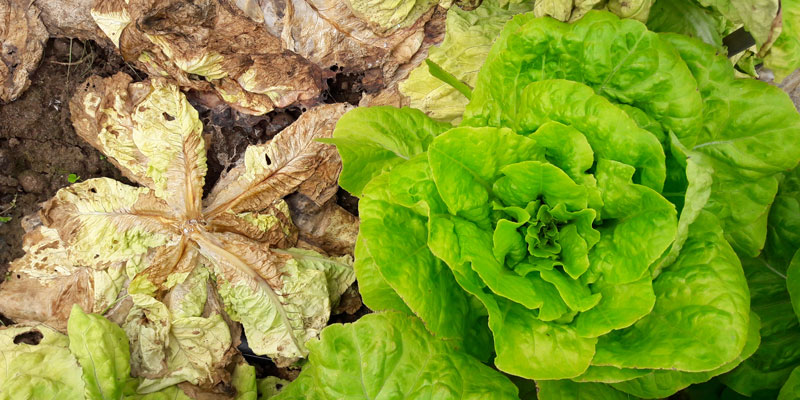
Fungal plant pathogens cause substantial economic losses on a global scale, reducing the yield and quality of agricultural products. In general, the vast majority of growers resort to repetitive applications of fungicides to overcome fungal diseases, bringing concerns over public health and environmental risk. Botrytis cinerea (causal agent of grey mould) and Sclerotinia sclerotiorum (causal agent of white mould) are closely related necrotrophic pathogens, each able to infect over 200 species, including lettuce (Lactuca sativa).

The research

In the Denby Lab, we use transcriptome profiling (time series and across diversity sets), gene regulatory network modelling and genetics to identify regulators of plant immunity and how an effective defence response is launched through changes in gene expression. We use synthetic biology and gene editing to generate lettuce varieties with increased disease resistance. By focusing on identifying transcriptional regulators of plant immunity and re-wiring gene networks to enhance the defence response, we aim to develop durable and sustainable resistance in host plants.

Featured researcher

Katherine Denby

Professor Denby is interested in plant disease resistance and plant-pathogen interaction, and in novel approaches for engineering or breeding improved crop varieties tolerant to environmental stress and disease.

View profile