
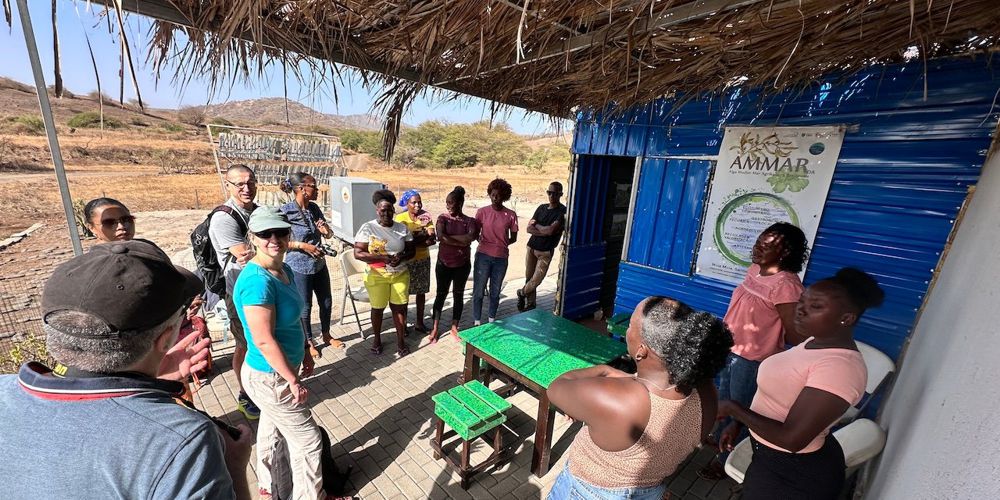
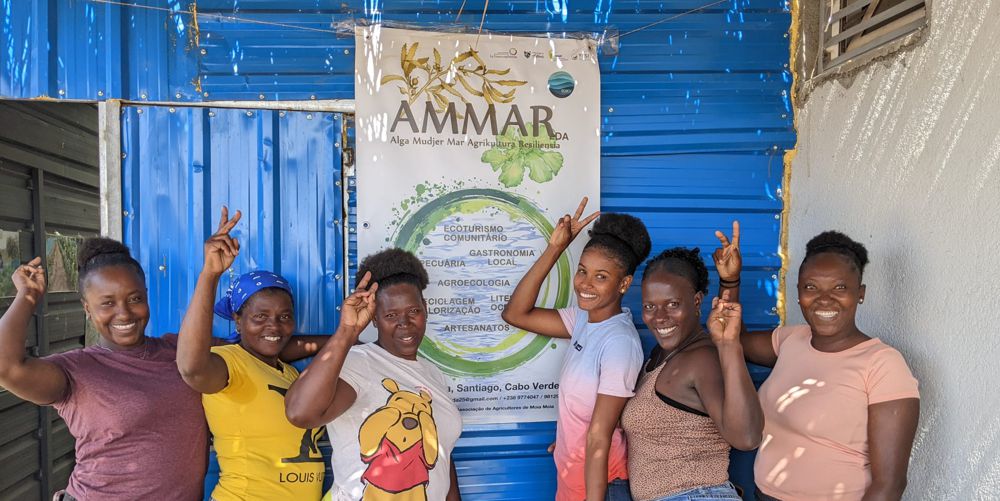
Seaweed biofertilisers for climate adaptation and women’s empowerment in Cabo Verde (AMMAR)
Context
Since 2011, Caribbean and West African countries have suffered from deposits of millions of tons of brown seaweed (common name: sargassum), with 2025 seeing the largest deposits to date. Sargassum damages coralline communities, seagrass beds, and negatively affects tourism and fishing - two of the major income-generating activities in Cabo Verde. More recently, several islands of this archipelago have also been impacted by blooms formed by red seaweed. At the same time, Ulva sp. is a green seaweed growing on rocks in the intertidal zone. Ulva can accumulate in certain areas due to organic contamination of the seashore.
Many rural communities in Cabo Verde rely on agriculture and livestock as their major sources of income. However, poor soils, limited livelihood opportunities and drought create difficult challenges for development. In the context of climate change, efforts are needed to improve agricultural production, especially through the engagement of women, who experience climate and livelihood challenges differently than men, and who are often left behind when men migrate to find other sources of income.
This project explores the valorisation of green, red and brown seaweed with a view to addressing these multiple challenges.
The Research
This project is a close collaboration with the NGO ECOCV and Professor Lindsay Stringer of the University of York, with additional support from Universidade Jean Piaget de Cabo Verde, University of Cabo Verde, Instituto Nacional de Investigação e Desenvolvimento Agrário (INIDA), and women communities of Moia Moia and Praia Baixo.
It trains groups of women in these two rural communities on the hand-harvesting of seaweed. The harvested seaweed is dried, processed and tested for use as a safe and effective soil amendment for vegetable crops, in collaboration with local partners in Cabo Verde. The project will explore the potential for seaweed liquid biofertilisers, compost and mulch. These soil amendments can improve the quality of drought-affected soils, stimulate crop production, and reduce reliance on traditional fertilisers. The project will also explore the potential for dried sargassum seaweed combined with recycled glass and plastic in the production of building bricks, as well as Ulva seaweed as a human food or additive to cosmetics.
Overall, these new opportunities will provide new business potential for rural women, while contributing to rural agricultural development and building resilience in the face of climate change.
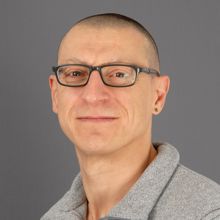
Thierry Tonon
Dr Tonon is interested in algal physiology, enzyme characterization, evolution of metabolic pathways, and on developing biotechnological applications based on algae and/or algal genes.
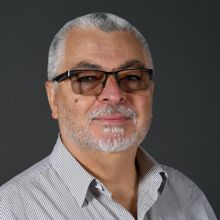
Leonardo Gomez
Dr Gomez specialises in the use of plants as chemical platforms for the production of biorenewable products.