
Staff spotlight: Dr John Molloy
Posted on Monday 23 June 2025
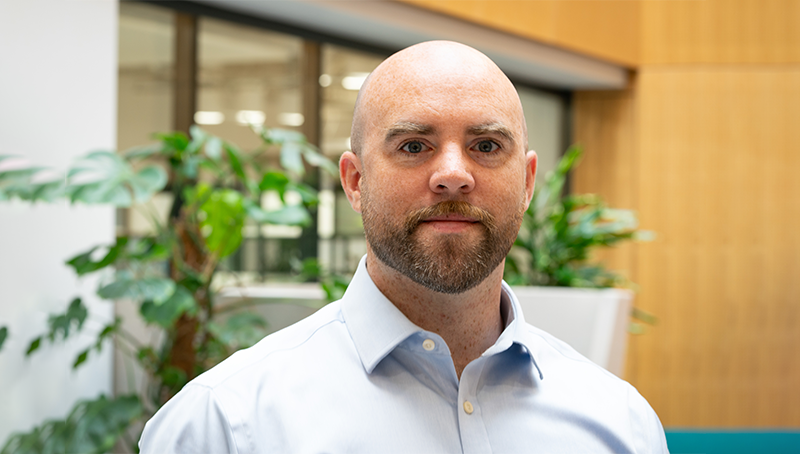
1. You have two different roles here at the CfAA. Can you tell us more about what they entail and how you manage the challenges of each?
You might even say I have three roles. As Research and Innovation Fellow, my work focuses on the safety of understanding in autonomous systems, specifically how sensor hardware interacts with machine learning algorithms within perception systems. This along with my background in electro-optics and remote sensing gives me strong technical foundation in a key enabling technology of autonomous systems, particularly relevant to the maritime and automotive sectors. This, in turn, supports my second role as a Business Development and Delivery Manager (BDDM). The BDDM role has two elements. Externally, it is about building and maintaining relationships with clients. I’m fortunate to be building on nearly 40 years of software safety expertise developed here in York, gives us strong reputation and a high level of credibility in many sectors.
However, the emergence of AI, ML, and autonomous systems presents a real challenge to traditional safety paradigms. To address this, we must work closely with clients to understand both their specific need and the broader context of their industries. That trust-based collaboration ensures that the solutions we provide are not only safe but also deliver real value. A key part of this process is helping clients navigate the trade space, understanding the compromises that come with different approaches.
Internally, managing the delivery of commercial contracts, which often come with tightly defined deliverables and timelines, can be quite different from the exploratory nature of fundamental research. It demands a shift in mindset. Supporting the team through this requires a team culture of strong communication and collaboration, and a shared vision of what success looks like.
Research is inherently challenging and rarely goes exactly to plan. But by building a strong team culture and communicating with the client we can overcome obstacles together and often discover better solutions along the way. Many of these projects are technically complex and require diverse, cross-disciplinary skills. In a smaller organisation, where resources are constrained, empowering individuals and building trust is essential. This not only enhances team capability and individual development but also fosters a shared sense of achievement.
2. Your background covers both industry and academia, how has this shaped your work at the CfAA?
My experience in both industry and research-focused technical organizations has significantly influenced my approach to work at the CfAA. From my time in industry, I have developed a strong appreciation for the commercial and time pressures that engineering teams face. For any process, especially those related to safety, to be most effective, it must be seamlessly integrated into the team’s daily workflow rather than treated as a separate or secondary task.
My academic background in physics also shapes my approach, particularly my preference for data-driven decision making, using experimentation and numerical analysis to validate and guide development. This combination of practical industry insight and scientific rigor motivates my focus on developing objective, quantifiable metrics, and procedures to support the safety process.
Moreover, if our tools can create near term benefits for the user, adoption will be smoother and more likely. From my perspective, effectively embedding the safety processes into system design and development not only enhances the safety it drives overall value of the systems they produce, through efficient testing, requirements validation and a better product.
3. Maritime is an important domain for the CfAA, how is your work on autonomous systems safety helping to shape the future of maritime autonomy?
My role specifically involves both high-level policy engagement and practical research. On the policy side, I participate in initiatives such as the UK Maritime and Coastguard Agency’s (MCA) National Correspondents Group on MASS, contributing to discussions on how to regulate MASS and remotely operated unmanned vessels (ROUVs). A growing focus for policy makers in Europe is how best to use the non-mandatory implementation period of the MASS Code (2026–2030) to collect real-world evidence that can inform and refine the code before it becomes binding.
On the research front, I lead projects with ship integrators and operators using CfAA’s SACE and AMLAS guidance to build assurance cases for uncrewed surface vessels (USVs). A critical aspect of this work is integrating robust safety processes into the Continuous Development/Continuous Deployment (CI/CD) paradigms now widely used for machine learning-based systems. A key challenge lies in ensuring that the safety evidence generated within these frameworks is both sufficient and traceable to specific system requirements—particularly in the complex and dynamic maritime environment.
Our goal is to support the delivery of autonomous systems that are not only innovative but demonstrably safe, reliable, and ready to operate under real-world conditions.
At CfAA, we are actively contributing to shaping the future of maritime autonomy. Our work ranges from supporting the International Maritime Organization (IMO) in the development of the Maritime Autonomous Surface Ships (MASS) Code, to conducting applied research with ship integrators and operators and operators around the word. We also work closely with National Maritime Authorities internationally, advising on the development of effective regulatory frameworks for autonomous systems.
4. Bridging the gap between academia and industry is a core pillar of the CfAA, what do you think are the biggest challenges and opportunities around this?
One of the key challenges in bridging academia and industry, particularly in the fields of AI, machine learning, and autonomous systems, is the ongoing skills and knowledge gap. Many businesses wish to procure and utilise these systems to realise the promised benefits of AI, but they may not have a full understanding about how these systems truly function, including their current capabilities, limitations, and the levels of assurance required for their deployment in safety-critical contexts such as maritime and automotive. As a result, there is sometimes a mismatch between industry expectations on AI performance, and the level of rigor required to validate and assure these technologies.
This is an area where the Research & Innovation team in CfAA plays a crucial role. We function as a bridge between cutting-edge academic research and real-world engineering practice. Our structured assurance frameworks, such as SACE and AMLAS, help industry partners apply robust safety processes to the development of autonomous systems. We work closely with regulators and operators to ensure these tools are practical, evidence-based, and aligned with operational realities.
Moreover, one of our core activities is in upskilling the workforce. Through our Continuing Professional Development (CPD) training programmes, we help professionals, from engineers and senior managers to policymakers in government, develop a deeper, and more nuanced understanding of autonomous systems. The CPD training provide the both the fundamental knowledge and practical tools needed to responsibly develop, evaluate, deploy, and manage autonomous systems in their respective domains.
The opportunity lies in enabling the benefits of autonomous systems to be safely realised. By building regular interactions between academia and industry, we can ensure innovation is grounded in rigorous evidence, supported by a skilled workforce, and ultimately deliver systems that are not only innovative but also trustworthy, safe, and fit for purpose.
5. Finally, where can we find you outside of work?
Outside of work I enjoy spending time outdoors, it is refreshing break to have a horizon that extends far beyond the computer screen. The Yorkshire countryside has a wealth of options for hiking and cycling which I try to make the most off. Unfortunately, the weather is not always co-operative, so you will also find me participating in combat sports, mostly grappling and Judo, which offer a great mix of mental and physical challenge.
Read John's latest blog on how autonomy is transforming maritime operations