
Study reveals details of pottery production in medieval Yorkshire
Posted on Wednesday 8 July 2026
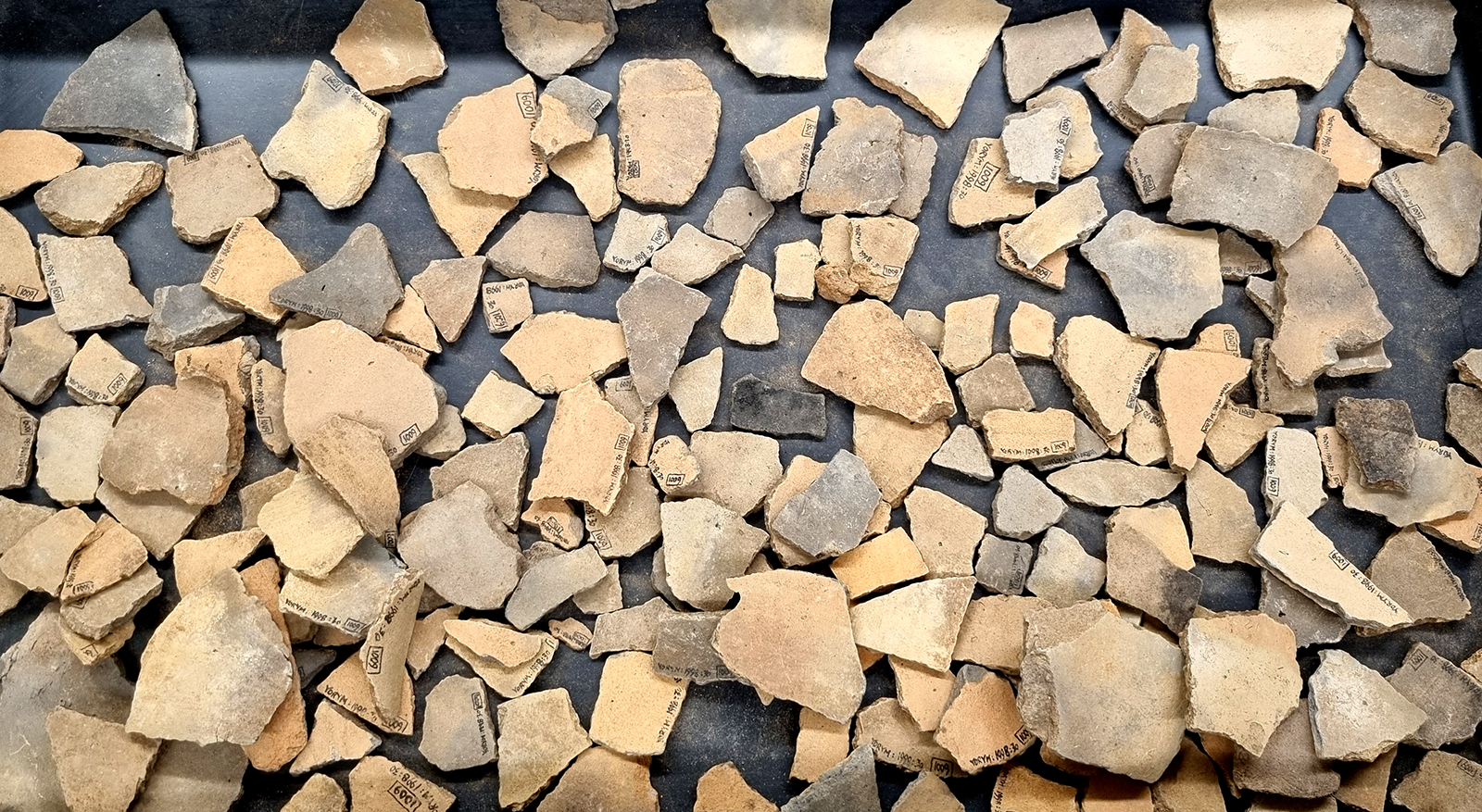
By the 12th to 13th centuries, pottery production in Yorkshire had re-established itself as a widespread industry in both urban and rural spaces after a period of limited ceramic activity during the 11th century. Researchers have presumed that this expansion of pottery production mostly involved wheel-thrown pots, with little variation across the region.
However, a new study published in the Journal of Archaeological Science: Reports demonstrates wider variation in pottery production processes than was previously thought. Scientific analysis of 12th- to 13th-century pottery production waste from the village of Staxton (North Yorkshire) has confirmed that medieval potters at this highly prolific production site instead used the rarer technique of wheel-coiling.
This suggests that potters across Yorkshire belonged to different ‘communities of practice’, even when producing ceramics within the same time period. Each production site took individualised approaches to pottery-making, perhaps indicating that potters moved, both within Yorkshire and England, in the centuries after the Conquest.
Potting at Staxton
Using a combination of hand examination, thin section ceramic petrography (studying the clay’s composition under a microscope), and X-ray analysis, the research established the entire production process: where the Staxton potters sourced their clay, how they shaped and decorated different vessel types, and how they fired them in simple kilns.
This revealed that the predominant forming method at Staxton was wheel-coiling (i.e. constructing vessels from clay coils on a turntable) rather than wheel-throwing on a potters’ wheel. This contrasts with nearby contemporary production sites where potters were wheel-throwing their wares, revealing that both techniques were used in close proximity during the 12th to 13th centuries.
Communities of practice
Yannick Signer, who undertook the study as part of his PhD at the University of York’s Department of Archaeology, said: “While we have known about the products of Yorkshire’s medieval pottery production sites for a long time, we have rarely had such a detailed understanding of how the potters undertook their craft.”
“The confirmation that the Staxton potters used wheel-coiling while other nearby potters threw their pots on a wheel shows how variable production was within the region, and possibly indicates that these potters learned their craft outside of Yorkshire.”
This study is the first detailed reconstruction of how pottery production took place in medieval Yorkshire after the Norman Conquest that is underpinned by scientific data. It has confirmed the value of materials analysis in unpicking craft processes, and provides a methodological basis for future research. The authors note that similar studies on other medieval pottery production sites will be needed to better understand the spatial and chronological variations in ceramic production across northern England, which have now been shown to be more complex than previously believed.