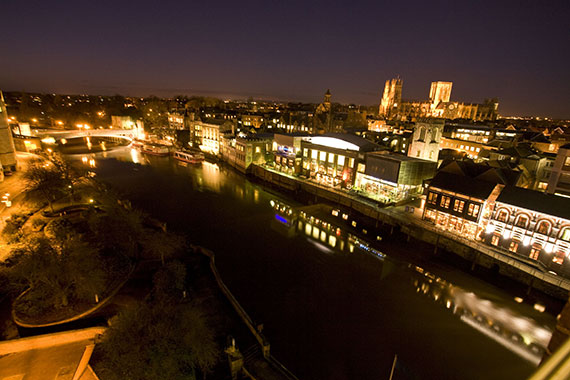
The buildings, material culture and landscapes of York and the north of England offer unrivalled opportunities for the study and research of medieval archaeology. The Archaeology department in York was established as the first in the UK to specialise in medieval archaeology, and that legacy is evident today in the department’s concentration of medieval archaeologists. Their specialisms cover the entire medieval period, from the post-Roman era to early modern times.
The course focuses on the artefacts, landscapes, buildings and social, cultural and environmental contexts of medieval Britain and Western Europe. It covers the period from the end of the Roman Empire to the Reformation, and explores themes such settlement, trade and economy, religion, buildings and artefacts, social structure, ethnicity and identity, conquest and cultural contact, and methodological and theoretical approaches.
The flexible modular structure of the course means you can tailor your MA to suit your interests and goals. There is an opportunity to learn valuable practical skills, which are essential for a wide range of archaeological and associated careers.
This degree is for anyone interested in studying the medieval period from a material perspective. It is primarily for students with previous experience in archaeology, history, art history or anthropology, but our students do come from a wide variety of academic backgrounds.
The course provides a solid foundation for a wide range of careers and further studies. Our students have gone on to research degrees, academic or teaching careers, museum positions and archaeology posts at local councils, regional authorities, field units, and heritage bodies such as English Heritage and the Portable Antiquities Scheme. See what our alumni have to say about the course.
“My MA year widened my view of the field of archaeology and prepared me with skills useful in archaeology as well as other heritage fields.”
Heather Garside (2010), Historic Site Manager and Curator, Passaic County Historical Society
“I had a brilliant experience during my MA, and the knowledge and support I have received has made it one of the best achievements of my life!”
Emma “Bruni” Boast (2012), Manager, Nidavellnir
This one-year MA course is taught through a combination of lectures, seminars and field work. You will study two core modules, two optional modules and four shorter skills modules of your choice. Finally, you will hone your research skills by producing a dissertation and presenting an assessed lecture on your chosen topic.
AUTUMN AND SPRING TERMS
During the autumn and spring terms, you will study two core modules, each worth 20 credits. These are:
The Vikings
Understand the impact of Scandinavian activity in the early medieval world. Explore new facets of the Viking Age through artefacts, buildings, landscapes and environmental remains. Consider diverse sources of evidence, and the challenges of interdisciplinary research. Engage with key debates in Viking studies using leading-edge methodologies and theories.
Medieval settlement and communities
Investigate the inhabitation of medieval England; the places in which medieval communities lived, worked, played and worshipped. Understand the settlements, landscapes, buildings and artefacts of the later medieval period, and how they shaped social structures and everyday life. Explore the relationships between medieval people and things, and learn to think critically about identity, status, belief and power in medieval life.
You will study two further 20-credit modules. These could include any of the following from a longer list:
Analysing historic buildings
Discover the special skills required for analysing and recording the archaeology of historic buildings. Understand buildings archaeology in the context of heritage and conservation practice.
Concepts of landscape
Examine approaches to landscape archaeology and address issues associated with interpreting the cultural landscape. Learn to critically review work on a wide variety of landscape types.
Archaeology of households
Explore archaeologies of the household, from a range of time periods. Critically examine the household as an analytical unit in archaeological reconstructions.
Issues in historical archaeology 1
Understand the aims, objectives and social relevance of historical archaeology. Examine changes in society, economy and culture between the late Middle Ages and the modern day.
Cultural heritage management 2: museums, audiences and interpretation
Evaluate the ways cultural heritage is interpreted in education, the media and tourism. Examine community participation in managing sites or artefacts, social inclusion and access to historic places.
The archaeology of human bones
Discover the field of human osteoarchaeology, exploring how skeletal remains can be analysed to learn how our ancestors lived, worked and died. Study examples from England’s rich archaeological record.
Digital publication and web technologies
Understand the principal digital and internet technologies used for disseminating, publishing and archiving archaeological information, and learn how to apply them.
Interpreting historic buildings
Learn the skills required to discern the function and meaning of historical building types. Develop a critical understanding of the way building types can be interpreted.
Bone and bones
Discover the structure and chemistry of bone, the organisation of bony tissues within the vertebrate skeleton, and explore skeletal diversity in relation to phylogeny and adaptation.
Analysis, interpretation and dissemination of field archaeology data
Discover concepts and methodologies in analysing, disseminating and archiving field data. Understand how field data analysis has been affected by research agendas, IT technologies and organisational factors.
Analysis and visualisation
Assess the main digital technologies used for analysing and visualising archaeological information, including 3-D modelling, GIS, CAD and VR technologies.
You will also choose four shorter ‘skills’ modules . These could include any of the following from a longer list:
Narrating our pasts
Explore the relationship between the producers of archaeological knowledge and its consumers, and analyse the narrative forms used in contemporary archaeology.
Topographical survey
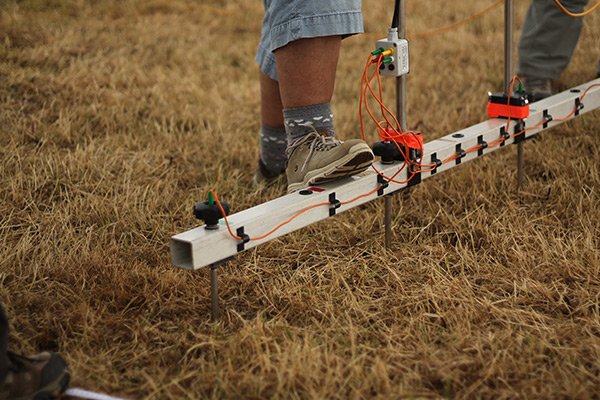
Develop specialist skills used in topographical archaeological surveys, and gain practical experience of using a range of survey equipment and techniques.
Working on the web
Learn the principles of effective web design and develop the skills required to create simple web pages.
Bone taphonomy
Receive a practical grounding in the taphonomy of archaeological bone assemblages, from the death of the organism to the assemblage on the bench.
Artefacts
Learn to recognise distinctions between artefact types according to material and modes of manufacture. Understand the principles of describing and sorting artefacts for archaeological analysis.
Buildings survey
Receive training in building survey principles and practices, and learn to work with survey data in CAD and other digital applications.
Database design and implementation
Understand the applications of database technology in archaeology, and learn the basic principles of relational database design.
Human bone practical skills I
Learn the basic skills required to analyse human skeletal remains. Gain hands-on experience of the latest techniques used in the osteological analysis of archaeological human remains.
Human bone practical skills II
Gain practical experience of human skeletal anatomy and metric analyses. Learn to identify and describe basic disease and trauma categories and their skeletal manifestations.
Geographical Information Systems
Learn how to use GIS equipment, examine how it can be applied in archaeology and explore the issues it raises.
Geophysical survey
Learn the principles and practical skills required for geophysical surveying and evaluation of archaeological sites.
Zooarchaeology: exploring the assemblage
Discover the practical applications of vertebrate quantification and gain practical experience of the acquisition of zooarchaeological data from assemblages of ancient bones.
Artefacts from excavation
Discover the range of artefacts found on archaeological sites and learn the principles of object identification, recording, handling and conservation.
Virtual reality modelling
Gain practical experience in three-dimensional computer modelling, and understand its uses and limitations.
Perspectives in landscape research
Develop the skills required to interpret visual representations of landscape and learn how to use aerial photography and cartographic techniques.
We always try to give everyone their first choice of modules, although this cannot be guaranteed. Some skills modules required by particular programmes may be over-subscribed. Take a look at the full modules list for scheduling information, as some modules run concurrently.
SUMMER TERM
In your final term of study, you will carry out research for your dissertation and give an assessed lecture on your dissertation topic.
Some examples of past dissertation topics include:
This programme is also available for study as a Postgraduate Diploma or Certificate in Medieval Archaeology.
“The Medieval Archaeology course at York provided me with countless opportunities and experiences, both inside and outside the classroom.”
Heather Garside (2010), Historic Site Manager and Curator, Passaic County Historical Society
“I am extremely happy with my degree and the options that it has given me, since now I will not only be leading crew in the field, but also co-authoring reports.”
Jose Vilahomat (2012), Field Officer, Flat Earth Archaeology LLC
Teaching for this course is conducted in small groups by experienced and respected academics who specialise in every aspect of medieval archaeology. Seminars feature student-focused discussion, while practical training is used to teach critical skills.
Dr Aleks McClain (Course Director) and Dr Steve Ashby provide the principal teaching, guidance and leadership for this course:
Additional teaching and support is provided by other specialists with medieval interests who lead various optional modules on the course. These include Dr Jonathan Finch, Dr Kate Giles, Prof. Julian Richards, Steve Roskams, Dr Stephanie Wynne-Jones and Dr Michelle Alexander.
“The Medieval Archaeology MA provided me with an excellent grounding in the archaeology and history of Europe c. 500-1500, and was instrumental in my decision to pursue a PhD.”
Rob Collins (2001), Finds Liaison Officer for North East England, Portable Antiquities Scheme
The MA in Medieval Archaeology enables you to:
The skills and knowledge gained on the course are applicable to wide range of archaeological careers, as well as further study and research.
Course postgraduates have gone on to pursue research degrees, academic or teaching careers, museum positions and archaeology posts at local councils, regional authorities, field units and heritage bodies. Some of the organisations our students now work for include:
Find out what some of our alumni have said about the course and how it improved their career prospects.
“Since finishing my MA, I have had so many wonderful opportunities within the heritage industry, which have been based on the strong archaeological foundations I gained at York.”
Emma “Bruni” Boast (2012), Manager, Nidavellnir
Alumni of the MA in Medieval Archaeology have gone on to further studies and into varied careers in archaeology and a range of associated fields.
Here’s what some recent graduates had to say about the course:
Emma “Bruni” Boast (2012), currently Manager of Nidavellnir, a small business based in York, which creates Viking period clothing and knitted items such as hats, socks and gloves made from the Viking craft of nalbinding:

“Since finishing my MA, I have had so many wonderful opportunities within the heritage industry, which have been based on the strong archaeological foundations I gained at York. It has enabled me to develop the confidence to start my own business, as well as implement Viking Age projects with leading individuals in the field, both locally and internationally. I still stay in touch with fellow students, as well as lecturers at King’s Manor and look forward to pursuing a PhD with the department in the near future. I had a brilliant experience during my MA, and the knowledge and support I have received has made it one of the best achievements of my life!”
Jose Vilahomat (2012), currently Field Officer, Flat Earth Archaeology LLC, Arkansas, US:

“Since graduating from the MA, I have been working with Flat Earth Archaeology in my home state of Arkansas, a professional unit doing survey in advance of major building and infrastructure projects. This is a small but growing company and now I have a great permanent job where I find amazing sites every day, and where my Masters has given me the opportunity to succeed and even get a promotion. Needless to say, I am extremely happy with my degree and the options that it has given me, since now I will not only be leading crew in the field, but also co-authoring reports with the PI.”
Heather Garside (2010), currently Historic Site Manager and Curator, Passaic County Historical Society, NJ, USA:

“The Medieval Archaeology course at York provided me with countless opportunities and experiences, both inside and outside the classroom. The connections and friendships I made with my fellow students, including some students pursuing other degrees, exposed me to new and different ideas. My MA year widened my view of the field of archaeology and prepared me with skills useful in archaeology as well as other heritage fields. Today, I find myself referencing information and experiences I had at York in my position as a historic site manager and curator.”
Rob Collins (2001), currently Finds Liaison Officer for North East England, Portable Antiquities Scheme:

“The Medieval Archaeology MA provided me with an excellent grounding in the archaeology and history of Europe c. 500-1500, and was instrumental in my decision to pursue a PhD. I’ve been able to apply the skills and knowledge gained during my time at York in working for the Portable Antiquities Scheme and as a Research Associate at Newcastle University.”
To apply for this course, you will need:
If you don’t have conventional qualifications, but do have appropriate, relevant experience, you are encouraged to apply. We carefully consider each application on its merits.
First, check our How to apply page, which explains what information the Department needs from you.
“Nowhere else will you find such a wealth and depth of expertise in medieval archaeology. There is simply no better place than York to study medieval material culture, and our course takes full advantage of the region’s abundant artefacts, buildings, landscapes and institutions.”
Dr Aleksandra McClain