
Critical Long-Term Thresholds in Global Dryland Social-Ecological Systems
Context
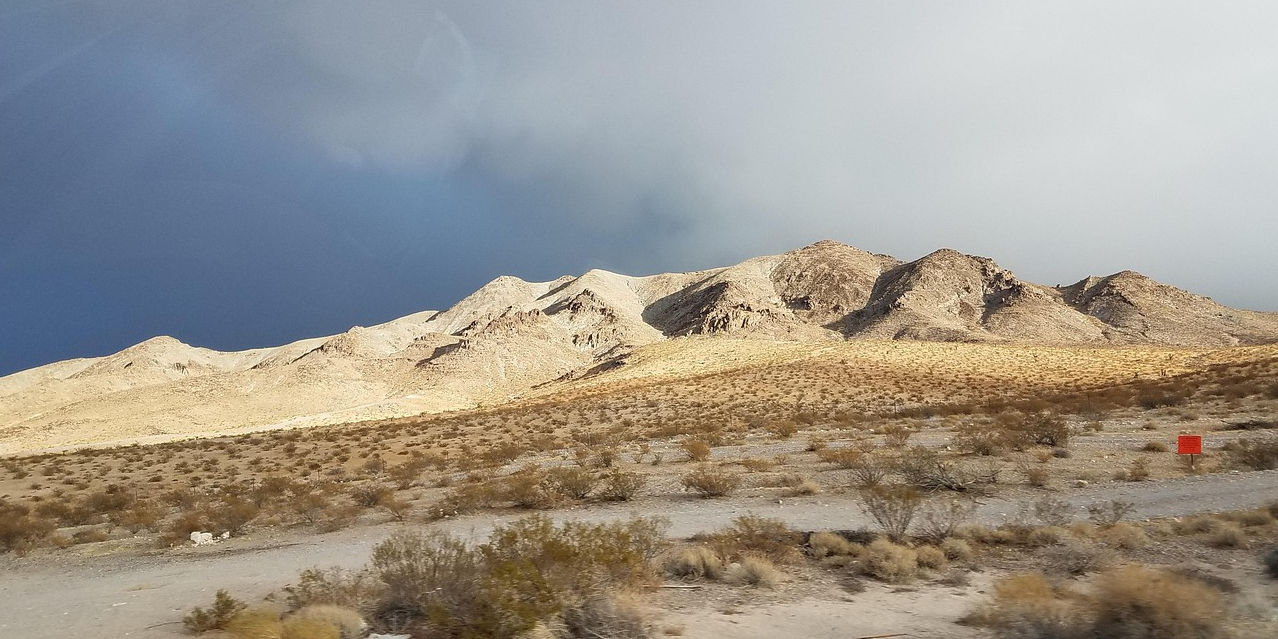
Drylands cover ~45% of Earth’s land surface and ~40% of its population, and ~90% are in developing countries. Drylands provide a wide range of crucial ecosystem services, e.g., climate regulation, supply of water and food, and unique biodiversity. However, drylands have low and highly variable annual precipitation, high potential evapotranspiration, coarse nutrient-poor soils, and sparse vegetation with low productivity. They are considered fragile ecosystems, highly sensitive to climate change and human activities, prone to degradation and desertification. The resilience of global dryland social-ecological systems (SES) is facing increasing challenges from increasing aridity and grazing pressure, climate extremes, urbanization and agricultural expansion.
Understanding how global dryland SES respond to ongoing environmental change is critically important for global sustainability and adaptation in the near and long-term. Considering the complexity of human-nature interactions in global drylands, it is essential to accurately identify critical thresholds in SES for maintaining and enhancing resilience.
Aims and Objectives
Dr Li’s Fellowship will seek to identify possible methods to assess carrying capacity thresholds for fast and slow changes in dryland ecosystems to 2500. This is important because identifying the scope of change is needed to determine the dryland thresholds, carrying capacity, and other features is necessary for safe and just development and adaptation planning.
Project Outputs
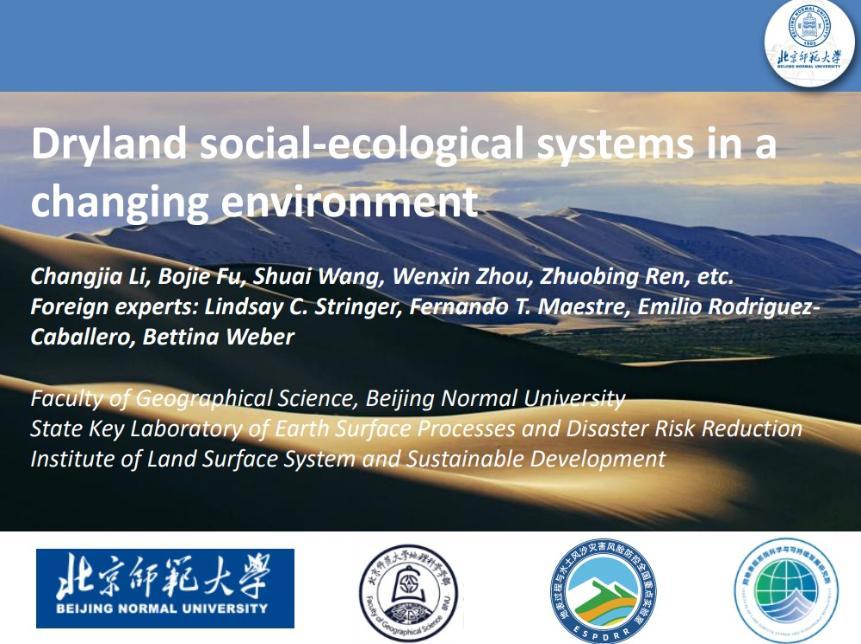
Dr Li presented his research at the YESI International Fellows seminar: Dryland social-ecological systems in a changing environment, during his visit to the University of York. The link to the presentation slides is below and Dr Li welcomes comments or ideas via email changjia.li@bnu.edu.cn
University of York Collaborator
Dr Christopher Lyon, Leverhulme Centre for Anthropocene Biodiversity and Department of Environment and Geography
Bio: Dr Christopher Lyon has a PhD in Geography and is currently a Fellow at the Leverhulme Centre for Anthropocene Biodiversity and a member of the Department of Environment and Geography at the University of York. His broad range of work covers the social dimensions of environmental change. Building a widely covered paper in Global Change Biology, his research explores questions of living and thriving human communities on a hotter Earth with a very different biogeography to today to understand what adaptation and habitability mean under climate and land use change.
International Collaborator
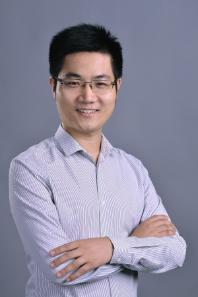
Dr Changjia Li, Faculty of Geographical Science, Beijing Normal University
Bio: Dr Changjia Li obtained his PhD in Physical Geography from University of Leeds and is currently an associate professor at Faculty of Geographical Science of Beijing Normal University. His research interests cover land degradation, desertification, ecological thresholds, ecological restoration, and human-environment relationships. He has published more than 50 publications including the 1st author or the corresponding author of nearly 30 peer-reviewed papers published in journals like Nature Reviews Earth & Environment, Nature Sustainability, Earth Science Reviews and Global Change Biology. His leading work has been awarded the “2021 Top 10 Research Achievements of Chinese Geography” and “2023 Top 10 Research Achievements of Chinese Geography” by the Chinese Geographical Society.