Skip to content Accessibility statement

Echoes of Climate

Gamelan Encounters in the Anthropocene

Scientific representations of environmental change don’t always connect with people in ways that spark real motivation or action. Art, however, can reach us differently through emotion, imagination, and personal experience, making it a powerful way to get people thinking and caring about our changing planet. But while we often measure how audiences feel right after seeing environmental art, we still know very little about whether it changes behaviours or attitudes in the long run. This project brings together science and the arts to explore exactly that.

Here, we focus on the shared problem of haze — the smoke pollution from open burning that affects both Malaysia and, in very different ways, York. Haze is a striking reminder of human-driven environmental harm: it blurs our landscapes, affects our breathing, and disrupts daily life. Its recurring, all-enveloping nature makes it both scientifically important and creatively compelling, offering a powerful starting point for artistic expression and public engagement.

Aims and Objectives

This project aims to bring science, art, and lived experience into the same conversation about air pollution and climate change. By blending earth observation, social science insights, and creative practice, we want to explore how environmental art can shift the way people feel, think, and act, both in the moment and over time. Along the way, we’ll be testing new ways of understanding how art can create impact. The project also builds on long-standing collaborations between York and Malaysia and strengthens ties with partners across the arts and environmental fields.

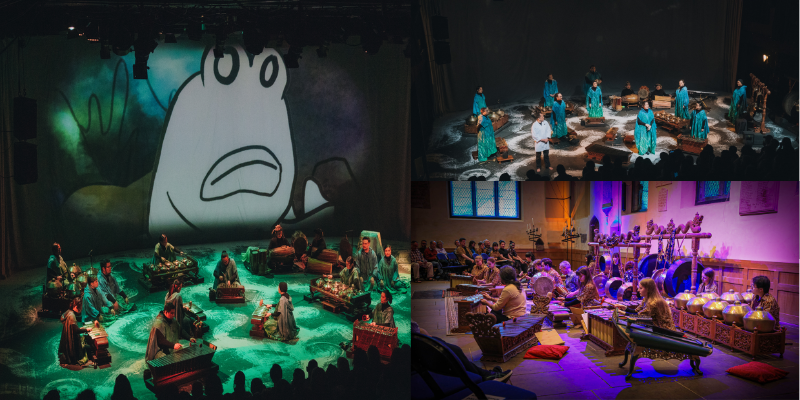
To do this, we’ll create a new dialogical gamelan work that draws on scientific and social-scientific data, weaving together York’s Javanese gamelan and the Malaysian gamelan led by Jillian Ooi. The piece will express shared yet distinctive environmental experiences, particularly around recurring haze. We’ll present it in three public performances - one each in Kuala Lumpur, York, and London - combining live and recorded gamelan with short talks that invite audiences into the story. These performances will also be moments of learning, where we gather audience reflections through short interviews and invite a small group to keep journals about their experience. The project will culminate in at least one peer-reviewed publication sharing what we learned about how environmental art can spark awareness, imagination, and change.

University of York Collaborators

Felicia Liu (Environment & Geography)

Bio: Felicia Liu is a Lecturer in Sustainability in the Department of Environment and Geography at the University of York.  Her research examines the relationships between capital, society, and nature in the Anthropocene, with a particular focus on sustainable finance.  She completed her PhD at King’s College London and the National University of Singapore, where she explored how financial centres influence sustainability agendas.  Her current work focusses on ’Seasons of the Anthropocene’, where society collectively builds understanding and response to recurring anthropogenic environmental events.  This work has led her to investigate the role media, public discourse, and more recently, art play in mediating human-non human relationship in contemporary times.

Ángel Cataño Flores (School of Arts and Creative Technologies)

Bio: Ángel Cataño Flores is the Director of Gamelan Sekar Petak at the University of York, home to the UK’s first gamelan set.  He also serves as Music Technician at the School of Arts and Creative Technologies.  Ángel is also involved in teaching and directing with the Golden Thread Gamelan at the University of Leeds and Lotus Gate Gamelan at the University of York St John.  Trained as both an engineer and musician, he has a strong academic background in electronics and extensive experience in designing electronic musical instruments.  His work focuses on creating technologies that enable musicians of all abilities to explore new forms of interaction with instruments and with one another.

International Collaborator

Jillian Ooi, Department of Geography, Universiti Malaya

Bio: Jillian Ooi is an Associate Professor in the Department of Geography at Universiti Malaya. Originally trained as an environmental social scientist, she later shifted her focus to marine ecology and earned a PhD in Seagrass Biogeography at the University of Western Australia. Beyond her academic work, she is the Artistic and Music Director of Rhythm in Bronze, a contemporary gamelan ensemble renowned for its innovative approach to Malay gamelan performance. Her music direction and compositions have been recognised with multiple nominations and awards at the BOH Cameronian Arts Awards. She credits the sea as her enduring source of artistic inspiration.