
Joint Symposium on Sustainable Futures
This event has now finished.
Event details
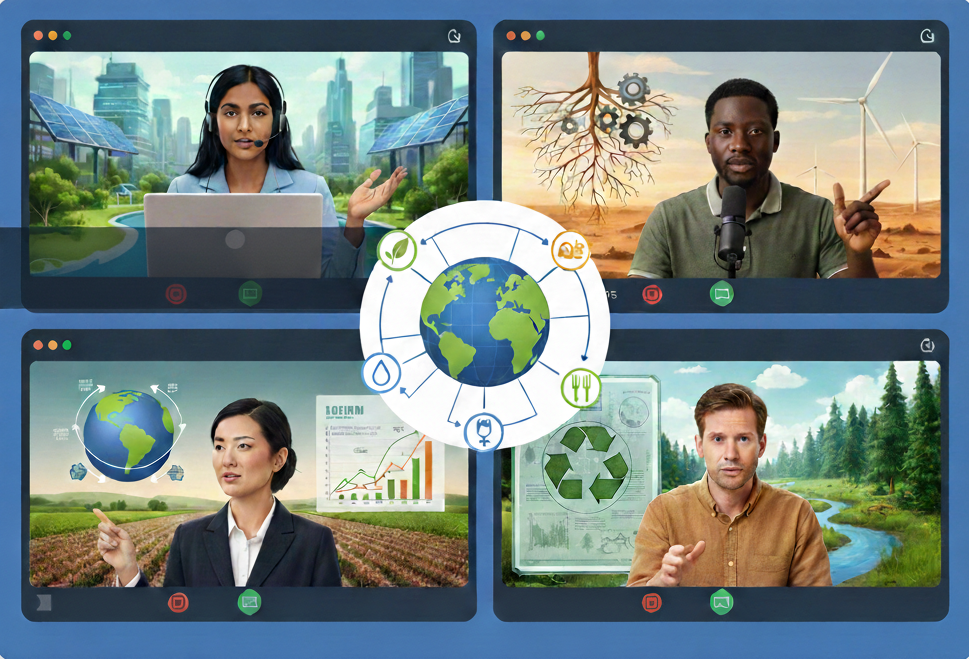
How can we build a more resilient and sustainable world? Join us for a landmark international symposium. This event brings together a prestigious global cohort of institutions to explore "Sustainable Futures" through the lens of critical environmental and social systems.
This symposium features five dedicated research presentations, each focusing on a unique system and its role in a sustainable future. Our partner institutions and their focus areas include:
- Mountains – Presented by the University of York (UoY)
- Air Pollution & Atmospheric Systems – Presented by Lahore College for Women University (LCWU)
- Food Systems – Presented by Kumasi Technical University
- Drylands – Presented by Bayero University, Kano
- Land Systems & Geographical Information Systems (GIS) – Presented by the University of Eswatini
Each organisation will give a 15-minute expert presentation, these will be followed by a collaborative discussion. Our goal is to work together across borders to identify three priority research questions for each system that will help define the next decade of sustainability science.
Learn more about our speakers and presentations
Why Attend?
- Global Networking: Connect with academics and students from five different countries.
- Interdisciplinary Insights: Learn how diverse systems—from urban centers to drylands—intersect with sustainability.
- Shape the Agenda: Participate in discussions that will influence future research priorities.Priority research questions
Priority research questions
The priority research questions co-developed during the symposium for each of these systems and three cross-cutting priority research questions, aimed at defining the next decade of sustainability science, are below:
Air Pollution
- How do varying urbanisation land-use patterns influence the distribution and dispersion of PM2.5 and other air pollutants, and what are the specific implications for urban planning and mitigation strategies?
- What is the feasibility and global impact of establishing internationally agreed legislation for higher carbon taxes on heavy emitters to benefit low emitters?
- What are the specific control measures for soil erosion as they relate to air pollution and sand and dust storms, and how can green infrastructure be effectively used to improve air quality?
Food Systems
- How can food systems be redesigned to provide healthy, affordable food, addressing the dual problems of undernourishment and obesity, while simultaneously protecting the environment, supporting farmers, and remaining resilient to global shocks?
- What are the long-term impacts of environmental changes and the implementation of food standards on food safety, particularly regarding food waste and chemical residues (e.g., antibiotics)?
- How can biodiversity, specifically pollinators, be protected from extinction within the context of intensifying food production?
Drylands Systems
- What is social and ecological "value for money" for expensive afforestation projects, and how do these projects compare to reforestation in terms of past forest extent and local livelihood preservation?
- How has climate change specifically affected farmer productivity in drylands, and what role does the lack of pasture play as a primary driver of farmer-herder crises?
- What are the climate impacts of transitionary solutions, such as factory-based animal feeds, compared to traditional rangeland grazing?
Land Systems
- How can land-systems research better integrate climate resilience, biodiversity integrity, and livelihood security within rapidly changing landscapes?
- What specific forms of GIS and spatial data science are most effective for decision-making in regions facing data scarcity and institutional constraints and how can AI help?
- How can land-system science originating in the Global South and Africa more effectively shape global theory, methods, and policy agendas?
Mountain Systems
- What are the interactions between climate change and land-use change in mountainous areas, and how do these changes impact downstream wetlands and communities?
- How can we better define the boundaries and functional space-time scales of mountain social-ecological systems (i.e.where does a mountain stop)?
- How can land-use transitions in mountain regions be accurately translated into Natural Capital assessments, biodiversity impacts, and economic evaluations over wider scales?
Cross-Cutting Priority Research Questions
- Inclusive Governance: What are the most effective enabling conditions and participatory processes for engaging marginalised groups—including women, Indigenous Peoples, and local communities—to ensure their voices shape long-term sustainable outcomes?
- Knowledge Integration: To what level can Indigenous and local knowledge be integrated with data-driven science to solve climate-related issues?
- Policy & Application: What are the most effective stages and mechanisms for implementing "polluter-pays" policies and transitioning science into active, integrated land-use planning and application?