Ancient DNA reveals earliest known dogs lived alongside Ice Age humans
Posted on Wednesday 25 March 2026
By uncovering the earliest genetic evidence of domestic dogs to date, researchers have found that our 'best friends' were already living alongside us more than 14,000 years ago - redefining our understanding of how this ancient relationship first took root.
The international team of researchers analysed ancient DNA from animal remains found at archaeological sites in the UK and Türkiye, dating to the Late Upper Palaeolithic period, long before the advent of farming.
They found that bones recovered from Gough’s Cave and Pınarbaşı belonged to early dogs, pushing back confirmed evidence of domesticated dogs by more than 5,000 years.
Whole genome
Professor Oliver Craig, from the University of York’s Department of Archaeology and Director of the BioArch Centre, explains: “We have long believed dogs evolved from grey wolves during the last Ice Age, but physical evidence of their association with humans has been difficult to confirm.
“During the earliest stages of domestication, dogs and wolves looked almost identical, and behavioural differences do not show up in the archaeological record.”
Previous studies relied on small DNA fragments and skeletal measurements. This new study, however, was able to reconstruct whole genomes from remains more than 10,000 years old and compared them with over 1,000 modern and ancient canids.
Dietary analysis
At the University of York, scientists conducted a dietary analysis of dog, human and wolf remains from the same archaeological sites.
By measuring carbon and nitrogen isotopes preserved in bone collagen – chemical signatures that reflect long-term diet – they were able to reconstruct what these animals and people ate.
Lizzie Hodgson, PhD student from the University of York’s Department of Archaeology, said: “A key finding came from Pınarbaşı, where the data showed that domestic dogs consumed a diet rich in fish, closely matching that of local humans.
“It is unlikely dogs were catching significant amounts of fish themselves, suggesting they were being actively fed by people.”
This shared diet provides strong evidence of a close and cooperative relationship between humans and dogs during the Ice Age.
Canine bond
Dr Sophy Charlton, from the University of York’s Department of Archaeology, said: “This study reveals the beginnings of a human and canine bond that continues to this day. It’s a narrative that began towards the end of the Ice Age but was foundational to many of the modern breeds we see today.”
The study suggests that dogs were present among different hunter-gatherer groups, including Epigravettian and Magdalenian communities, towards the end of the Ice Age.
Genetic analysis revealed that these early dogs were more closely related to the ancestors of modern European and Middle Eastern breeds than to Arctic dogs.
Dr William Marsh, from the Natural History Museum, said: “These specimens allowed us to identify additional ancient dogs from sites in Germany, Italy and Switzerland, showing they were already widely dispersed across Europe and Türkiye by at-least 14,000 years ago.”
Emotional significance
Experts say this raises the possibility that dogs were domesticated more than 10,000 years before any other animals or plants.
Alongside the genetic work, researchers also examined how these early dogs and humans may have lived together. While the exact role of these early dogs remains unclear, researchers believe they were closely integrated into human communities.
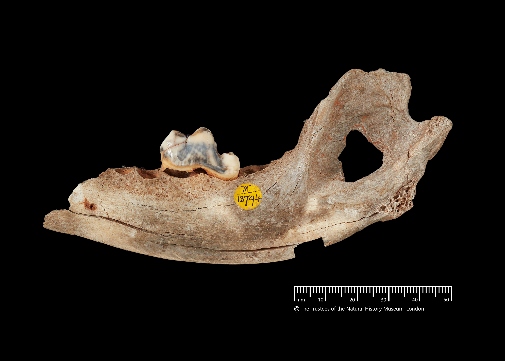
A dog jawbone from Gough’s Cave – dating to around 15,000 years ago – is now considered the earliest known domesticated dog in the UK.
Dr Lachie Scarsbrook, from LMU Munich, said this indicates that major dog lineages were already established around 15,000 years ago. He said: “Dogs with very different ancestries already existed across Eurasia, from Somerset to Siberia.”
Further evidence, including intentional burial of dogs, points to possible emotional or cultural significance. Researchers say the discovery highlights the deep and long-standing relationship between humans and dogs, stretching back to the end of the last Ice Age.
The study, titled Dogs were widely distributed in Western Eurasia during the Palaeolithic, is published in the journal Nature, alongside related research exploring the genetic history of early dogs across Europe.