Study sheds new light on bear baiting in early modern England
Posted on Monday 17 February 2025
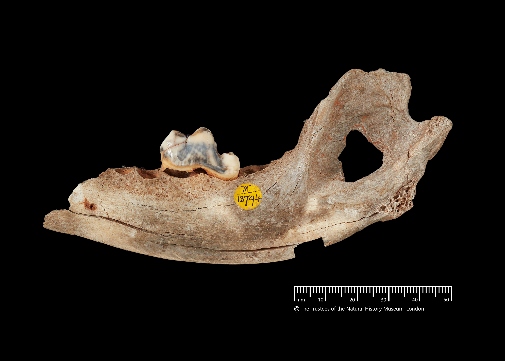
The study, by researchers at the Universities of York and Nottingham, has brought together zooarchaeological, stable isotope and archival evidence from nine archaeological sites in Bankside, London, to define features specific to bear baiting.
Animal baiting – a blood-sport which involved the pitting of dogs against other animals such as bulls and bears for public entertainment – was an incredibly popular and culturally important form of entertainment in Shakespearian times. In London, baiting took place from c.1540 to 1682 in formalised arenas on Bankside in Southwark, which was a key early modern entertainment hub.
The research, published in the journal Antiquity, forms part of the Box Office Bears: Animal Baiting in Early Modern England project, a UK Arts and Humanities Research Council (AHRC)-funded project, exploring the widespread, surprising, and sometimes alarming recreational interactions between humans and animals in early modern England.
Bankside bears
Dr Lizzie Wright, from the University of York’s Department Archaeology, said: “We examined what species were present on Bankside and used this evidence to learn about the lives and deaths of the animals.
“They demonstrated that both dogs and bears lived on Bankside and were eating the remains of old horses, as well as each other. The dogs were particularly large – some 60-80cm high at the shoulder - like a large modern German Shepherd or Great Dane.
“This size of dog was uncommon across England at the time, suggesting these big dogs known as ‘mastiffs’ were particularly used for baiting.”
Expensive animal
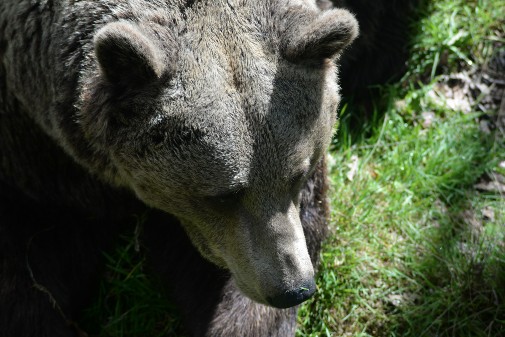
Results also revealed there was no evidence for bears below the age of four years, which leads to the intriguing question of why not? Given they were likely to have been captured as cubs, they perhaps were used for dancing or on stage prior to being baited.
A bear was a very expensive animal – roughly eight times the cost of a horse – so their owners would not have wanted them to die as their replacements would have to be imported from overseas.
The same may also be true of the dogs, as although some were found with bone fractures, their injuries had healed, indicating they survived for at least six or more weeks after being wounded.
Shakespearean entertainment
Hannah O’Regan, Professor of Archaeology and Palaeoecology at the University of Nottingham, said: “It’s a hugely unpleasant topic, but understanding baiting is critical to understanding performance in Shakespeare’s England.
“The people who went to watch King Lear and Hamlet, would also have popped into the arenas to see a baiting. They saw no difference between the practices, and indeed baiting terminology, and even the bears themselves are threaded throughout early modern plays.”
Animal baiting was finally banned in England in 1835 and while the idea of such deliberate animal cruelty is now hugely distasteful, it was a very popular entertainment in its time.
Although Bankside is unique in the wealth of documentary archives associated with it, baiting is known to have occurred widely elsewhere. This new model for data analysis enables researchers to either identify or exclude bear baiting when examining zooarchaeological assemblages,even where accompanying documentation is lacking, and can be expanded to other countries where baiting took place.


.jpg)