Green doesn’t always mean clean: cleaning products urgently need better regulation, researchers warn
Posted on Friday 9 February 2024
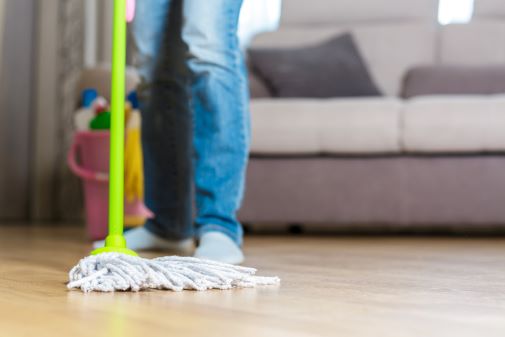
Researchers say there needs to be better regulation and more guidance for consumers about how safe cleaning products really are.
Potentially harmful
The study, published by The Royal Society of Chemistry in the journal Environmental Science: Processes & Impact, found that fragranced cleaning products can be potentially harmful for the air quality in people’s homes.
Cleaning products emit a wide range of volatile organic compounds (VOCs), including some which are hazardous or can undergo chemical transformations to generate harmful secondary pollutants. In recent years, “green” cleaners have become increasingly popular, with an implicit assumption that these are better for our health and the environment. But the University of York research found this was not the case.
Secondary pollutants
As part of the study, the VOC composition of 10 regular and 13 green cleaners was examined by researchers. Green cleaners generally emitted more monoterpenes than regular cleaners, resulting in increases in harmful secondary pollutant concentrations following use, such as formaldehyde and peroxyacyl nitrates.
The study found that the fragrance ingredients of these products were the source of the volatile monoterpenes. As levels of these types of pollutants increase in the home, susceptible people can develop breathing problems or irritation of the eyes, nose, throat, or skin. Repeated exposure to high concentrations of formaldehyde can possibly lead to cancer in some cases.
Misleading consumers
Ellen Harding-Smith, Environmental Chemistry researcher from the Department of Environment & Geography, said: “Our research found there is no strong evidence to suggest that clean green products are better for indoor air quality compared to regular products.
“In fact, there was very little difference. Many consumers are being misled by the marketing of these products and could be damaging the air quality in their homes as a result - potentially putting their health at risk. For so many products on the supermarket shelves, green doesn’t mean clean.”
Compositional differences
The research was funded by the EPSRC and the project is called IMPeCCABLE. It is a collaboration between the University of York’s Department of Environment and Geography, the Department of Chemistry, and the Wolfson Atmospheric Chemistry Laboratory.
Miss Harding-Smith, who is PhD Candidate, added: “The study highlights potential compositional differences in the formulations of regular and green cleaners, for which there is currently very little information on in the available literature.
Mitigating harm
“Manufacturers really need to be so much clearer about what’s in these products and make clear how to mitigate their harm. For example, just improving ventilation and opening windows when using these cleaning products makes air quality at home so much better.”