How did Western Mediterranean societies inspire medieval ‘Green Revolution’?
Posted on Friday 14 April 2023
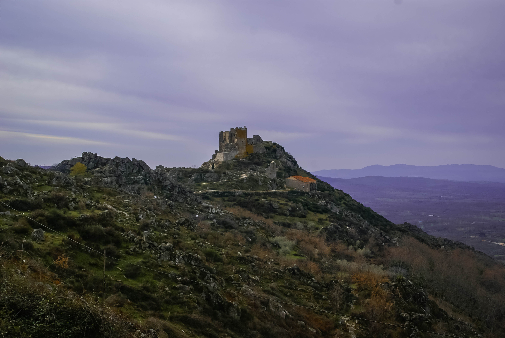
With support from the European Research Council, scientists at the universities of York, Reading, Barcelona, Granada, UCL, Basel, València, Murcia and INSAP (Rabat), will study how plants, animals and land changed over the course of a millennium in Spain, the Balearic Islands, and Morocco.
Between the 6th and the 16th centuries, the Western Mediterranean saw successive political and demographic changes, from the Arab conquests of North Africa and Iberia to the Christian conquests of Islamic Al-Andalus.
Innovations
The Arab conquests came alongside significant innovations in agriculture, including advances in irrigation, land management and the introduction of new crops. This ‘Green Revolution’ took place across the medieval Islamic world.
Professor Michelle Alexander, from University of York’s Department of Archaeology, said: "Studying ancient DNA and using isotope analysis, as well as pottery residue analysis, will help us to understand changes in diet and cuisine and how humans worked with plants and animals in adapted agricultural regimes.
"We hope that this will give us the answers to how societies were able to adapt to environmental challenges, and whether any of these answers could help us in how we continue to adapt today."
Food security
The project will map climate change in the Western Mediterranean in the centuries before, during and after the Arab conquests, when increasing aridity in some regions would have posed a significant problem.
Professor Aleks Pluskowski, a medieval archaeologist from the University of Reading, said: “From your orange juice at breakfast, to the rice you have for lunch, and the cotton sheets you sleep in at night, the legacy of the Green Revolution is still with us more than 1,000 years later.
“We still have many questions, and we hope this project will help to answer them. We suspect that migrating Arabs (and in Iberia, also Berbers) did not bring a ready-made agricultural toolkit with them, but instead adapted to the opportunities and challenges they encountered. We also want to see how later societies adopted and adapted these innovations.”
The techniques used by the project’s researchers will include the microscopic study of soils and sediments, analysis of food residues on ceramics, ancient DNA and isotopic analyses of plant remains and animal bones, alongside conventional archaeology.