Viking trade connections stretched over hundreds of kilometres to the Arctic, research shows
Posted on Monday 18 September 2023
Led by researchers from the University of York, the findings provide evidence of trade connections between the town of Hedeby (modern Schleswig-Holstein, Germany), the largest urban settlement in Viking Age Europe, and upland Scandinavia, hundreds of kilometres to the north.
Biomolecular analysis
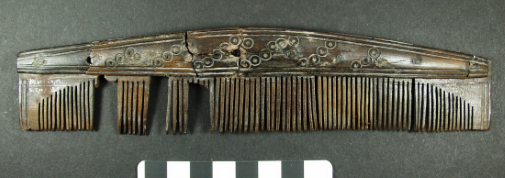
The study, funded by the European Union's EU Framework Programme for Research and Innovation, confirms the existence of these trade routes through biomolecular analysis of antler combs found there.
Hedeby was a major centre of antler-working, with 288,000 antler finds recorded, most of which was waste material from the production of hair combs: a major urban craft in the Viking Age.
The team of archaeologists from the Universities of York, Stockholm and Barcelona as well as the Center for Baltic and Scandinavian Archeology (ZBSA) and the Leibniz Center for Archeology (LEIZA) analysed the collagen in the combs to determine the species of deer the antler came from.
Reindeer antler
The findings revealed that 85-90% of the combs were made from reindeer antler. Reindeer herds were only located in northern Scandinavia, indicating that either the combs themselves or the antlers from which they were made were imported.
A previous study of waste from the production of antler artefacts at the site found that only 0.5% of the waste was from reindeer, and no manufacturing evidence from this early phase is known. Therefore, these combs were almost certainly produced elsewhere. This demonstrates the existence of large-scale, frequent long-range maritime contact between Hedeby and the north as early as AD 800.
Viking-Age Britain
Dr Steven Ashby, from the Department of Archaeology at the University of York, said: "We have begun to answer a whole range of questions about the timing of travel and trade in Viking-Age Britain and Scandinavia.
“The work at Hedeby is particularly interesting, as it tells us about connections between the mountains of upland or arctic Scandinavia and this large town at the gateway to continental Europe, and points to a window in the 9th Century when these northern links must have been particularly strong."
Movement and interaction
The team's next project will use biomolecular analyses of artefacts to look at movement and interaction across the Viking world: from Greenland to the Baltic.
The paper 'In the footsteps of Ohthere: biomolecular analysis of early Viking Age hair combs from Hedeby (Haithabu)' is published in Antiquity Journal.