Grow It York wins award for indoor community farming initiative
Posted on Thursday 29 September 2022
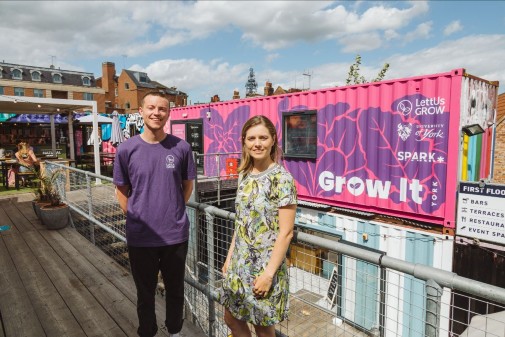
The farm, called Grow It York, was created by the FixOurFood team at the University in 2021, when Prof Katherine Denby teamed up with LettUs Grow, an indoor farming technology provider from Bristol and Spark.
The annual Vertical Farming World Awards celebrates excellence and innovation across the global industry. The 14 awards span crops, technology, sustainability, and commercial initiatives.
Professor Katherine Denby, from the University of York’s Department of Biology, said: “We are so pleased to have won this award. Working with Spark to establish Grow It York has been a fascinating journey, and LettUs Grow are an inspiring team, who have helped us from the outset to build this community initiative.”
Urban community
Grow It York was created as an indoor urban community farm in a shipping container, supplying hyper-local produce to the surrounding businesses and locals. LettUs Grow’s aeroponic technology is an eco-friendly method of growing crops indoors without soil, with less water and without the need for pesticides.
The container farm grows salad crops such as pea shoots, watercress, microgreens and herbs, which can also be prepared and eaten fresh at the restaurants within Spark.
Positive change
India Langley, from LettUs Grow, said: “It’s exciting to see indoor farming being utilised in this environment because the advantages of growing in such close proximity to consumers are so evidently visible.
“Container park communities are a great way to demonstrate the impact of indoor farming on a smaller scale and they really emphasise the potential for this model to be translated across the country at different settings and scales.”
The farm was built to investigate how vertical farming can play a role in creating positive changes within food systems, benefiting health, environment and economy. It forms part of the FixOurFood programme, a leading food systems research collaboration led by the University of York, funded for five years through the Transforming UK Food Systems Strategic Priorities Fund.
Sustainable future
FixOurFood aims to transform Yorkshire food networks and develop regenerative systems that will create a fairer and more sustainable future for food production, retail and consumption. The University of York, through FixOurFood, is researching how hybrid businesses that prioritise social and environmental benefit (not just profit) can be encouraged in the food system.
The farm offers tours for the public, usually on the last Thursday of each month (book in via growityork.org/). Spark* is open 12 noon -11pm Tuesday to Saturday.