Blood test could shorten hospital stays for children with cancer, new study reveals
Posted on Thursday 17 March 2022
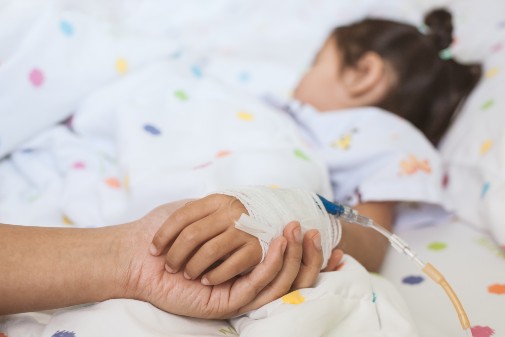
The study, by researchers from the University of York and Hull York Medical School and funded by Yorkshire cancer charity Candlelighters, reveals the blood test can help doctors to distinguish between children whose fever is a sign of serious illness and those who are safe to go home.
High temperatures are common in children undergoing treatment for cancer due to their lowered immune system. The commonest approach in the NHS is to keep children in hospital for up to a week while antibiotics are administered in case the fever is a symptom of a serious infection like sepsis.
Enormous difference
The results of the study, which involved 28 children with cancer, show that using the blood test in combination with a new protocol to identify children that are safe to go home, cuts their average stay in hospital down to two days, with some able to leave in as little as eight hours.
The authors of the study say this change will make an enormous difference to children with cancer and their families, easing mental health and financial burdens.
The test diagnoses serious infections by looking at levels of the biomarker procalcitonin in the blood. Those children with low levels often had their antibiotics stopped more quickly and went home earlier.
Promising results
Dr. Bob Phillips from the Centre for Reviews and Dissemination at the University of York and Hull York Medical School, said: "Frequent fevers are a distressing and sometimes life-threatening complication of childhood cancer. Our study shows that procalcitonin blood tests could make a big difference to children who don’t have a serious infection, allowing them to go home earlier to be with their families, cutting unnecessary treatment with antibiotics and reducing an already intense mental and physical toll.
"These promising results and the willingness of families to take part in this research mean we can now apply for further funding in order to carry out a large-scale study."
Improvement
Around 1,800 children are diagnosed with cancer in the UK every year, with 150 of these children living in Yorkshire. Treatments used to kill cancer have many side effects on children, from losing hair to feeling sick, losing appetite, exhaustion, diarrhoea or constipation, mouth ulcers, and more. Long stays in hospital away from family and friends can badly impact their mental health, with children feeling lonely and isolated. Many parents are forced to stop working whilst they care for their child round the clock, potentially resulting in financial difficulties for the family.
Candlelighters CEO Emily Wragg said: "In the 1970s, when Candlelighters was formed, the survival rate for children's cancers was just 10%. The five-year survival for all childhood cancers diagnosed in Yorkshire is now at 86%, a fantastic improvement made possible by investments in research from organisations like ours. Now, more must be done to ensure not only that more children survive, but they survive with fewer long-term side effects and have an improved quality of life while undergoing treatment. That's what we want to achieve going forwards.”