York academics to lead pioneering blood cancer research
Posted on Tuesday 19 April 2022
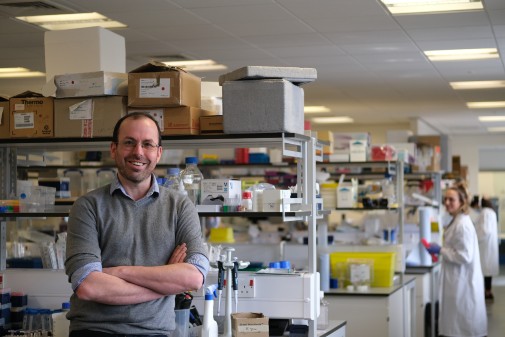
Led by Dr. David Kent, Dr. James Hewitson and Dr. Jillian Barlow from the Department of Biology, the researchers at York will form one of seven clusters across the UK in the MRC National Mouse Genetics Network, in collaboration with researchers from the universities of Edinburgh, Oxford, Cambridge and Imperial College London.
Accelerate
The team will integrate research on mouse genetics with clinical findings to accelerate our understanding of blood cancer in order to make real improvements for patients.
Blood cancer is the most common form of childhood cancer and the fifth most common cancer across the population in the UK. The disease occurs when the body’s finely-tuned process of blood cell production goes awry, and more than 40,000 people are diagnosed with cancers such as Leukaemia and Lymphoma every year.
New tools
Dr David Kent said: “Our cluster will address the urgent need to develop new tools to dissect the cellular and molecular mechanisms underpinning normal, malignant, and stressed blood cell production. By gaining fundamental insights into the processes behind blood cancer, we aim to provide the building blocks for new interventions and treatments that will benefit patients.
"Our work with our cluster partners in Oxford, Edinburgh, Cambridge and London will bring together some of the UKs best researchers in haematology and immunology to tackle big questions that require a larger-scale network approach."
Excellence
The MRC National Mouse Genetics Network will capitalise on the UK’s international excellence in the biomedical sciences. The Mary Lyon Centre at MRC Harwell will act as the central hub of the Network, sharing access to specialist facilities, resources, data, and training with all other Network members.
The six other cluster themes are: Cancer, Congenital Diseases, Degron Tagging, Microbiome, Mitochondria and Modalities for Understanding, Recording and Integrating Data Across Early Life.
Vital
Professor Matthias Ruth, Pro-Vice-Chancellor for Research at the University of York, said: “We are delighted that the MRC has selected the University of York to lead one of the seven research themes across the country. This is testament to our global reputation for excellent research and our ability to draw researchers together across skills and disciplines to drive fundamental breakthroughs in biomedical and clinical sciences.
“New interventions to improve health and wellbeing begin with understanding the fundamental underpinnings of health and disease and this vital research will provide crucial new insights into how blood cancers such as leukaemia progress.”
Further information
The Haem cluster is led by Dr David Kent, Dr James Hewitson and Dr. Jillian Barlow from the Department of Biology at the University of York, in collaboration with Professor Katrin Ottersbach from the University of Edinburgh, Professor Cristina Lo Celso from Imperial College London, Professor Claus Nerlov from the University of Oxford, Dr. Andrew McKenzie from the MRC Laboratory of Molecular Biology, and Professor Brian Huntly from the University of Cambridge.