New biobank to boost research into children and young people’s cancers
Posted on Tuesday 27 September 2022
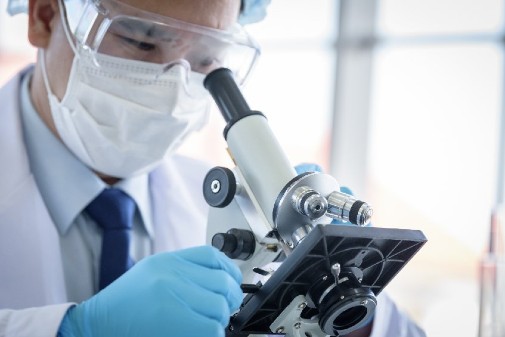
VIVO Biobank is supported by the charities Cancer Research UK and Blood Cancer UK and will provide cancer researchers with a centralised collection of cell and tissue samples from children and young people affected by cancer across the country.
The samples will form a crucially important resource as many children and young people's cancers are extremely rare. This has made it difficult for researchers to access sufficient samples from patients in order to study them.
VIVO Biobank is a merger of two existing biobanks – one dedicated to the study of leukaemia at York and another for the study of solid tumours at Newcastle. The merging of the Banks also allows additional genetic and clinical data to be made available, aiding research into these cancers.
More data
There are around 4,200 new cancer cases in children and young people in the UK every year.
Co-Deputy Director of VIVO Biobank, Professor Alexandra Smith from the Epidemiology and Cancer Statistics Group in the Department of Health Sciences at the University of York, said: “Bringing our biobanks together is going to enable more children and young people to donate samples and along with the additional clinical data provide an invaluable resource for scientists.
"This will make more research possible on prevention, diagnostics and treatments for children and young people with cancer than ever before.”
Leading the way
Director of VIVO Biobank, Professor Deb Tweddle from the Translational & Clinical Research Institute and the Centre for Cancer at Newcastle University said: “This is a huge opportunity for the UK to lead the way in Children’s and Young people’s cancer research by providing a single point of access to researchers for precious samples, particularly for researchers who may want to work on many different types of cancer.
“Around 80% of childhood and young people’s cancer is cured by current treatments and we hope VIVO biobank will promote research for those types not currently curable and lead to the development of kinder treatments for others."
Cancer Research UK’s Children’s and Young People’s Research Lead, Dr Laura Danielson, said: “We have seen great progress in treating children’s and young people’s cancer over the years, but more work still needs to be done. This is why we are proud to be supporting the VIVO Biobank, which will help drive a bedrock of research that will take us to a future where more children and young people with cancer will survive and go on to lead healthy, fulfilling lives.”
Further information
VIVO,funded by Cancer Research UK and Blood Cancer UK, partners with Children’s Cancer &Leukaemia Group
Existing biobanks include: Blood Cancer UK CellBank - biobank for Leukaemia and similar disorders, run by University of York, Epidemiology and Cancer Statistics Group, and Cancer Research UK, Children’s Cancer & Leukaemia Group, Tissue Bank - biobank for solid tumours, run by the University of Newcastle, Wolfson Childhood Cancer Research Centre