Links between railways and slavery to be explored in new research project
Posted on Sunday 10 October 2021
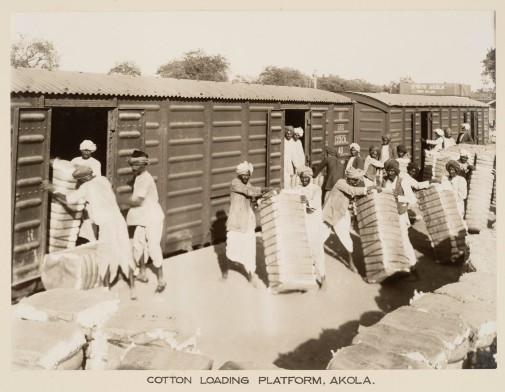
Called ‘Slavery and Steam: steam power, railways and colonialism’ the project has received a grant from the White Rose University Consortium.
The year of funding will stimulate research, build networks, and increase awareness of the links between slavery, steam power and the development of railways in Europe and the colonies.
Colonial legacy
The project was developed by academics from the Universities of York, Leeds, and Sheffield, and curators from the National Railway Museum, the Science and Industry Museum in Manchester and Leeds Industrial Museum.
As part of the project, the team will run a series of workshops, publish a handbook and create digital content such as web articles and blogs to share their findings with the public.
In the longer term, the project will seek to generate peer reviewed research articles and further academic research into Britain’s colonial legacy.
The history and development of the railways has been the subject of considerable research in the past, but according to project lead, Professor Jonathan Finch from the Department of Archaeology at the University of York, there has been little research in this area.
Professor Finch said: “The relationship between steam power and global trade is complex. Steam engines replaced wind power on the plantations and waterpower in British cotton mills, steamboats transported raw materials and goods around the globe.
“Railways were critical to the expansion of colonial power across Asia and Africa, as well as the opening up of the North American interior. Wealth generated in the colonies was a stimulus to industrialisation, long after the abolition of slavery in the UK and US. This project will examine the economic, social and infrastructural legacy of steam and slavery in the late 19th and 20th centuries.”
Untold stories
Dr Oliver Betts, Research Lead at the National Railway Museum, said: “This is the latest in a series of collaborations between the museum and leading academics which will shine a spotlight on the links between slavery and railways. Across the Science Museum Group through projects such as this, we are examining Britain’s colonial past to look again at the stories we tell, the voices we represent, and the challenges we face in presenting complex, hitherto untold stories to the public.”
Dr Kate Pangbourne from the University of Leeds’ Institute for Transport Studies said: “I am delighted to be leading the University of Leeds’ contribution to this ground-breaking interdisciplinary initiative to develop new understandings of the entwined history of steam power innovation, enslavement and colonialism. We have a visible legacy that is revealed in the geography of our ports, rail infrastructure, and industrial landscapes that deserves closer examination. At the University of Leeds, we are contributing expertise in transport studies, mobilities and law.”
Enslavement
Dr Rosie Knight from the University of Sheffield, said: “The University of Sheffield's slavery research hub is very pleased to be part of this project. It promises to make an important contribution to ongoing debates around the relationships between industrialisation, colonialism, and enslavement, as well as bringing to light the day-to-day lives of enslaved, indentured, and free labourers.”
The National Railway Museum has a dedicated research department and in 1995, launched the Institute of Railway Studies in partnership with the University of York. The collaboration has led to numerous opportunities for full-time and part-time study, including a number of shared PhD students whose work broadens public understanding of the museum collections.
Further information
The research grant for £9,000 was awarded by The White Rose University Consortium, a strategic partnership between the Universities of Leeds, Sheffield and York. For more information visit https://whiterose.ac.uk/