Archaeologists to recover lost World War II US bomber crew in West Sussex field
Posted on Friday 2 July 2021
In June 1944, the American B-24 Liberator heavy bomber crashed in a field in Arundel, West Sussex.
Closure
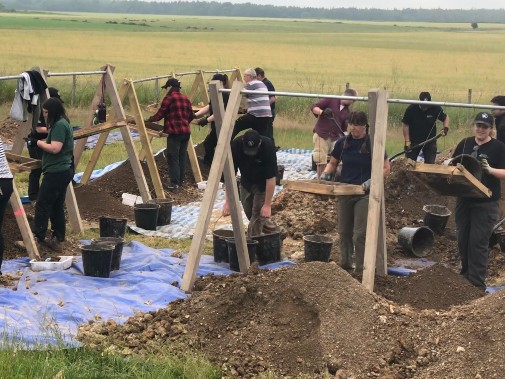
To coincide with the 77th anniversary of the crash, University of York archaeologists are teaming up with the American Veterans Archaeological Recovery (AVAR), the American Defense POW/MIA Accounting Agency, and the local Arundel community to carry out an archaeological excavation of the crash site.
Dr Stephen Humphreys, chief executive of AVAR and a research fellow at the University of York’s Department of Archaeology, said: “Our mission is to recover the remains of those service members who were lost when this aircraft crashed, and hopefully give some closure to some families if we can.”
The team started with a memorial service on Tuesday, June 22, including a flypast with three Spitfires to honour the missing airmen. Excavation work then started with the removal of the top layer, and will continue with excavations going deeper into the ground. The team has already found aluminium wreckage and components.
Mission
The bomber was based at Suffolk and was on a mission near Versailles, where it was hit and damaged by anti-aircraft fire. The bomber lost most of its flying controls but the pilot managed to fly it back to England in a tremendous feat of airmanship.
As it neared the English coastline, the pilot gave the order to bail out. As it flew over Arundel, something happened that caused the aircraft to crash that remains a mystery to this day. Although seven of the crew managed to escape, the three remaining crew were killed.
Now it is hoped the remains of the three men will be found and returned to American soil.
-505x284.jpg)
'Aerial image of the team machine excavating the trench to the lowest depth of the 1944 crash’. Credit: Michael Drummond