Study reveals role of sleep deprivation in unwanted thoughts
Posted on Wednesday 21 October 2020
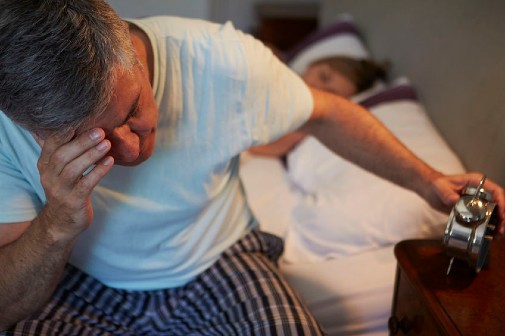
The authors of the study say the findings could have implications for people suffering from psychiatric conditions associated with unwanted thoughts – such as post-traumatic stress disorder, depression and schizophrenia.
The study, from the University of York, tested the ability of participants to suppress intrusive thoughts when they were either sleep deprived or well rested. Sleep deprived participants suffered an increase in unwanted thoughts of nearly 50% compared to those who had a good night’s sleep.
Uncontrollable and distressing
Lead author of the study, Dr Marcus Harrington, from the Department of Psychology at the University of York, said: “In everyday life, mundane encounters can remind us of unpleasant experiences. For example, a car driving too fast on the motorway might cause us to retrieve unwanted memories from a car accident many years ago. For most people, thought intrusions pass quickly, but for those suffering with psychiatric conditions such as post-traumatic stress disorder, they can be repetitive, uncontrollable, and distressing.
“It is clear that the ability to suppress unwanted thoughts varies dramatically between individuals, but until now the factors that drive this variability have been mysterious. Our study suggests sleep loss has a considerable impact on our ability to keep unwanted thoughts out of our minds.”
For the study, sixty healthy participants learnt to associate faces with photographs of emotionally negative scenes (such as an image from a war zone) or neutral scenes (such as an image of a cityscape).
Sleep deprived participants
The following morning, after a night of either sleep or total sleep deprivation, participants were shown the faces and asked to try to suppress thoughts related to the scenes with which they were paired.
Compared to the sleep group, the sleep deprived participants had much more difficulty keeping unwanted thoughts of the emotionally negative and neutral scenes from their minds. While the task became easier with practice for the rested participants, for those who had gone without sleep, thought intrusions remained consistently high.
The sleep group’s success at suppressing unwanted thoughts caused them to view the negative scenes more positively after the suppression task, and they also showed a reduced sweat response when the negative scenes were presented. In contrast, the sleep deprivation group’s failure to keep unwanted thoughts out of mind meant that they did not experience this positive change in their responses.
Sleep and mental health
Senior author of the study, Dr Scott Cairney, from the Department of Psychology at the University of York, added: “This study offers an important insight into the impact of sleep on mental health. Besides post-traumatic stress disorder and depression, our findings might have implications for our understanding of other disorders linked to sleep disturbances, such as obsessive-compulsive disorder and schizophrenia”.
“The study also suggests that the onset of intrusive thoughts and emotional disturbances following bouts of poor sleep could create a vicious cycle, whereby upsetting intrusions and emotional distress exacerbate sleep problems, inhibiting the sleep needed to support recovery”.