Covid-19 exposes inequalities in the UK food system, new analysis reveals
Posted on Monday 6 April 2020
According to the analysis, the COVID-19 pandemic has highlighted stark inequalities in the UK system of food supply and distribution.
The study - published on Emerald Open Research - concludes that food banks and other food aid providers are already at capacity and will struggle to adopt any additional responsibility required of them by central and local government.
Emergency food provision
The report, by University of York academics from the Global Food Security Programme-funded IKnowFood research team, calls on the Government to make changes to social security policy, ‘emergency’ food provision, and urge supermarkets who are experiencing increased sales to pay their employees a Real Living Wage, to help alleviate the problem.
The researchers - with expertise in food insecurity and food supply systems - recommend that households are given cash grants to enable them to buy the food they require, rather than food itself, as Covid-19 has exposed the fragility of the food banking system.
They suggest it may be possible to administer this through hardship funds administered by Local Authorities, although these funds would need to increase substantially for this to be viable.
Food insecurity
Dr Maddy Power from the Department of Health Sciences said: “Millions of households were in poverty before the pandemic, and millions more will be so during and as a result of the pandemic unless the government continues to protect household incomes through additional policy change.
“It is well-established that food banks -- whether independent or affiliated with the Trussell Trust -- and other food aid providers are unable to improve household incomes and mitigate against food insecurity in the long-run. At present, they are fighting on all fronts but, ultimately, struggling in the face of this health and economic crisis.”
The researchers also call on the Government to end the five week wait for Universal Credit and streamline the processing time. They say reducing the time from application to receipt of first payment will ensure that fewer households are reliant on advance payments and therefore facing debt or a longer term reduction in payments at a time when they may already be experiencing increased financial difficulties.
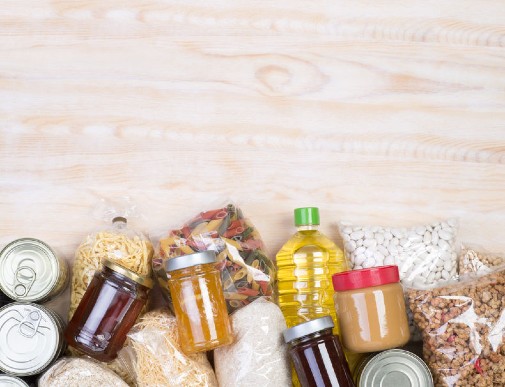
The paper explores emerging fragilities within the food aid system including the social and economic crisis surrounding Covid-19 which has jeopardised food supply chains. Individual food donations have dropped sharply as households prioritise their own food supply, while many food banks are unable to purchase the non-perishable items required for standard food parcels, due to supermarket rationing and the poor availability of much of this produce as a result of stockpiling.
Vulnerable groups
Dr Power added: “The Covid-19 pandemic has revealed the profound insecurity of large segments of the UK population; increased unemployment, reduced hours, and enforced self-isolation for multiple vulnerable groups is likely to lead to an increase in UK food insecurity, exacerbating diet-related health inequalities.
Prof Bob Doherty also explained: “The social and economic crisis associated with the pandemic has exposed the fragility of the system of food charity which, at present, is a key response to growing poverty. A vulnerable food system, with just-in-time supply chains, has been challenged by stockpiling.
“Resultant food supply issues at food banks, alongside rapidly increasing demand and reduced volunteer numbers, has undermined many food charities, especially independent food banks.”