York awarded £6m to investigate the role food systems play in the health of children and the environment
Posted on Monday 28 December 2020
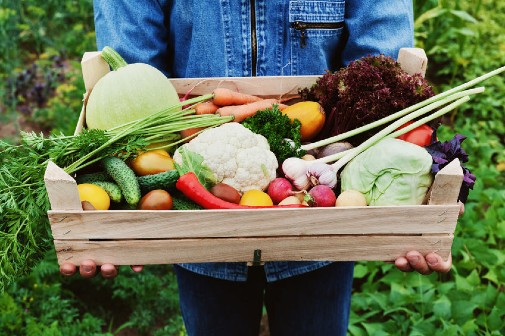
Researchers will look at healthy eating interventions in schools and nurseries, food retailing, food procurement and farming to address issues such as childhood obesity, sustainability in agriculture and global warming.
The five year research programme called 'Transformations to Regenerative Food Systems (TReFS) will also look at how regenerative farming - which promotes biosystems health – can help achieve both healthier populations and environment in the future.
Dietary health
Professor Bob Doherty from The York Management School said: “This research programme will bring together expertise from partners who are committed to shifting our food system to one which prioritises dietary health in young people, and builds a more diversified hybrid food economy which sources produce from farmers that promote increased soil health, carbon sequestration and biodiversity.
“TReFS will do this by a set of innovative interventions in Yorkshire schools and nurseries to change food environments and menus, scaling-up new community businesses, new models of regenerative farming, new measures and new policies. Working with our national and international partners, we will catapult our transformations beyond Yorkshire to impact the broader UK food system”.
The York-led project is part of a larger £24 million programme which will also focus on research including hydroponics, where plants are grown without soil. Researchers will also look at how transforming food systems in communities encountering multiple health and environmental inequalities can improve lives.
Environmental
Professor Guy Poppy, Programme Director of the Transforming the UK Food System SPF Programme said: “Never before has the role that the food system plays in both environmental and human health been so centre-stage. Major issues facing humanity such as addressing climate change and building back better post-Covid will be essential in improving health and wellbeing.
“Every single person in the UK will benefit from this research and we will ensure that the best evidence is generated to answer and offer solutions to the questions which matter and the decisions which need to be made in Transforming the UK food system.”
Four projects - including the one led by York - have been funded by the UK Research and Innovation (UKRI) Strategic Priorities Fund (SPF). Bid development and submission was supported by the York Environment Research Institute.
York will be working with Leeds, Manchester, Oxford, City and Cranfield Universities and 21 partner organisations.