Brain mapping: How deaf adults brains re-wire to boost ‘danger radar’
Event details
York Disability Week Lecture
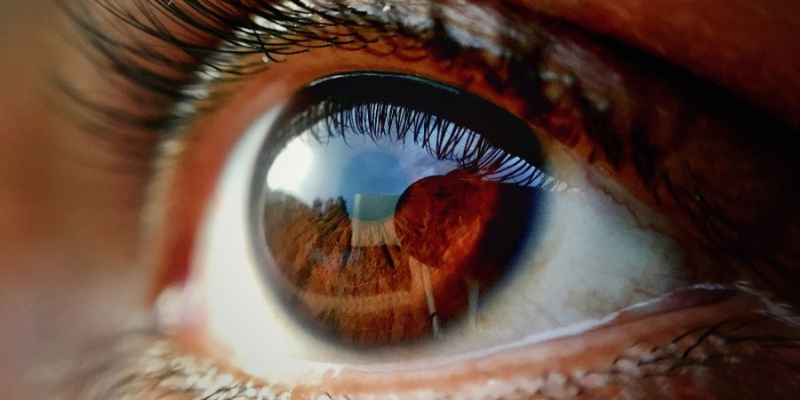
Join Dr Heidi Baseler, from the University of York and Professor Charlotte Codina, from the University of Sheffield; for an online lecture sharing their scientific findings that lifelong deafness causes the brain to shift its processing power, boosting how well a person can see out of the corner of their eye.
Learn more about brain mapping and the study ‘Retinotopic remapping of the visual system in deaf adults’ and how this was conducted by researchers at the Universities of York and Sheffield. Find out why deaf people are often particularly skilled at spotting motion and events outside their direct line of vision, giving them a distinct advantage when monitoring their surroundings for potential danger.
This lecture is part of York Disability Week. a week-long programme of events taking place within Disability History Month and supported by York Human Rights City Network.
This programme coincides with the UN International Day of Persons with Disabilities on 3 December, the aim of which is to promote the human rights and well-being of people who identify as disabled or as having an impairment in all spheres of society and increases awareness of their situation in every aspect of political, social, economic and cultural life.
About the speakers
Dr Heidi Baseler is a neuroscientist and Senior Lecturer at the University of York in the Hull York Medical School. Originally from the United States, she completed her undergraduate degree in Biology at Dartmouth College and a PhD in Vision Science at the University of California, Berkeley. Her research focuses on understanding how the brain adapts to changes due to disorders such as sensory loss (e.g., vision and hearing loss) and more recently, to COVID-19. She combines behavioural testing with non-invasive neuroimaging techniques (e.g., MRI, EEG) to measure changes in the brain, eyes and behaviour in human participants with vision or hearing loss, and special populations with other disorders such as long COVID. She also studies aspects of basic human vision such as how we process colour and pattern information.
Professor Charlotte Codina is the Professional Lead for Orthoptics and Ophthalmology at the University of Sheffield. Charlotte oversees pre-registration and postgraduate degree programmes, educating UK and global eye-care practitioners. Qualifying as an orthoptist in 2003, her clinical career spans several UK hospitals, including Moorfields, Sheffield Teaching Hospitals, and Sheffield Children’s Hospital and international practice in South Africa and Mozambique. Since completing her PhD in 2008 and entering academia, she teaches across multiple degree levels and supervises postgraduate research. Charlotte’s research focuses on visual system plasticity and adaptation. Of particular interest to her is investigating how profound congenital deafness impacts the whole of the visual system. Charlotte has also studied the visual system in autism, ADHD, and visual vertigo, alongside key interests in peripheral vision and amblyopia.
Partners