
IMRY workshop sets priorities for research on sleep and gambling harm
Posted on Thursday 18 June 2026

The stakeholder workshop was organised as part of BETTER (Behaviour, Environment and Technology in Tiredness and Excessive Risk), an interdisciplinary research programme led by the Institute of Mental Health Research at York (IMRY). BETTER is exploring whether improving sleep could help to prevent and reduce gambling harm and support recovery.
Although sleep problems are increasingly recognised as an important influence on physical and mental health, their relationship with gambling remains poorly understood. Gambling can disrupt sleep through stress, anxiety and repetitive thinking, while poor sleep may make it harder for people to regulate their emotions, resist impulses and consider the longer-term consequences of gambling.
Through round-table discussions and interactive activities, workshop participants considered future research priorities across three themes: Behaviour, Environment and Technology. Conversations explored topics including decision-making, emotional regulation, loneliness, shift work, financial pressures, round-the-clock access to online gambling and the growing influence of smartphones and digital advertising.
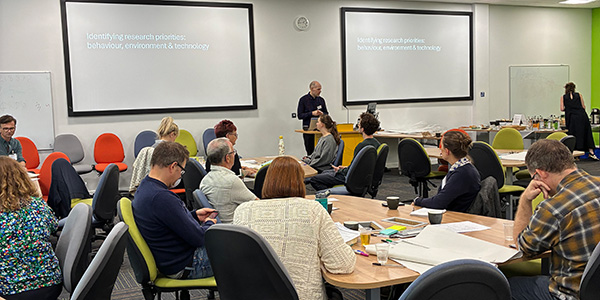
Professor Scott Cairney, IMRY Director, leading the workshop.
A key message was that these factors do not operate independently. Participants described how poor sleep, emotional distress, social and environmental pressures and easy access to digital gambling platforms can reinforce one another. Late evening and overnight periods were identified as potentially important times of vulnerability, when tiredness may coincide with fewer natural barriers to gambling.
Professor Scott Cairney, Director of IMRY and Principal Investigator of BETTER, said: “Sleep problems and gambling harm can become locked in a damaging cycle, but we still know far too little about how that cycle develops or how best to interrupt it. Addressing this gap requires us to draw on many different forms of knowledge.
"By developing our research priorities with people who have lived experience of gambling harm, practitioners, charities, policymakers and researchers, we can ensure that our work reflects the diversity of people’s needs and the questions that matter most.”
The workshop also highlighted opportunities for prevention and intervention. Participants discussed whether improving sleep could strengthen emotional resilience, support better decision-making and complement existing gambling treatment services. Technology was viewed as both a source of risk and a possible part of the solution, with suggestions including overnight account restrictions, digital blocking tools and personalised reminders.
The workshop marks an important first step in building a shared research agenda for BETTER. Its findings will guide future interdisciplinary research aimed at understanding how sleep can contribute to the prevention, treatment and reduction of gambling-related harm.