IMRY Research Showcase Event - September 2026
Posted on Tuesday 29 September 2026
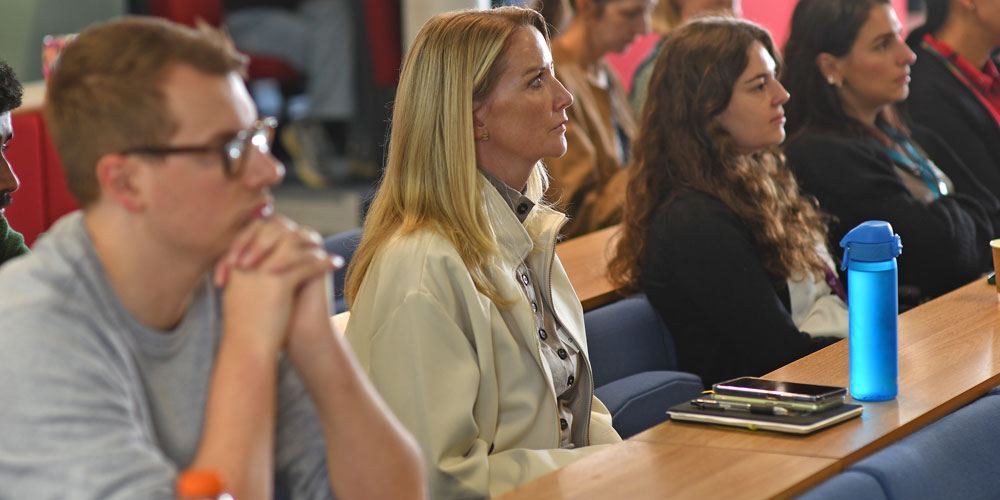
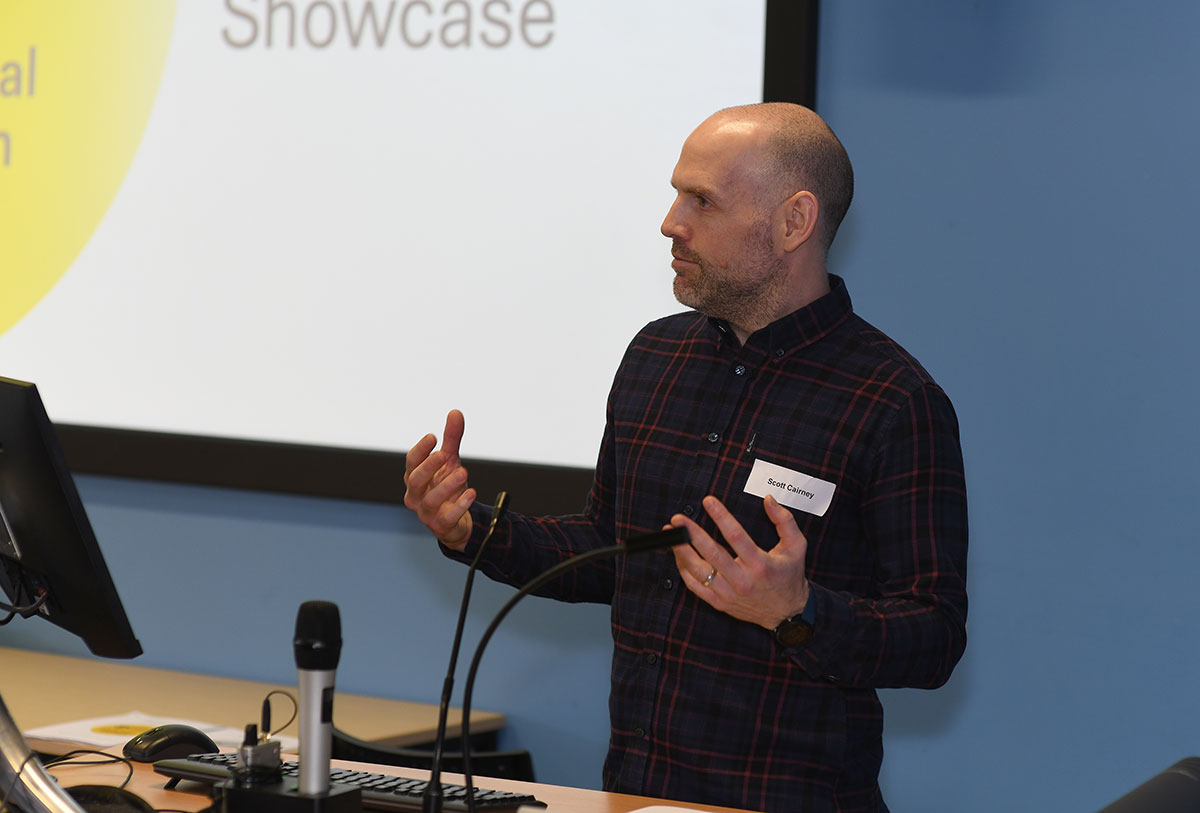
Over a hundred attendees from across the University of York and its external partners were greeted by a welcome address from the Director of IMRY, Professor Scott Cairney. He highlighted the core objective of both the conference and the broader IMRY initiative: building a cross-disciplinary research community that fosters new collaborative projects by sharing opportunities, methodologies and ideas to tackle global mental health challenges. Scott noted that the conference had already made significant strides towards this goal, pointing to the impressive turnout of fifteen participating departments in the research showcase.
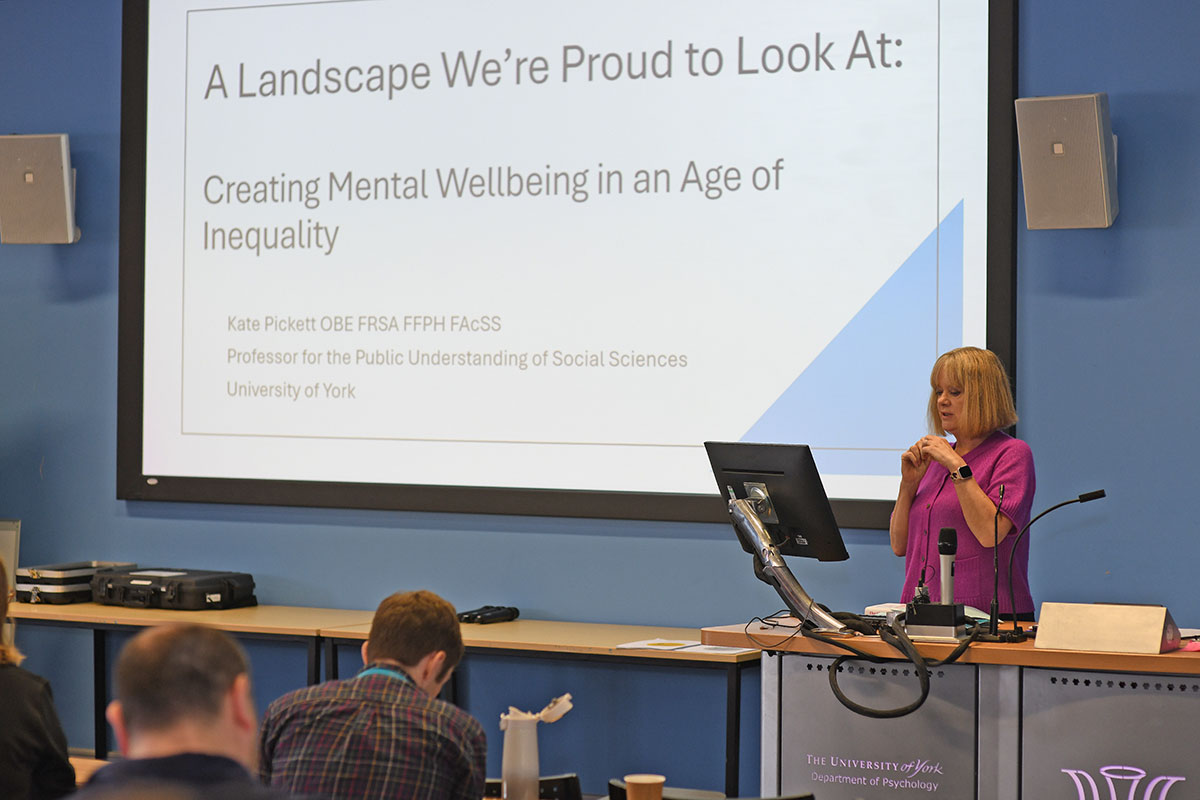
The Showcase kicked off with an engaging keynote from Professor Kate Pickett OBE, a Professor of Epidemiology and Director of the Born in Bradford Centre for Social Change at the University of York. Kate is the co-author of The Spirit Level, a book about the impact of inequality on societal outcomes, named by the Guardian as one of the top 100 books of the century. Kate’s talk mirrored the themes addressed within this book, focusing on systematic prevention of mental ill-health by addressing root social causes and inequality, such as poverty and early childhood environments. Kate suggests that targeting such root causes delivers compound benefits, transforming population health, mental health, reducing crime and helping to build a flourishing society.
Session one discussed the use of creative and digital methods in mental health research. The talks referenced a wide variety of creative avenues to research mental health concerns such as digital methods discussed by Lewis Paton (Hull York Medical School), music technology outlined by Caroline Waddington-Jones (School of Arts and Creative Technologies) and novel writing alongside critical analysis of historical documents from The Retreat, York (one of the first mental health asylums to focus on compassionate ‘moral treatment’ of mental illness) presented by Tom Spencer (Department of English and Related Literature). This session finished with a powerful monologue co-created by a group of adolescent boys at Inspire Academy and introduced by Emma Standley (Department of Health Sciences). The conference heard a dramatised version of this monologue, which focused on challenging perceptions of adolescent boys. This was performed live by James Lewis-Knight from Next Door But One.
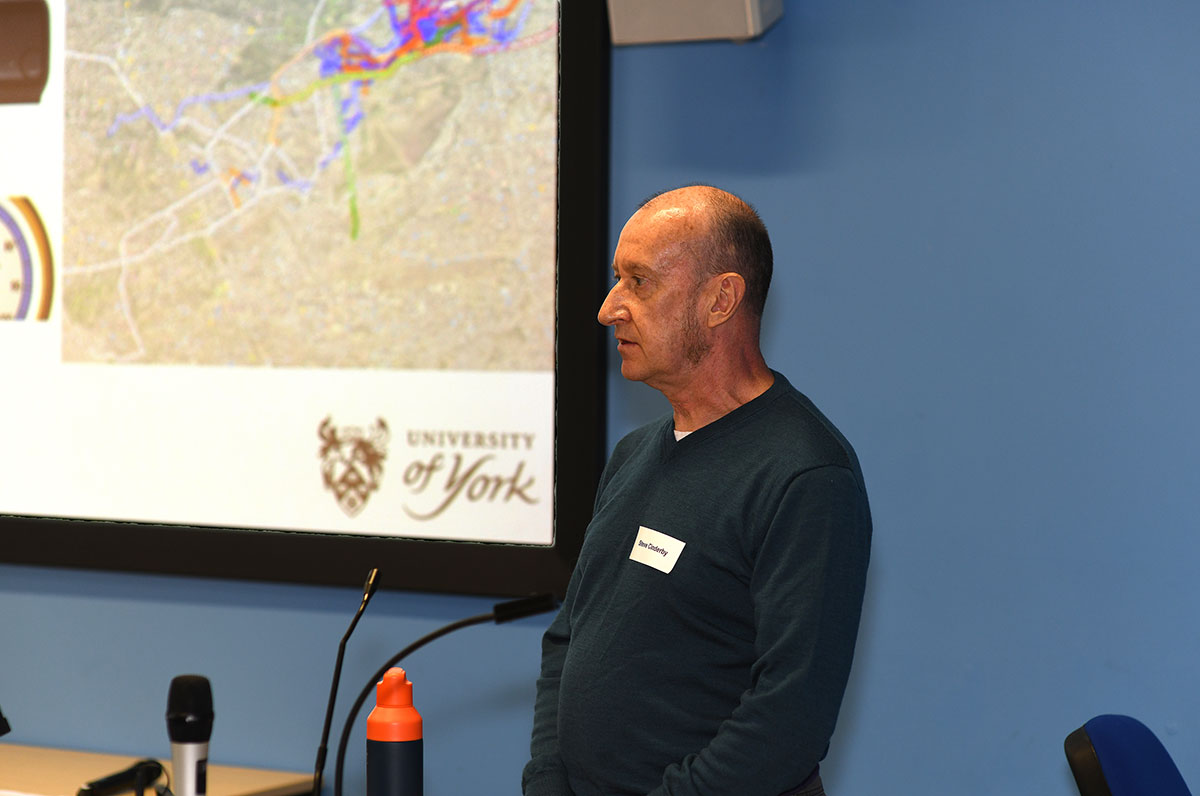
Session two spoke to diverse experiences and contexts in mental health. This included a diverse range of talks featuring research that cut across genders, ages, cultures and mental health concerns. Talks in this session discussed dual harm in young men in prison settings Lindsay Thurston (Department of Health Sciences); the negative appraisal of gastric sensations within disordered eating presented by Lucy Stafford (Department of Psychology); the impact of disability benefit reform on the mental health of older adults presented by Suzanna Nesom (Department of Economics); the impact of urban environments on the health and wellbeing of those living in Kenyan cities presented by Steve Cinderby (Stockholm Environment Institute); reducing inequalities in child and adolescent mental health presented by Joshua Stubbs (Department of Education) and finally unusual sensory experiences presented by Rob Dudley (Department of Psychology).
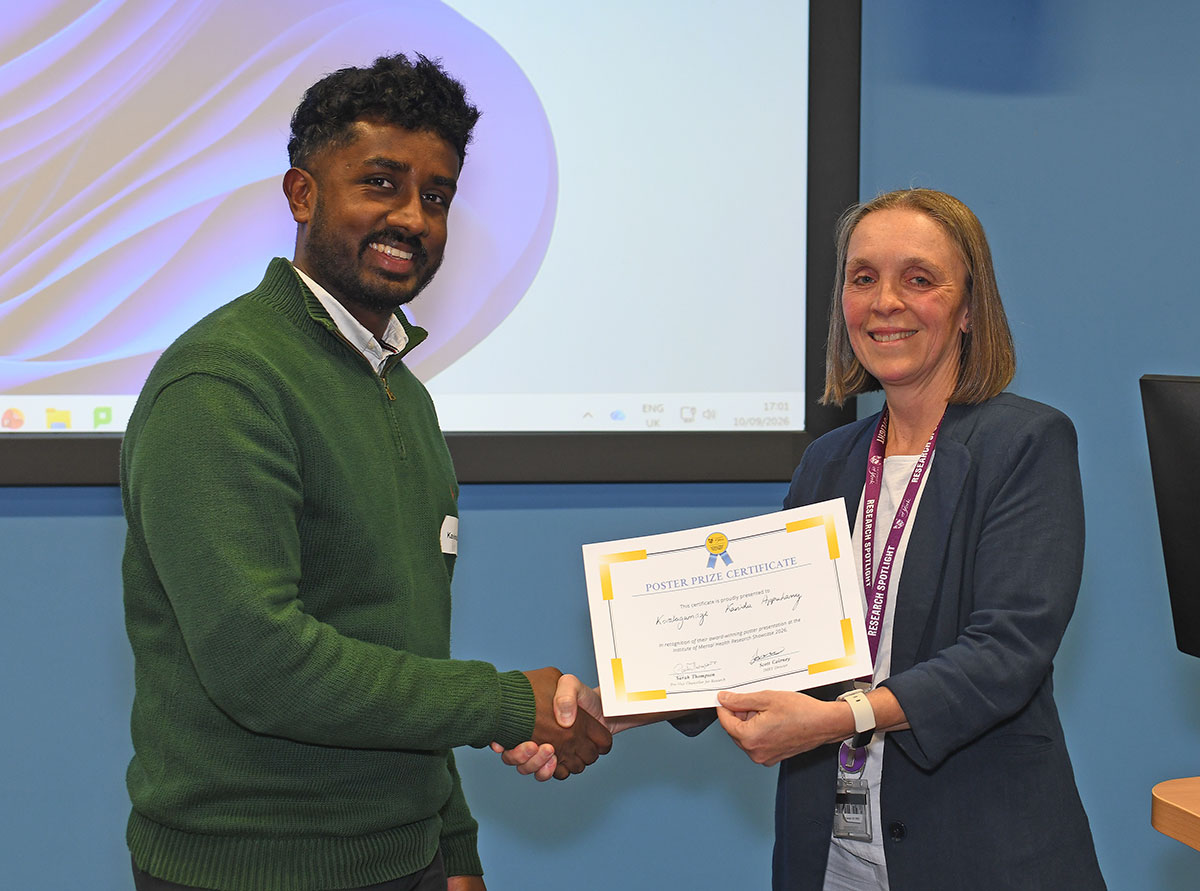
During the lunch break, attendees had the opportunity to explore the poster presentations and connect with researchers to discuss their work. There were 26 posters presented by individuals from nine departments. Poster prizes were also given to Catherine Preston (third place), Camila Piccolo-Lawrance (second place), and, last but not least, Koralagamage Kavindu Appuhamy receiving first place poster prize for his poster entitled ‘Exploring the barriers and facilitators to sustained engagement with mental health services for South Asian people in the UK’.
Session three, titled ‘No man is an Island’, highlighted how individual mental health, trauma and recovery is deeply connected to social context, community support and external intervention.
This session bridged multiple fields from philosophy to business and social policy, highlighting the shared goal across departments of addressing the diverse impacts of mental health. Talks within this session discussed: Loneliness, memory and trauma Robert Davies (Department of Philosophy), treatment resistant depression Chandani Nekitsing (School for Business and Society), emergency responses to self harm Eva Liu (Centre for Reviews and Dissemination) and the impact of employment advice within NHS talking therapies Adrián Villaseñor (Centre for Health Economics).
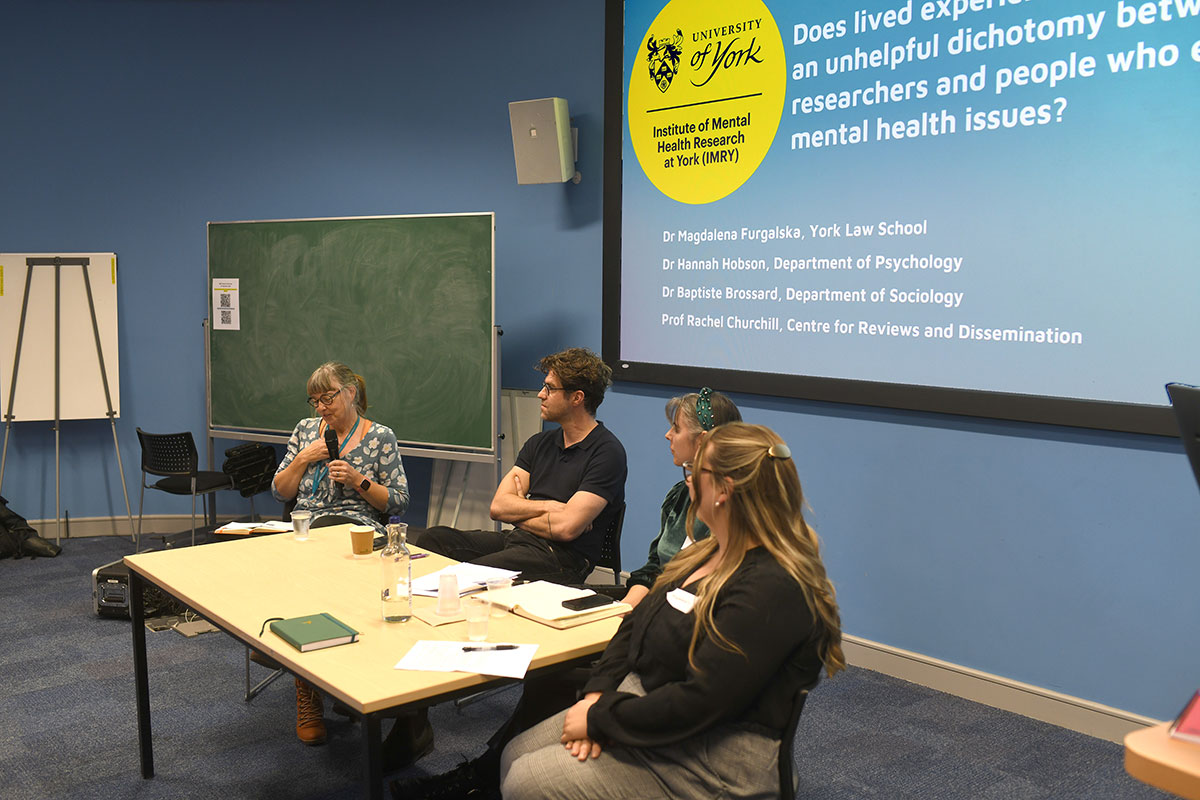
To close the day, there was a panel discussion about whether lived experience research creates an unhelpful dichotomy between researchers and people who experience mental health issues. The panel included Magdalena Furgalska (Department of Law), Hannah Hobson (Department of Psychology), Baptiste Brossard (Department of Sociology), and Rachel Churchill (Centre for Reviews and Dissemination). This was an insightful discussion which highlighted the importance of lived experience perspectives. However, discussions highlighted ongoing concerns with how lived experience contributions are currently framed and implemented within research, and how the infrastructure and academic ecosystem do not always support true lived experience coproduction. It is frequently criticised as a tokenistic box-ticking exercise, signalling the need for an urgent shift towards a truly reciprocal relationship. This sparked animated debate and drew enthusiastic participation from the audience.
IMAGES FROM THE EVENT
All pictures by Paul Shields.