
Celebrating 50 years of Structural Biology at York
Posted on Monday 22 June 2026
Structural Biology at York
Structural biology is the study of biomolecular structure. Because bonds in molecules are less than a billionth of a metre in length, advanced biophysical techniques are used to determine the arrangement of atoms in biomolecules. From the beginning, YSBL was a centre for development of x-ray crystallography, the first and still most widely used approach. Building on these foundations, pioneering methods to analyse and visualize biomolecular structure were developed and members of YSBL started to use crystallography to understand biology more widely. Later, YSBL diversified. Its focus on chemical detail developed into a multi-group program in chemical biology for the development of chemical tools to probe biology. And, cryogenic electron microscopy was established, allowing direct visualisation of biological molecules.
The Eleanor and Guy Dodson Building opened in 2021, thanks to support from the Wolfson Foundation, Wellcome Trust, BBSRC, and an early graduate of the Chemistry Department, Dr Tony Wild. This building houses YSBL’s advanced structural hardware in optimal conditions and provides a perfect home for the experimental structural biology arm of YSBL.
Real world application
Advances in fundamental science can be inspired by and provide solutions to real-world problems. The expertise and methods developed in YSBL has been the foundation for many productive, symbiotic collaborations with pharmaceutical and biotechnology companies. Examples include Novo Nordisk who developed fast and slow acting insulins for controlling diabetes, Novozymes on different industrial enzymes that act in environmentally friendly biological washing products and KaroBio to understand how the female sex hormone estrogen changes biological function, inspiring new generations of drugs to treat cancer. In addition, the methods developed in YSBL were taken forward in companies such as Accelrys for molecular modelling and Vernalis for fragment-based drug design.
Education and training
Members of YSBL have always been active in teaching the Chemistry and Biochemistry undergraduate courses. Many of these students have gone on to do their final year projects in YSBL with many progressing to further study in structural biology. YSBL also led the development of various Masters programs and has run many courses that train academic and industrial scientists from around the world in the methods developed in York.
Statistics
Over its lifetime, YSBL has been home to 16 academics, 65 support staff, 155 postdoctoral scientists and 255 PhD students. This effort has been sustained by about £160m of external funding and resulted in more than 1950 publications that have accrued ~125,000 citations.
The future
Recently, five research fellows have joined YSBL to start their own groups as members of both the Department of Biology and Chemistry. As structural biology is now a well established discipline, the focus moves from the determination of biomolecular structure to understanding how molecules come together to create a living cell. This understanding is one of grand challenges of modern science. It will also be essential to understand the complex molecular underpinnings of diseases in humans and to allow the engineering of biology in bacteria and plants.
A 50th birthday party to remember
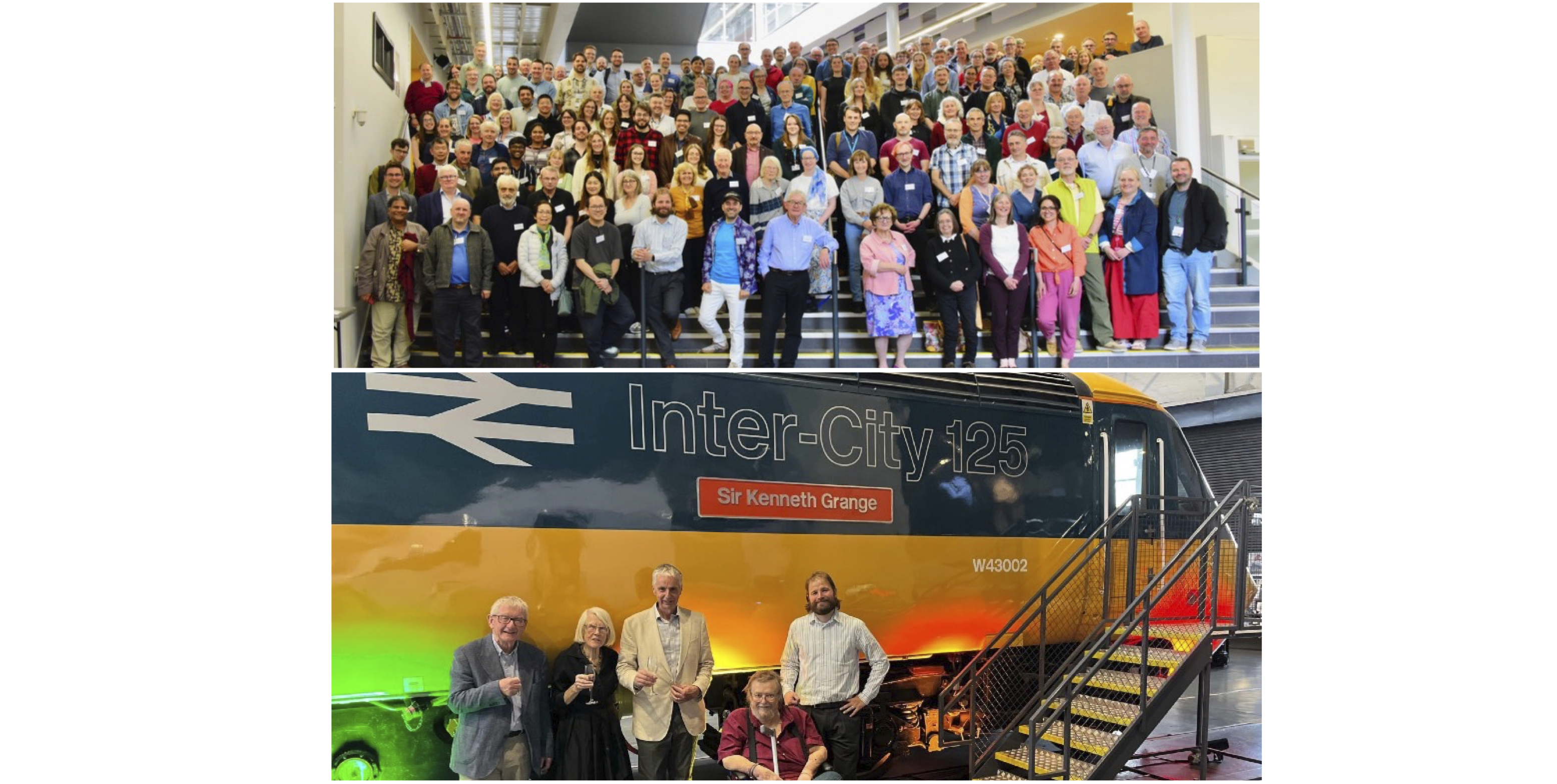
YSBL shares its 50th anniversary with the iconic Inter-City 125 train housed at York's National Railway Museum. But while both share a proud history, unlike the 125, YSBL’s future is definitely not in a museum. Instead, YSBL is moving ahead into its next half-century. Armed with cutting-edge technology and a new generation of brilliant scientists, YSBL remains on the fast track to unlocking the complex molecular secrets of life.