
Student contributes to Cries in the Desert Exhibition
Posted on Monday 13 April 2026
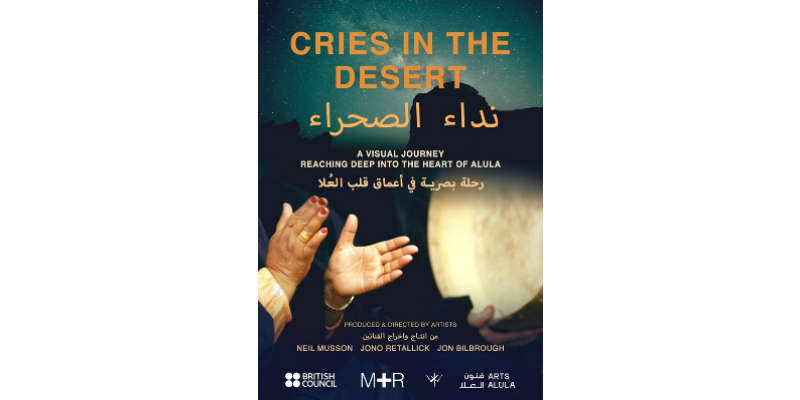
As an Archaeological Consultant, Mohammed selected culturally and historically meaningful filming locations within AlUla, facilitated access to local elders, families, and women performers, ensured cultural and historical accuracy in representation, provided archaeological and heritage research to inform narrative structure and translated and mediated between artists and community members. As a local archaeologist from AlUla and a postgraduate student at the University of York, Mohammed acted as a bridge between international artists and the community, striving to ensure that the exhibition reflected local perspectives rather than external interpretations.
The installation was presented on the ground floor of a traditional old house in AlJadidah Arts District, reinforcing the connection between built heritage and lived cultural memory. The exhibition was structured across four rooms with six short films exploring layers of AlUla’s landscape and identity as well as two sound installations, where visitors sat individually with headphones to listen to recorded voices, conversations, and singing from local people in AlUla. This immersive format was intended to allow visitors not only to watch but to feel embedded within the community experience. The six film sketches move vertically through AlUla’s landscape — from Balhah (Below the Surface) and the life-giving springs, through paths, voices, trees and mountains, and ultimately to Tamara (Beyond the Sky). Each title reflects one of the six phases of the date palm, connecting natural cycles with cultural memory. A central element was the recording of Hadwa, a women’s harmonica wedding tradition specific to AlUla and rarely documented digitally. By presenting these performances within the installation, the project contributed to safeguarding a fragile form of intangible heritage.
Mohammed explains how his studies in York prepared him to contribute to the project:
"My academic courses “BA in Archaeology & Heritage and an MA in Cultural Heritage Management” at the University of York, directly shaped how I approached Cries in the Desert and the practical choices I made throughout the project. From York I learned to treat heritage as a lived, social practice, so I used participatory outreach methods to design respectful home visits, negotiate informed consent, and make sure local voices, elders and women musicians in particular, were central to the film and sound rooms rather than being passive subjects. My undergraduate training in archaeological field-methods and historical analysis guided the selection of filming locations (old houses, springs, groves and other vernacular settings): I prioritised places with layered evidence of past activity and provided contextual captions grounded in that research.
Courses on interpretation and public presentation helped me work with the artists to balance strong aesthetic choices with cultural meaning, ensuring images, sequences and soundscapes conveyed a genuine sense of place while remaining accessible to outside audiences. The MA’s focus on intangible heritage influenced how we recorded Hadwa: I advised on ethical audio/video documentation, archiving workflows and community access so the recordings could be preserved for local use and future study. Training in stakeholder engagement and heritage ethics shaped the consent procedures, translation choices and mediation strategies I used between artists and participants so the collaboration avoided extractive practices.
York’s emphasis on media-based and sensory interpretation also informed the decision to create two immersive film rooms and two dedicated headphone sound rooms; I contributed technical and interpretive recommendations for audio editing, metadata and presentation so that recordings are discoverable and useful for both research and community audiences. Finally, research methods taught across both degrees — from field recording to archival work and structured report writing — enabled me to integrate insights from my undergraduate dissertation into the film’s narrative and to prepare concise briefing materials for publicity and academic exchange.
Together, these academic experiences strengthened my ability to translate archaeological knowledge into public-facing outputs, mediate cross-cultural collaborations, and design ethical documentation and archiving workflows — skills that helped make Cries in the Desert both artistically compelling and firmly rooted in local heritage values."
A significant highlight for Mohammed was being able to meet HRH Prince William during his visit to AlUla, and to be able to present the installation and discuss its six-part structure, the immersive sound experience, and the importance of documenting Hadwa and oral histories. The meeting coincided with the announcement of the Saudi–British Cultural Year 2029, highlighting cultural diplomacy and collaboration between the UK and Saudi Arabia.