
New project to investigate the impact of microplastics on in situ archaeological deposits
Posted on Friday 3 April 2026
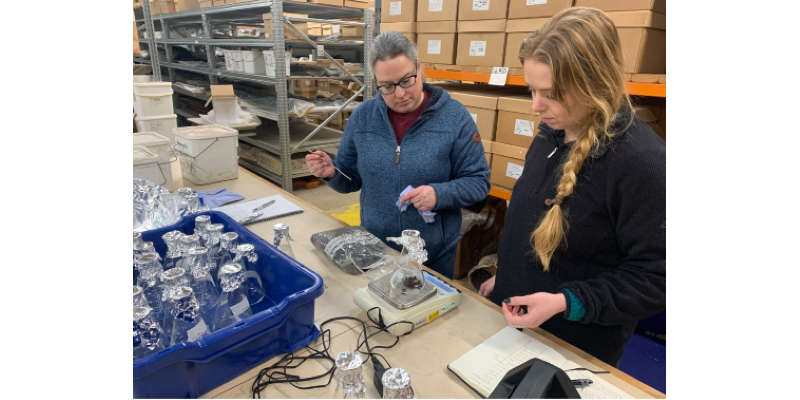
John Schofield has been successful with his application for UKRI funding, through the Arts and Humanities Research Council, for a project entitled 'Challenging the Preservation Paradigm: The Impact of Microplastics on the Integrity of Archaeological Soils and Sediments.'
Working with Professor Jeanette Rotchell (University of Lincoln), Professor Will Mayes (University of Hull), and Dr Paul Flintoft (York Archaeology), and following a Historic England-funded pilot study, 'Micro-Past' will investigate the impact of microplastic contamination on buried archaeological deposits. The project has four research objectives:
- To establish how widespread is microplastic contamination, how variable it is, and what causes this variability.
- To determine the archaeological and heritage management implications of this contamination. For example, using archived soil samples and experimentation, to question whether microplastic contamination accelerates geochemical/microbial attack on buried archaeological deposits and compromise the data they contain?
- To create a measurement scale for heritage managers, mapping the risk of deterioration associated with different levels of microplastic contamination.
- To identify priorities for remedial action which may include the recovery of archaeological or paleaoenvironmental samples from deposits at highest risk before valuable information is destroyed or damaged beyond recovery.
This timely project will generate new data that inform key policies that will support heritage management practice. This will help to directly address Historic England’s guideline that states: ‘Critical to the success of any preservation in situ scheme is that the below-ground environment is understood fully....’. The principle of in-situ preservation is applied in many countries, giving this project relevance beyond the UK.