
An Overview of the world's largest cuneiform catalogue published in Arabic
Posted on Thursday 8 October 2026
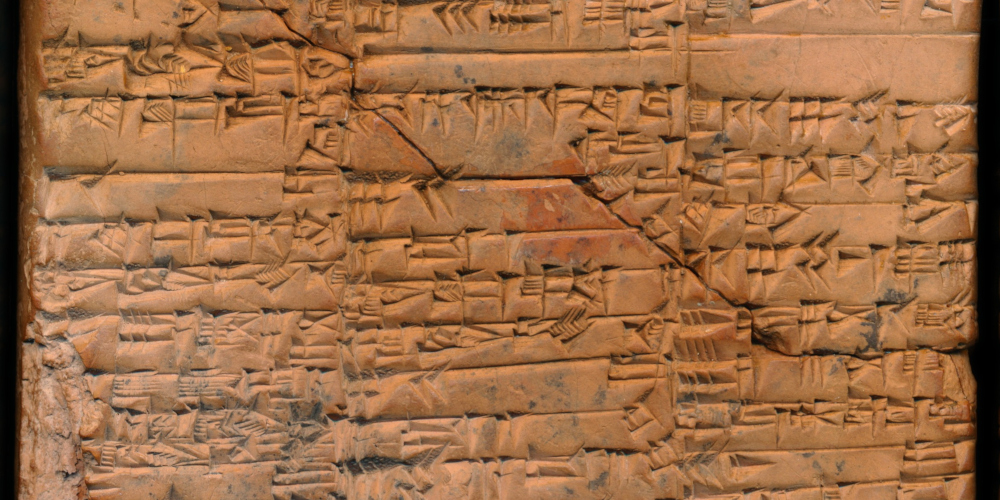
The Cuneiform Digital Library Initiative is the reference catalogue for cuneiform inscriptions, the earliest writing in the world. It records close to half a million clay tablets and other inscribed objects from ancient Iraq and neighbouring regions, with photographs, transliterations, translations and information on where each object was found and where it is kept today. Dr Pagé-Perron of the Archaeology Data Service, Department of Archaeology, co-directs the CDLI with colleagues at the University of Oxford, The French National Centre for Scientific Research and the Max Planck Institute of Geoanthropology.
The article gives an overview of the CDLI: its history since 1998, the structure of the catalogue, how to download and reuse the data, and how users can contribute to it. It is published in the Isin Journal for Archaeology, History and Ancient Languages, a peer-reviewed journal of the Faculty of Archaeology at the University of Al-Qadisiyah, in a special issue in memory of the Iraqi archaeologist and former Minister of Culture Dr Abdulamir Al-Hamdani.
Most cuneiform tablets were found in Iraq, and Iraqi scholars publish on them in Arabic, but the international reference tools have long been available only in English. The article, like the Arabic interface the CDLI launched this year, was written in Arabic for students and researchers in Iraq and the region.
Rattenborg, R., Pagé-Perron, É., Dahl, J. L., Lafont, B. and Renn, J. 2026. The Cuneiform Digital Library Initiative (CDLI): a free database of all cuneiform texts. In Journal for Archaeology, History and Ancient Languages, Special Issue 2026.