
Exploring human-nature relationships in Bangladesh’s city parks
Posted on Thursday 28 May 2026
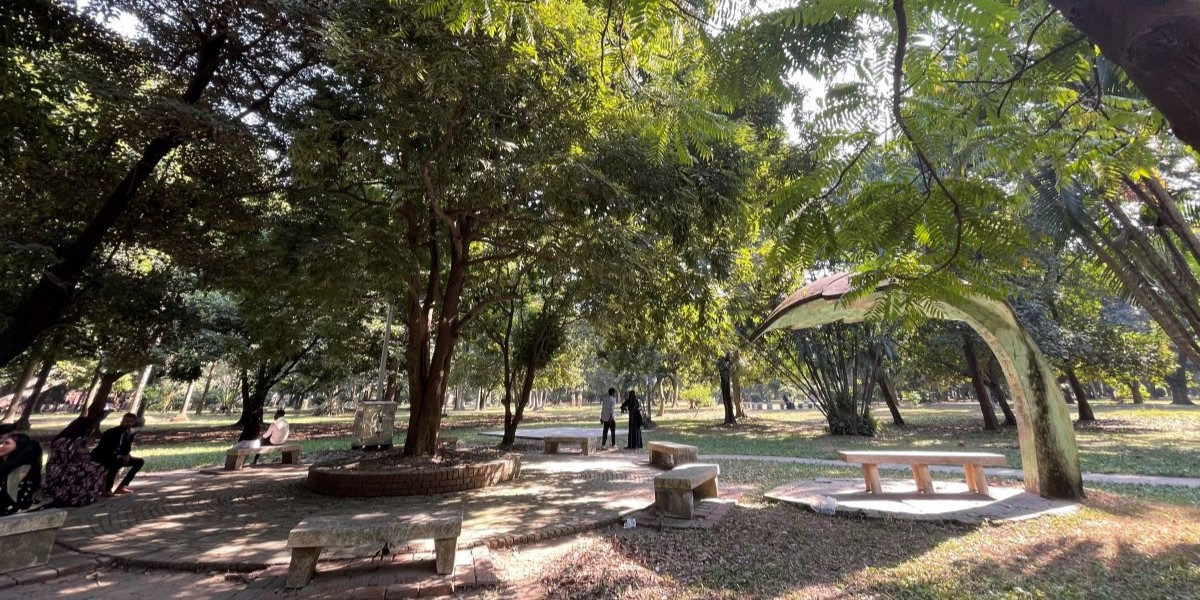
Many research papers on urban green spaces preface their study with a statement along the lines of, “urban green spaces are crucial for health, biodiversity and the environment”. However, the intersection of all three themes are actually rarely investigated, especially in the Global South. In my PhD, I hope to buck this trend with a case study in Bangladesh, but not without first experiencing the environments and meeting some of the people I’ll be working with. In 20 days, I visited four major cities: Dhaka, Khulna, Chattogram and Sylhet, eight universities, and 25 urban green spaces. These were mainly large public parks, but also university campus grounds which are common places for the public to visit, two peri-urban eco-parks, and a working tea farm, popular for taking photos at. Accompanied by researchers at ARK Foundation, a Dhaka-based NGO dedicated to sustainable socio-economic development in Bangladesh, I had the privilege of meeting experts and students working in the fields of public health, zoology, botany, urban planning, ecosystem services, Nature-based Solutions and One Health, as well as members of the public.
I wanted to ask the questions:
- “Are urban green spaces important for Bangladesh?”
- “Are green spaces important to you personally?”
- “What about urban green spaces are important?”
- “How can I, as a PhD student, add value to urban green space research in Bangladesh?”
Of course I received a huge diversity of answers, dependent on personal experiences, priorities and cities, however the resounding answer to my first question was “Yes, absolutely!”. Many people told me that parks are peaceful places to escape the chaos of the city, breathe clean air, exercise, and spend time with friends and family. They also told me about wider environmental benefits, such as mitigating the effects of climate change and increasingly concerning extreme weather, as well as being some of the few remaining refuges for wildlife within the city. I observed older people exercising, young couples and friend groups hanging out and taking photos, families with children playing and exploring, teens playing sports, and many people resting or walking quietly alone. I met some keen birders, who helped me spot over 30 species of bird, as well as many butterflies, fish, and a whole colony of flying foxes. Some of the trees were big enough to provide shade for dozens of people, and the intense traffic noise often disappeared within just a few minutes into the parks.
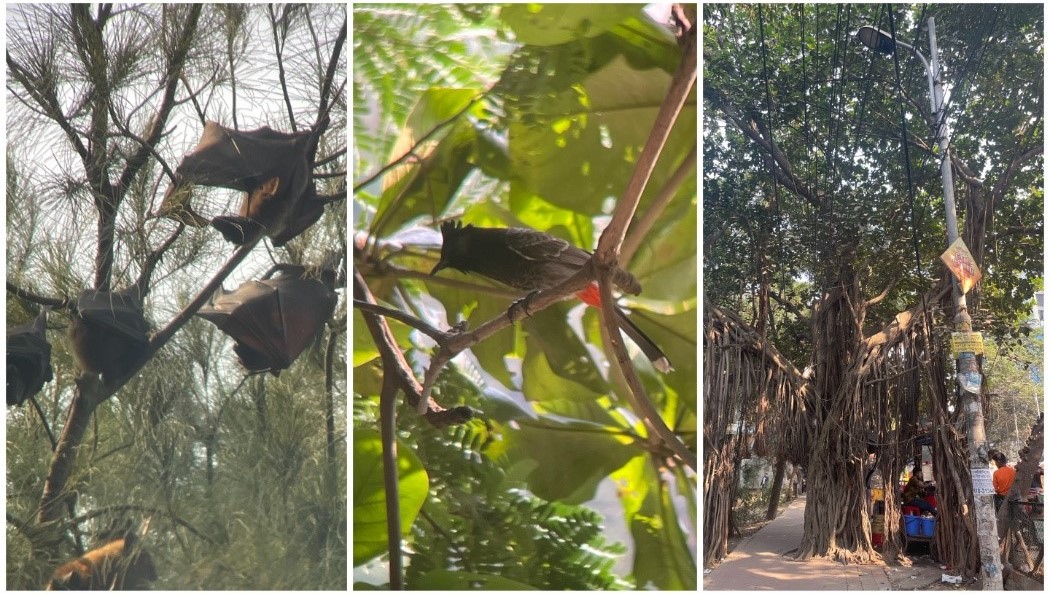 Flying foxes, red-vented bulbul, and a banyan tree with a pathway and street seller’s stall integrated within.
However, some people told me that in their already stressful lives, sitting in traffic to reach a park negates the calming effect of being in nature. Some people are deterred from visiting parks if they feel they are unsafe, unmanaged or untidy, and others simply prefer to spend their time doing other things. Indeed, during extreme heat waves, monsoon rains or high pollution days, air-conditioned inside spaces can be understandably more appealing than a park. The ecological state of many parks was also not always ideal; while their design and management maintains their multi-functionality, this can be in conflict with biodiversity, such as the burning of fallen leaves, vertical concrete lake boundaries, and large infrastructure encroaching on vegetation. Some parks were simply not large enough provide necessary ecosystem services, with traffic noise ever present, high visitor density and low vegetation diversity and structure. One person who grew up in a highly forested and biodiverse region told me he never bothers visiting such places as they are so unnatural compared to home.
After many observations and conversations, I certainly learned that urban parks in Bangladesh can provide benefits to health, biodiversity and the environment, but the contexts and nuances are complex. There is a wealth of existing knowledge and ongoing research in urban ecosystems in Bangladesh, coming from every angle and from many brilliant people. The trees of Dhaka and Chattogram and their ecosystem services have been comprehensively mapped, Khulna is part of the Flying foxes, red-vented bulbul, and a banyan tree with a pathway and street seller’s stall integrated within.
WHO’s Healthy Cities Initiative, and the IUCN has created a Compendium of Urban Nature Based Solutions for Bangladesh. Everyone I met was keen to inform, support or collaborate on any research I plan for my PhD, which will involve surveys of park visitor perceptions, bird and butterfly diversity, microclimate, air pollution and carbon sequestration. I’m excited to see how this project develops and the results from many collaborations.
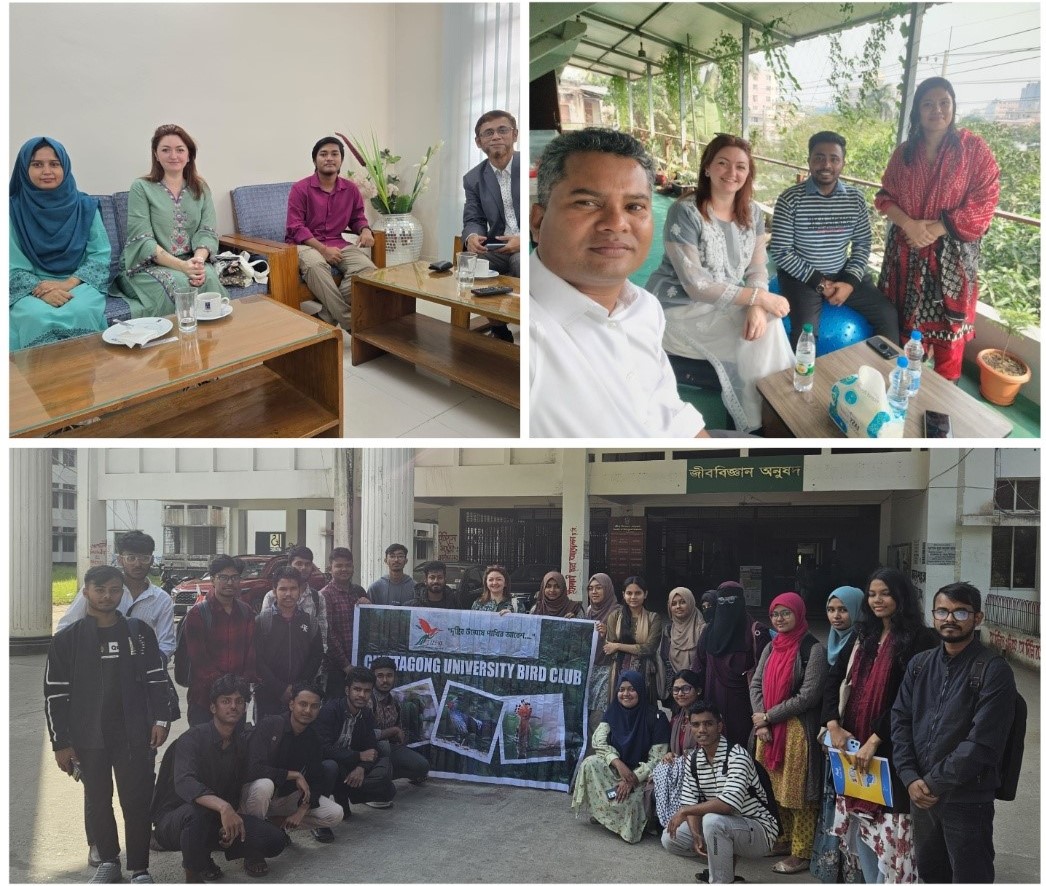 Meetings with ARK staff, students and professors at Dhaka University, public advocates in Khulna and Chittagong University Bird Club.