
The art and science of species revival
Posted on Wednesday 25 February 2026
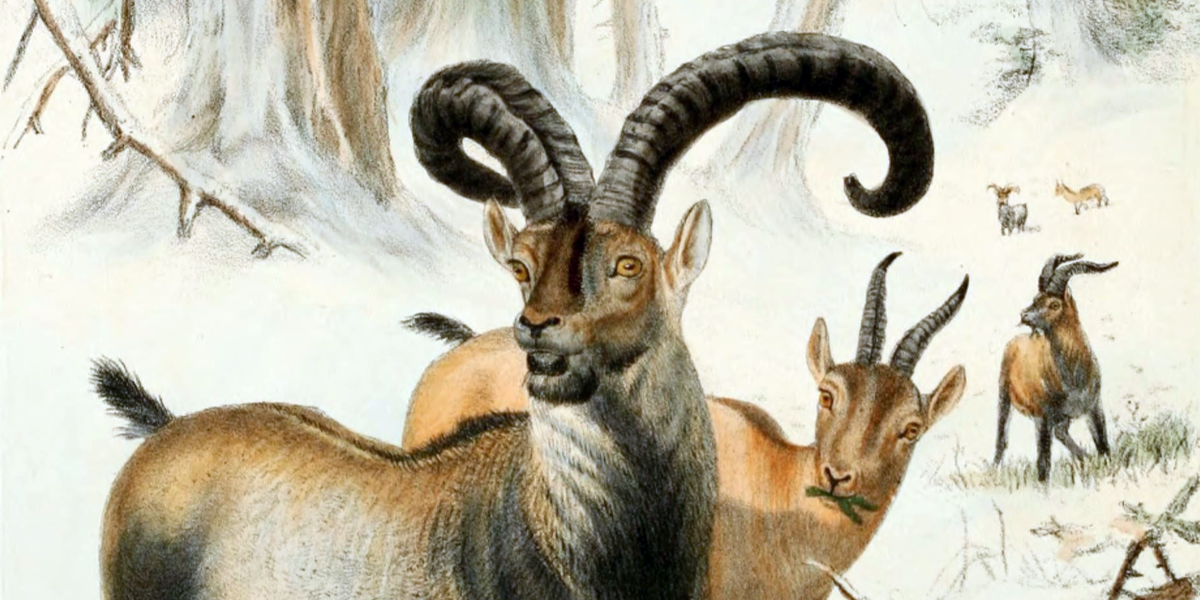
Sarah Bezan and Peter Sands have edited a special issue of Configurations: A Journal of Literature, Science, and Technology on “The Art and Science of Species Revival.” A project that began with an international symposium hosted by LCAB in December 2022, the issue combines perspectives “from art, science and technology studies (ASTS), literary studies, cultural geography, philosophy and environmental history” to explore the uneasy alliance of artistic and scientific methodologies that underpin species revival.[1]
De-extinction conjures both the imagined spectacle of resurrected woolly mammoths and associated publicity stunts such as genetically engineered woolly mice. As these examples attest, de-extinction’s public persona is that of a spectacular technology for solving the biodiversity crisis, leading us to imagine perfect copies of extinct species cooked up in the laboratory and implanted into ecologies in which they used to thrive. Yet beneath this veneer, Bezan and Sands argue, the true “meaning of ‘reviving’ an extinct species is still hotly contested” (5). What kinds of ethical questions, such as those to do with animal husbandry and laboratory practices, undergird gleaming images of resurrected individuals? And how do the meanings of species revival change when we acknowledge that revived animals will possess only the traits of extinct species, rather than representing “authentic” reproductions?
In order to address these questions, the issue considers the ways in which species revival depends as much on speculative imaginaries of future natures as it does on the hard genetic and ecological sciences. In the most basic sense, images of mammoths, thylacines and dodos constructed by companies like Colossal are aesthetic endeavours that produce certain effects – including genetic and morphological authenticity – in ways that obscure the complex epigenetic and environmental factors that will dictate the lives of revived creatures. But more than this, in speculating the makeup, function and aesthetic properties of future ecosystems, de-extinction treats DNA as creative fodder for the generation of specific futures. While inherently unknowable, thanks to the agency of resurrected animals to evolve and adapt in ways we might not be able to predict, these futures are also value-laden and ideological: informed by particular ideas of what kind of nature might be desirable.
By examining how de-extinction depends on the crossing of scientific and cultural codes, Bezan and Sands set the stage for “a broad but nevertheless comprehensive analysis of ‘species revival’ as an artistic and cultural engagement with the science of copying, mixing, and restoring species and ecosystems” (5). Their introduction frames the art and science of species revival according to three rubrics via which the future natures of de-extinction are imagined. Understood as evocative of the spectral, de-extinction creates meaning by attributing extinct species forms of ghostly agency over present and future ecologies. As an exercise in simulation, it engages strategies whereby the intactness, aesthetic consistency and authenticity of future ecosystems are constructed as forms of (un)reality. And as a practice concerned with the gestational, de-extinction invests in reproductive technologies that reshape the “moral terrain of extinction” in ways all-too-legible to the logics of green capitalism (16). Together, these frameworks offer three possible ways in which “to understand the still-unfolding cultural and ecological impact of species revival” (5).
The issue is the first of two, the second of which will be released next year (Configurations 35.3). You can read open access versions of Bezan and Sands’s introduction and Sands’s article via the York Pure database.
References
[1] Sarah Bezan and Peter Sands. “The Art and Science of Species Revival: De-Extinction, Unboxed.” Configurations 34, no 1 (2026): 1-21. https://dx.doi.org/10.1353/con.2026.a981314. Further citations appear in the text of the article.