
Biodiversity Change in Other Effective Area-Based Conservation Measures
Posted on Tuesday 26 May 2026
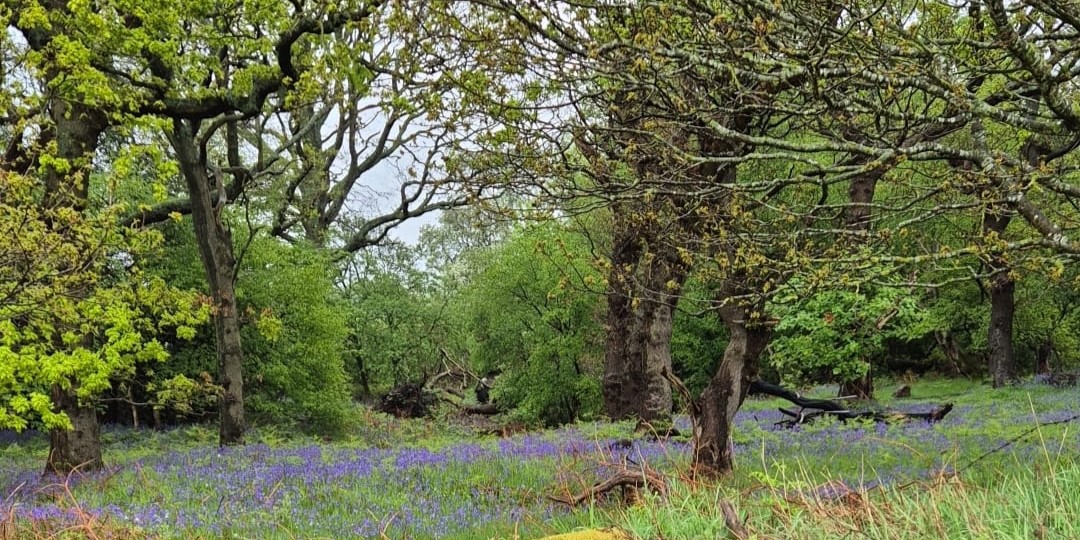
Under target 3 of the framework, nations have pledged to conserve at least 30% of terrestrial and marine areas by 2030 through an expanded network of protected and conserved areas.[1] While protected areas are widely considered the cornerstones of biodiversity conservation, Other Effective Area based Conservation Measures (OECMs) represent a relatively novel approach.
OECMs were first introduced in 2010 as part of the Convention on Biological Diversity’s Aichi Biodiversity Targets. However, the meaning of an OECM remained unclear, until the IUCN World Commission on Protected Areas (WCPA) task force published a formal definition, along with designation criteria, in 2018:
“A geographically defined area other than a Protected Area, which is governed and managed in ways that achieve positive and sustained long-term outcomes for the in-situ conservation of biodiversity, with associated ecosystem functions and services and where applicable, cultural, spiritual, socio-economic, and other locally relevant values.” [2]
The key distinction between OECMs and traditional protected areas lies in the management objectives. Protected areas must have biodiversity conservation as a primary, or joint primary, objective. While OECMs must demonstrate a positive impact on biodiversity, this may emerge as a secondary, tertiary, or ancillary outcome of management practices. Notably, biodiversity conservation may still be a primary objective of a site, but site managers may prefer OECM designation over that of a protected area.
This flexibility means that a remarkably diverse range of areas can qualify as OECMs. Examples include land managed by indigenous peoples or local communities, areas of geological, historical, or religious significance, military owned land, and designated conservation areas that lack formal protected status, such as Key Biodiversity Areas or Important Bird Areas.[3, 4]
By recognising that biodiversity conservation can occur outside formally designated protected areas, OECMs are becoming increasingly recognised for their potential to help countries meet global conservation targets. According to the World Database on Protected Areas, protected areas alone currently cover around 17.33% of terrestrial environments globally.[5] Including OECMs raises this figure to 18.43%. In marine systems, coverage increases from 9.79% to 10.01% when OECMs are included.
Yet simply increasing coverage alone is not enough. Target 3 of the Kunming–Montreal Framework explicitly emphasises effectiveness, ecological representation, connectivity, and equitable governance:
“At least 30% effectively conserved and managed through ecologically representative, well-connected and equitably governed systems of protected areas and other effective area-based conservation measures.” [1]
This raises an important challenge: how do we know whether OECMs are delivering positive outcomes for biodiversity?
LCAB and Royal Society PhD Student, Victoria Coulton, aims to examine how biodiversity changes within OECMs before and after their designation. By constructing biodiversity time series, Victoria will be investigating how species richness patterns shift following OECM designation using a Before–After– Control–Intervention (BACI) study design. This approach compares OECMs with matched control sites, allowing trends to be assessed while accounting for broader environmental change across sites experiencing similar background conditions.
Ultimately, the project asks a simple but important question: do OECMs actually support biodiversity conservation? More specifically, does the designation of an OECM alter biodiversity trends relative to comparable protected and unprotected areas?
References:
[1] Convention on Biological Diversity (CBD). Kunming-Montreal Global Biodiversity Framework – Target 3: Conserve 30% of Land, Waters and Seas. Secretariat of the Convention on Biological Diversity, Montreal. Available at: https://www.cbd.int/gbf/targets/3 (accessed 13 May 2026)
[2] Convention on Biological Diversity (CBD), 2018. Decision adopted by the Conference of the Parties to the Convention on Biological Diversity: protected areas and other effective area-based conservation measures. Conference of the Parties to the Convention on Biological Diversity, Sharm El-Sheikh, Egypt.
[3] Donald, P.F. et al., 2019. The prevalence, characteristics and effectiveness of Aichi Target 11’s “other effective area-based conservation measures” (OECMs) in Key Biodiversity Areas. Conservation Letters, 12, e12659.
[4] Petza, D. et al., 2026. Unlocking the potential of other effective area-based conservation measures (OECMs) for achieving conservation targets: a global scoping review. Ambio, pp. 1–23.
[5] UNEP-WCMC and IUCN. Protected Planet: the World Database on Protected Areas (WDPA). Available at: https://www.protectedplanet.net/en/thematic-areas /wdpa?tab=WDPA
(accessed 13 May 2026).
[6] Brodie, J.F. et al., 2025. The contribution of other effective area-based conservation measures (OECMs) to protecting global biodiversity. Nature Communications, 16(1), 7886.