
Diversity in urban forestry
Posted on Thursday 4 June 2026
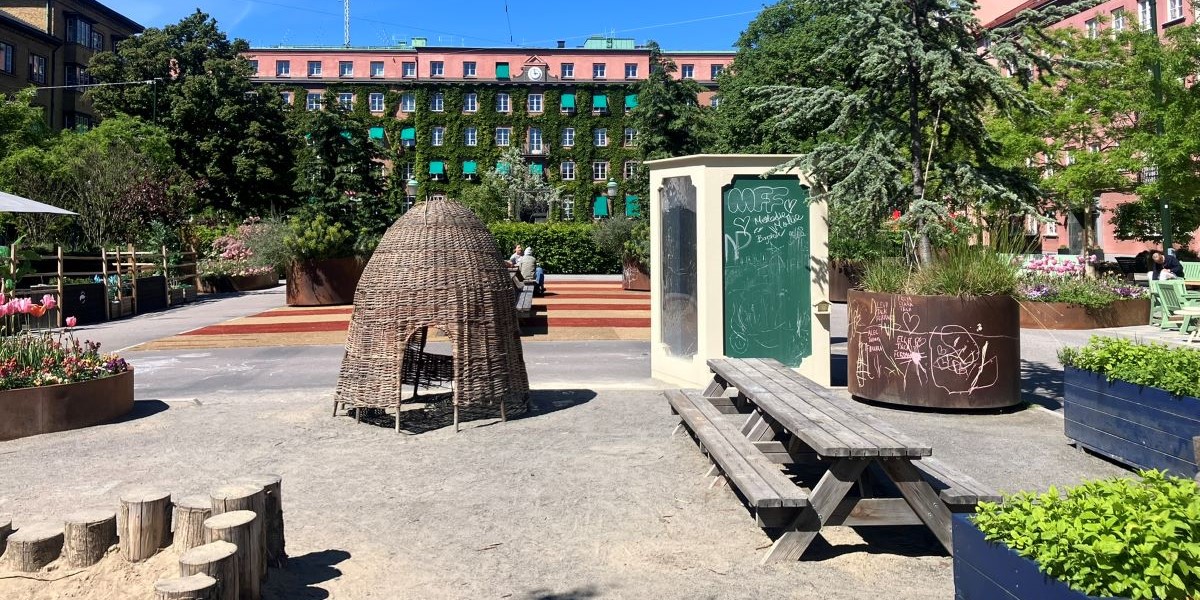
It was clear from the first presentations by colleagues from the City of Malmö that the conference theme reflected the ambitions of the host city. Previously dominated by the shipbuilding industry, Malmö is now home to a ‘minority-majority’ international population due to high numbers of immigrants. The municipality aims to reflect this diversity by increasing the number of species, canopy cover and accessibility of its trees while responding to local needs, knowledge and resources in its approach to urban design, emphasising the importance of polycultures for urban resilience. These are topics that arise in relation to urban rewilding, the focus of my research, and gave me confidence that the presentation I was due to give on the last day of the conference would be of interest to attendees despite being less focused on trees.
Speakers presented projects exploring the planning, management and effects of urban trees and green spaces. They included a literature review identifying barriers to fair distribution of urban nature benefits by Rik De Vreese (European Forest Institute), which highlighted the importance of ‘justice safeguards’ such as incorporating qualitative data; and a citizen science project monitoring the health of different planted tree species in Birmingham, by Deanne Brettle (University of Birmingham).
One of the most enjoyable aspects of the conference was the afternoon excursion to the living laboratory at the Swedish University of Agricultural Sciences (SLU) in Alnarp.
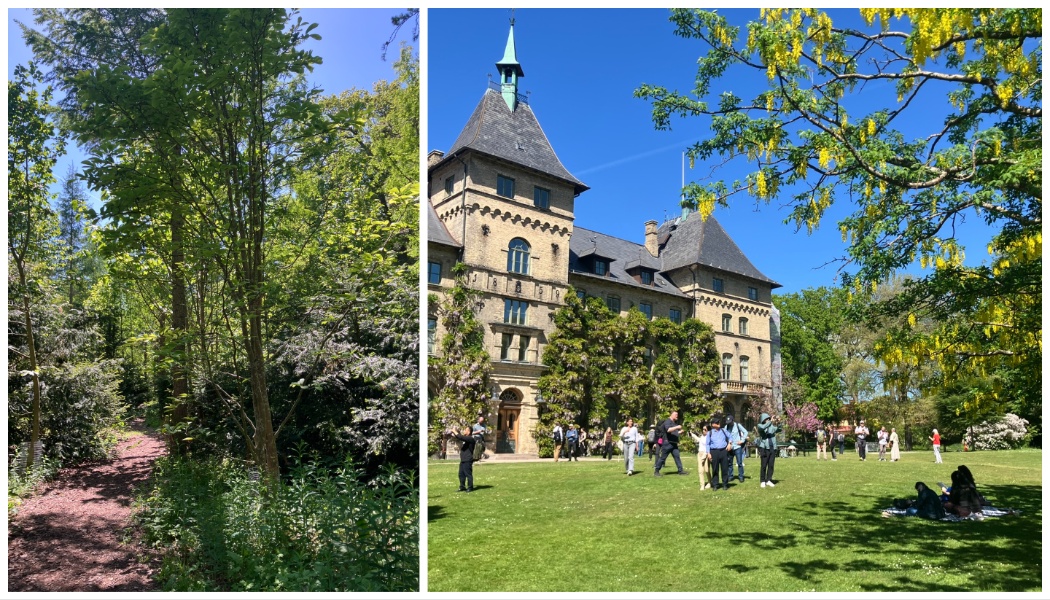 Magnolia forest and the Swedish University of Agricultural Sciences (SLU) in Alnarp Park.
Here, students of landscape architecture or agroecology are taught within an idyllic 40-hectare arboretum park split into plots with different planting combinations and management approaches, tested to inform the design of other urban and peri-urban parks. In the Klaus Vollbrecht Park area, some control is being given to nature by minimising intervention in certain areas, for periods of time. However, this is undoubtedly a heavily designed and managed landscape in which numerous non-native species are planted. Although the aim to learn about and experience nature is shared with urban rewilding, urban rewilding is generally understood as prioritising letting nature lead, adapting rewilding principles.
Urban rewilding also has a specific conception to support native species. In practice, site managers I have interviewed whose work aligns with urban rewilding often have this focus, reintroducing species such as harvest mice, protecting water voles, or using native grazing animals such as Sussex cattle. It has only been in relation to trees and their climate resilience that the idea of intentionally incorporating non-native species into sites has been discussed. I highlighted these findings in my presentation, also discussing how urban rewilding is distinct from other concepts such as greening, i.e. planting, viewed by participants with a conservation background as not always being wildlife-friendly.
I really enjoyed this conference, meeting great people and spending time in Scandinavia. Many thanks to EFUF for having me.