The MA in the Archaeology of Buildings is designed to train students in the systematic research, recording, analysis and interpretation of historic buildings within the heritage sector. In recent years, government, industry and the wider public have begun to appreciate the value and significance of historic buildings as some of the most significant assets within the heritage resource. The role of buildings archaeology in enhancing understanding, informing conservation and managing change has also increasingly been recognised. As a result there has been significant demand for professionals not only within the commercial sector, but also in organisations such as English Heritage, the National Trust and local authorities. The discipline of buildings archaeology has also grown in confidence, with new theoretical and methodological developments allowing archaeologists to record, date, model and present research in exciting new ways.
Established over fifteen years ago, the York Archaeology of Buildings course is one of the longest-established buildings archaeology programmes in the UK. It brings together experts in buildings survey, archive research, legislation and policy, conservation, theoretical interpretation and computer modelling. The result is a dynamic and developing course, which is well-respected within the profession and which benefits from a vibrant research community within the Department, and whose alumni now hold key positions across the heritage sector.
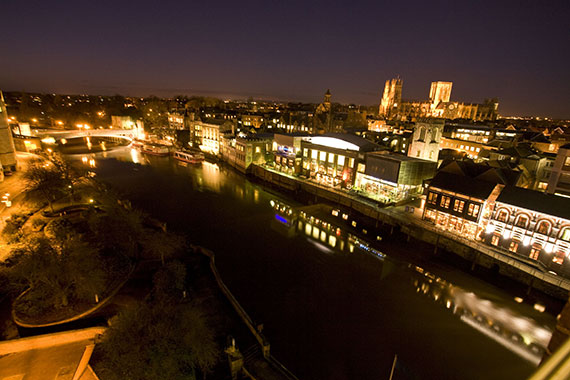
The MA Archaeology of Buildings course is taught in the heart of the historic city of York, located in the splendour of King's Manor, originally the lodgings of the mdeieval abbots of St. Mary's Abbey and later the headquarters of the Council of the North. The Department itself is an iconic example of twentieth century architecture, designed by the renowned conservation architect, Sir Bernard Fielden. The historic buildings of the city and the region form one of the most important resources for the course and we make extensive use of them through visual analysis training and field trips in the taught modules, and providing useful subjects for dissertation projects and voluntary experience. The numerous heritage organisations within the city and surrounding area also provide opportunities for networking, placement experience and employment. They include historic buildings units within Field Archaeology Specialists Ltd. and York Archaeological Trust, the metric survey and historic buildings investigation teams within English Heritage, as well as buildings professionals within the Council for British Archaeology, Churches Conservation Trust, National Trust, National Parks and local authorities.
The course is well-supported by resources and facilities within the Department and the city. In recent years the Department has developed increasing expertise in metric survey, including rectified photogaphy, photogrammetry, laser scanning, CAD drawing and computer modelling of historic buildings. We have also benefitted from the very generous support of the University of York in buying new REDMs, software and laser scanners, which allow us to continue to explore and develop the potential applications of new survey methodologies and applications.
Buildings history has always been a strength of the course, and students can take advantage of training in research resources, provided as part of the course. This is supported by excellent libraries such as the King's Manor, which specialises in architectural history and conservation, the Minster Library, which holds an extensive ecclesiastical and Antiquarian collections, and the JB Morrell, which has excellent archaeological and architectural history collections. In addition, the City Library and Archives and the Borthwick Institute for Archives provide extensive collections of local records, cartographic and pictorial sources, civic and ecclesiastical records and architectural records.
There are also a wide range of facilities for all students taking an Archaeology Masters programme:
Over the autumn and spring terms, you will take:
In the summer you will carry out research for your dissertation and give an Assessed Lecture on your dissertation topic.
The MA is suitable for students and mid-career professionals seeking to develop or enhance an academic or professional specialism in buildings archaeology. Students on the MA benefit from a well-established departmental research community who are in the vanguard of theoretical and methodological developments in buildings archaeology.
We interview most applicants, unless you are living or working overseas.
First, check our How to apply page which explains what information the Department needs from you.
Apply onlineAlumni from the course have been employed as buildings archaeologists in a range of commercial units including Field Archaeology Specialists, Oxford Unit, AOC, Pre-Construct, Headland Archaeology, ARCUS, and as freelancers. They have worked in range of heritage organisations including English Heritage, National Trust, Historic Scotland, Historic Royal Palaces, as freelancers (specialising in building recording), and as local authority Conservation Officers and Museum professionals.
The MA buildings course offers something for everyone. It provides a broad
overview of the different survey methods and the range of historic
buildings. Yet it also allows students considerable freedom to follow their
own interests. Highly recommended!Matt Jenkins