
Technology could transform future train communications
Posted on Monday 27 April 2026
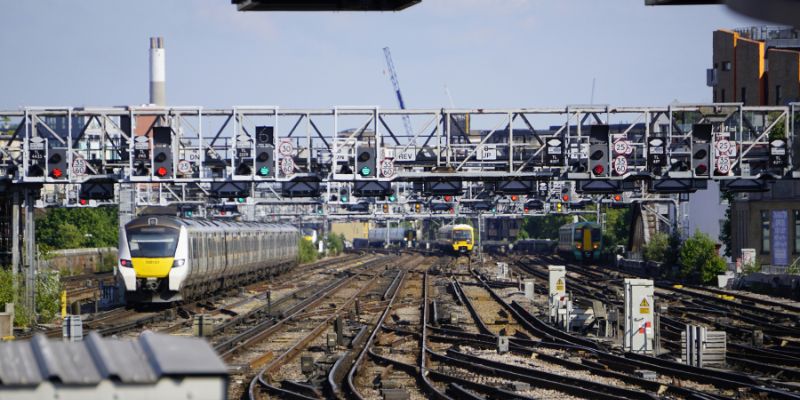
The demonstration was the result of a ten-month project, bringing together researchers and industry to explore whether a new generation of Open Radio Access Networks (O-RAN) could support the UK's transition to the Future Railway Mobile Communication System (FRMCS). The transition is one of the most significant infrastructure upgrades the UK rail network has faced in a generation.
Open Radio Access Networks represent a significant departure from the closed, proprietary radio systems that have dominated the telecoms industry for decades. By breaking down traditional network architecture into open, interoperable components, O-RAN offers the potential for greater flexibility, lower costs, and faster innovation. For the UK rail sector, which faces the enormous challenge of replacing its ageing GSM-R communications system with FRMCS, the technology could prove to be a game-changer.
Held in partnership with Hitachi Rail and project sponsors Network Rail, the event presented the findings of the project and showcased live demonstrations of how the O-RAN network can interact with railway technology.
Delegates heard from project leads about why O-RAN is being considered as a candidate technology in the decommissioning and replacement of GSM-R, the ageing radio system that currently underpins safety-critical communications across the UK rail network. Speakers outlined the opportunity presented by FRMCS migration and provided an in-depth technical overview of what O-RAN is and what it can offer the railway sector.
The project was led by Hitachi Rail, funded by Network Rail, and carried out at the Institute for Safe Autonomy at the University of York by Professor David Grace, Dr Yi Chu and Josh Shackleton. The work builds on £15m of York-led projects on the investigation and development of O-RAN technologies, including the DSIT funded projects YO-RAN and REACH.
Professor David Grace said: "Our research at the Institute for Safe Autonomy is dedicated to ensuring that the next generation of communications infrastructure is not only more capable but is fundamentally more resilient. This project has given us the opportunity to show how O-RAN can support migration of GSM-R to FRMCS , opening the path for a rail communications network that can be upgraded more easily and better supports increased use of autonomy in rail."
Sam Daw, Technical and Assurance Director at Hitachi Rail, said: “Our study together with the Institute for Safe Autonomy at the University of York, has shown that O-RAN is a credible technology for FRMCS, alongside the likes of purpose-built RAN. We were delighted to see the Hitachi Rail Access AMG solution seamlessly switching between O-RAN 5G and MNO 5G, demonstrating how the onboard communications gateway can assist in the cost-efficient migration from GSM-R to FRMCS, brilliant!”