
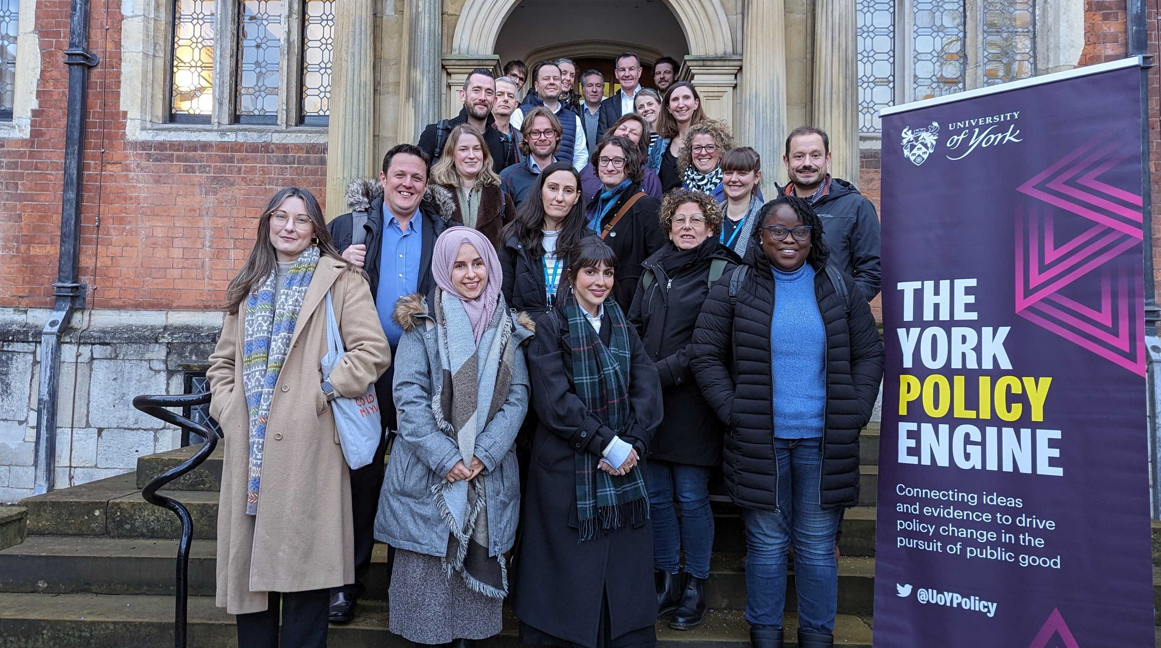
The York Policy Academy
Hear from our Academy alumni
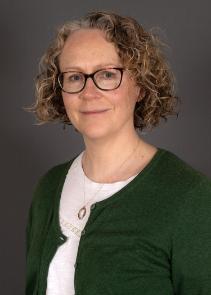
Sarah Dwyer, Project Manager, HFACT project, Centre for Health Economics
1. What have you learned over the past year as a Policy Fellow?
- Civil servants aren't experts, they get put in a role and learn on the job pretty much like me.
- MPs/civil servants are super busy, the breakdown of a day in the life of an MP was really helpful in seeing tangible examples.
- Even MPs can put 12 months of work into something and it still won't get discussed in Parliament so you have to be realistic and realise that you can put months of work into something and still not achieve the outcome you're looking for, in that case I would be looking at what else have we achieved and what other small wins can we celebrate.
- How UK government works and how to get information in front of policymakers e.g. APPG's etc.
- You need to think about how your message will land with the policymaker and the people they serve, there is no point in asking them to make changes which are completely infeasible.
2. How has your thinking evolved?
- I think I was focused on the 'right way' of engaging with policymakers but now realise that there are many ways and that they develop over time.
- I also now realise the value in having information available in visible, easy to find, useable formats for policymakers, which might look like frameworks etc.
- "Speaking their language" doesn't just mean that you make research findings easy to understand, it means presenting it in terms that can help them take action, e.g. there is value in presenting findings in terms of how much money will this save etc. if you're audience is a finance minister rather than talking about population health needs.
- Identify MP's or groups which have the same interest as you are advocating for, they are more likely to work with you.
3. What have you done differently in the last six months?
- We have used the Story Arc format to highlight research papers in a brochure we recently put together for an Advisory Board meeting.
4. How will you build on your new skills?
- I would like to transform our project website to feature the research findings front and centre.
- We have arranged to work with our in-department communications expert to identify small actions that can increase the visibility of our project with the aim of disseminating research findings further.
- In future projects, I will keep my focus on interpreting the research findings for policymakers and even earlier than that, of establishing a good network of supporters to help us disseminate the findings and advocate for policy change.
- I will keep banging the drum for policy engagement with my academic colleagues and help them to present their findings in ways that policymakers can easily use and understand.
How you'll benefit
- Join a growing network of university staff engaged in policy work.
- Connect with senior policy professionals across multiple sectors leading on a variety of policy topics.
- Explore policy engagement opportunities at local, regional, and national levels.
- Build skills and knowledge to develop policy engagement in your own work.
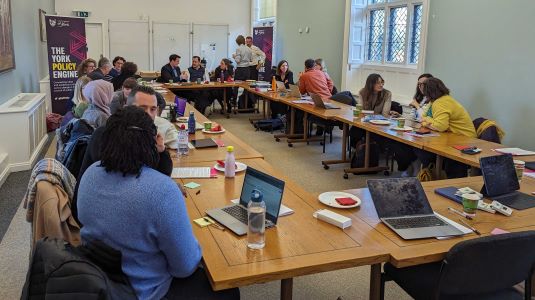
- Take part in an action learning set - a small peer learning group to reflect on your policy engagement practice, explore challenges, and develop practical next steps through structured discussion and shared learning over time.
"I have found the Policy Academy one of the most useful things I have taken part in...I have learnt how to think about my research with a policy head on and also to think strategically about building up relationships with different policy makers."
2024/25 Policy Academy Fellow
Who should join?
Open to ALL professional service and academic staff at the University of York and York St John, at any career stage, who have aspirations to influence policy through their work. Whether you're new to policy or bring years of experience, we are looking for those who can use their skills and perspectives to enrich the cohort’s dynamic and contribute to its collective learning.
How it works
Policy Academy sessions will run in person in York from November 2026 to June 2027. They’ll take place once a month, typically on Wednesday afternoons, each lasting half a day.
Examples of session topics include:
- Understanding the policy environment in different settings: unpacking experiences of policy engagement
- Research to policy journey & communicating research to policy audiences
.jpg)
- Inner workings of civil service and UK central government and parliament
- UK policy outside of Westminster: devolved and local government
- Understanding the role of think tanks & campaigning organisations
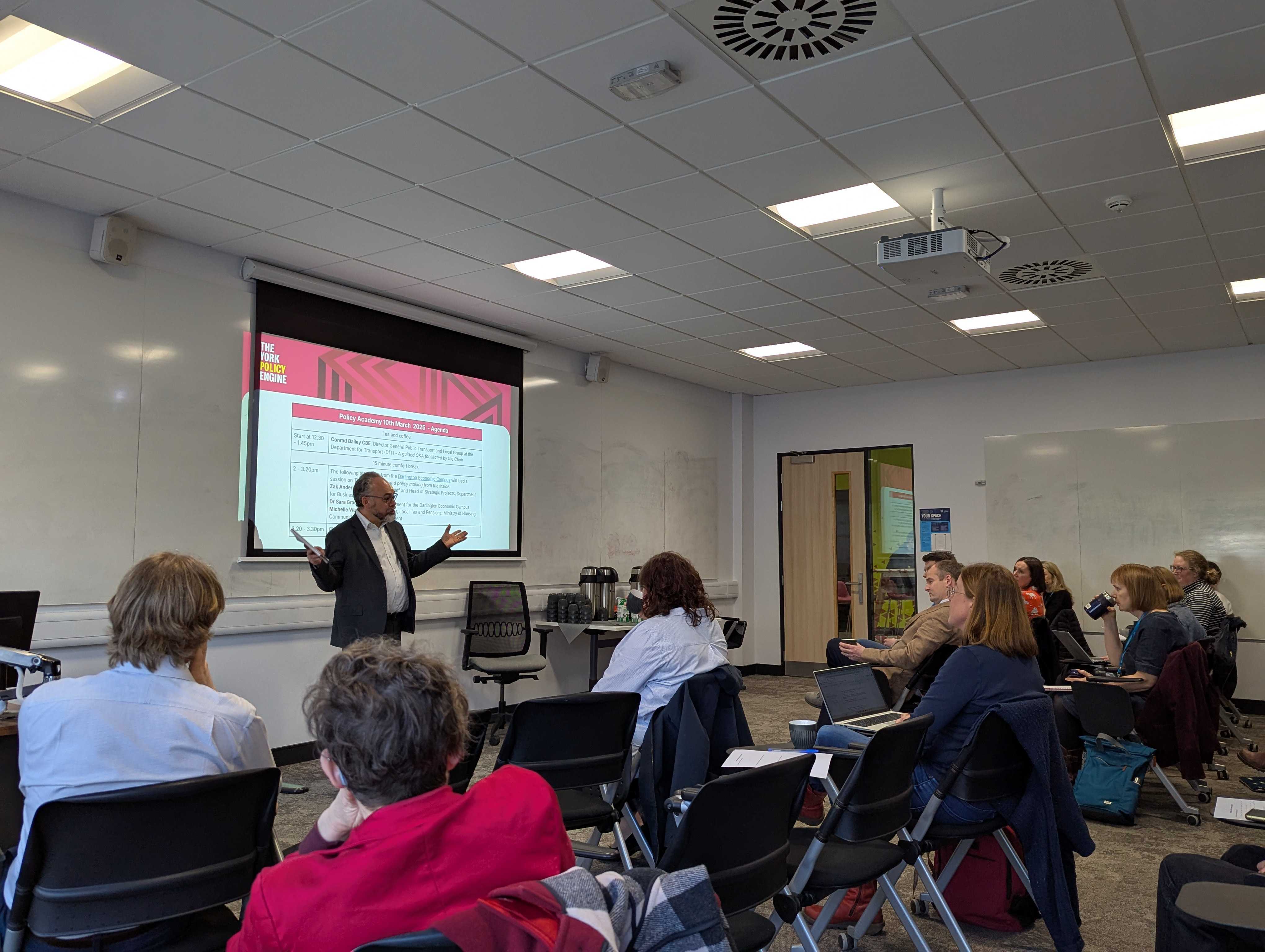
Sessions will be led by a range of policy experts and delivered through a combination of workshops, speaker presentations with Q&A and action learning sets.
"The monthly sessions run by the Policy Academy have been a brilliant mix of the practical and the inspiring. It's been fascinating to hear the stories of those who've achieved significant policy impact."
2023/24 Policy Academy Fellow
Examples of previous guest speakers:
- Conrad Bailey CBE, Director General Public Transport and Local Group at the Department for Transport (DfT)
- John-Paul Marks, Permanent Secretary to the Scottish Government
- Politicians including Rachael Maskell MP for York Central and Tom Gordon MP for Harrogate and Knaresborough
- Civil servants from the Darlington Economic Campus
- Senior Advisors from The Open Innovation Team
- University of York Academics - Professor Lucy Carpenter, Professor Paul Galdas, Dr Belinda Morris, Professor Kate Pickett
- Hannah Davies, Deputy Chief Executive Office, Northern Health Science Alliance
- Dr Andy Mycock, Chief Policy Fellow, Yorkshire Policy Engagement Network (Y-PERN)
- Andy Bell, Chief Executive, Centre for Mental Health
- Darren Baxter, Principal Policy Adviser, Joseph Rowntree Foundation (JRF)
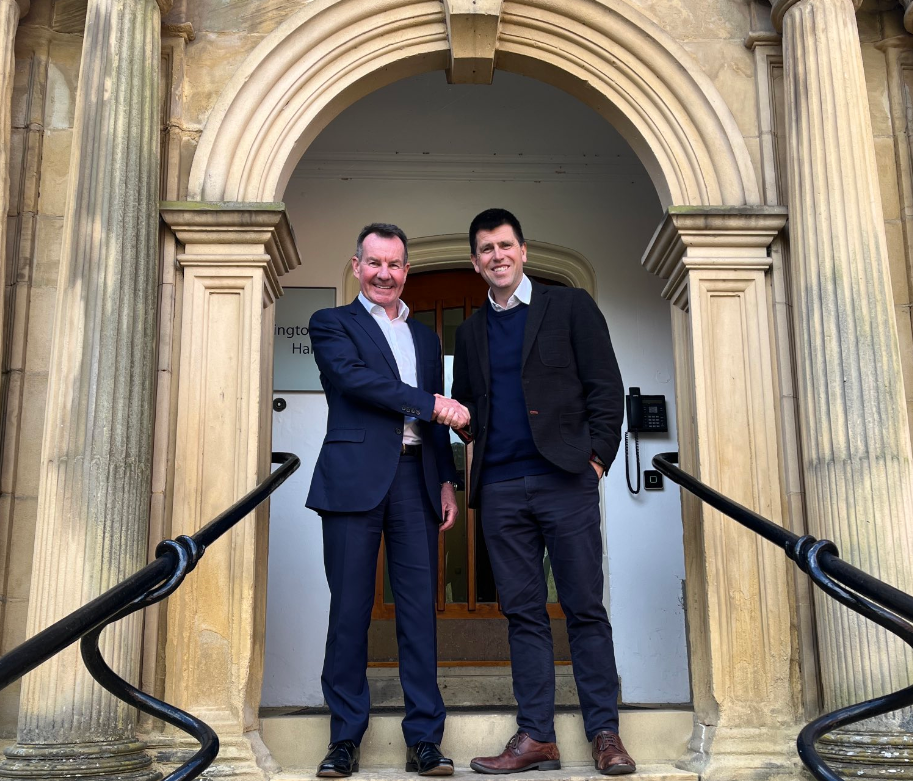
Mike Baker CBE, Professor of Practice and Senior Adviser for External Engagement for TYPE welcomes John-Paul Marks, Permanent Secretary to the Scottish Government to a Policy Academy session
"I enjoyed everything about the academy sessions. The speakers are top-notch and well-experienced. I made new networks which I am currently exploring at my work. I loved...the opportunity to go hands-on on real-time issues that required timely responses."
2023/24 Policy Academy Fellow
Explore previous Policy Academy programmes:
2023/24: Policy Academy Programme 2023-24 (PDF  , 7,979kb)
Meet the team
Academy Co-Leads
- Mike Baker CBE, Professor of Practice and Senior Adviser for External Engagement for TYPE
- Dr Chris Wilkinson, Hull York Medical School
Academy Coordinator
- Katie Heffron, Capacity and Policy Engagement Manager for TYPE
Additional Support and Participation
- Anthonia James, Head of TYPE
- Professor John Hudson, Academic Director for TYPE
- Duncan McKnight, Research Communications Manager for TYPE
- Dom Watson, Administrator for TYPE