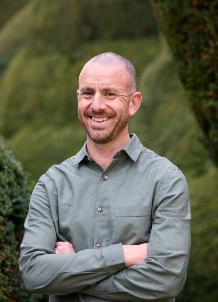
Paul Galdas
Professor of Men's Health
Profile
Biography
Paul's work focuses on improving how health systems, services and organisations reach and engage men, particularly those least likely to access help until problems have escalated. The core aim is practical: to generate evidence that helps shape better services, systems and policy, and improve outcomes for men and boys.
Paul work's across academia, policy, the NHS and applied partnerships. Paul chair's the National Men’s Health Academic Network, which provides independent academic advice to the Department of Health and Social Care in support of England’s Men’s Health Strategy. He also collaborates with partners across local government, public health, charities, employers and sport to develop and evaluate approaches that can be implemented in real world settings. Current areas of work include men’s mental health, suicide prevention, male dominated workplaces, elite and community sport, and the development of gender responsive models of support.
Before moving into academic research, Paul worked as a registered nurse in coronary care. Paul completed my PhD at the University of Leeds in 2006, and held academic posts in the UK and Canada, including at the University of British Columbia and the University of Sheffield, before joining York in 2011.
Teaching
Undergraduate
- Contributions across a range of modules in pre-registration nursing and midwifery programmes.
Postgraduate
Paul is able to supervise Masters projects with a broad focus on men’s health and those which relate to nursing or nurse education. Specific areas of interest include help-seeking behaviour (e.g. access to and uptake of health services) and self-management of long term conditions. Favoured approaches for Masters projects are qualitative evidence synthesis (particularly meta-ethnography) and scoping reviews.
- Contributions to Qualitiative Health Research
- Contributions to Health and Social Behaviour
- Supervision of PhD students:
- Helen Recchia (née Joyce)
- Cheryl Lythgoe
- Bev Waterhouse
- John Ratcliffe
- Sara Ma
-
Research
Overview
My research examines how masculinities, social context and service design shape men’s health behaviours, help seeking and engagement with care. Much of my work has focused on mental health, suicide prevention, workplace wellbeing, long term conditions and gender responsive intervention design.
I am particularly interested in moving beyond explanations that locate the problem solely in men’s attitudes or behaviour, and instead asking how systems can be designed around the realities of men’s lives, work, relationships and communities.
I use applied qualitative, mixed methods and intervention development approaches, often in partnership with health services, local systems, employers, charities and sport organisations. My current work includes research on proactive mental health support for men, suicide prevention, workplace wellbeing in male dominated industries, and the design and evaluation of gender responsive approaches to improving men’s health.
I welcome enquiries from prospective Masters, PhD and doctoral students interested in men’s health, masculinities, mental health, health services research, intervention design, implementation and evaluation.
Qualifications
- BSc (Hons) Nursing
- PGcert Health Professional Education
- PhD
Projects
Current Projects
- Behavioural Activation for Low mood and anxiety in Male NHS frontline workers: The BALM programme, Movember Foundation (2021-2023); principal investigator
- Exploring General Practice Nurses’ experiences of changing care delivery and implementing new ways of working during and after the COVID-19 19 Pandemic - Implications for future practice, The General Nursing Council for England & Wales Trust; (2021-2022); Co-Investigator
- E-cigarettes for Smoking Cessation And reduction in People with mEntal illness (ESCAPE trial), Yorkshire Cancer Research (2020 – 2024); co-investigator
- Promoting Smoking CEssation and PrevenTing RElapse to tobacco use following a smokefree mental health inpatient stay: the SCEPTRE programme’, NIHR Programme Grant for Applied Research (2019 – 2023); co-investigator.
Previous projects
- E-cigarettes for Smoking Cessation And reduction in People with mEntal illness (ESCAPE trial), Yorkshire Cancer Research (2020 – 2024)
- Promoting Smoking CEssation and PrevenTing RElapse to tobacco use following a smokefree mental health inpatient stay: the SCEPTRE programme’, NIHR Programme Grant for Applied Research (2019 – 2023); co-investigator.
- Experiences, coping styles, self-management and support preferences of men with Systemic Sclerosis, World Scleroderma Foundation (2018-19)
- Complete smokefree policies in mental health inpatient settings: exploring the impact on smoking behaviour and the role of electronic cigarettes’, Cancer Research UK, (2018-2020)
- Development of a toolbox to aid therapeutic patient education in psoriasis, European Academy of Dermatology and Venereology (EADV) (2016-18)
- Identifying and managing perinatal mental health in male partners using the Born and Bred in Yorkshire (BaBY) cohort: A White Rose Collaboration in Gender and Perinatal Mental Health. White Rose Collaboration Fund (2015-16)
- How effective, accessible and acceptable are self-management interventions for men with long-term conditions? NIHR Health Services and Delivery Research Programme (2014-15)
- Review of the National Men’s Health Policy and Action Plan (NMHPAP); The Health Service Executive (HSE), Republic of Ireland (2014)
- Unpacking the effects of gender and ethnicity on healthcare utilization: The cardiac rehabilitation experiences of Indo-Canadian men. CIHR - Canadian Institutes of Health Research (2008 – 2011)
- The health care experiences and needs of sudden cardiac arrest survivors following discharge from hospital: pilot study. Lyle Creelman Endowment Fund (2009 – 2010)
- Gender and Ethnic Differences in Treatment Seeking for Acute Coronary Syndromes. CIHR - Canadian Institutes for Health Research (2008 - 2010)
- Masculinities and Depression: The perspectives of men and their partners. CIHR - Canadian Institutes of Health Research (2008 - 2010)
- The experiences and cardiac rehabilitation needs of South Asian myocardial infarction patients: pilot study. Michael Smith Foundation for Health Research (2007 – 2008)
Research group(s)
Supervision
Paul is interested in supervising PhD projects in the following areas: men's health; masculinities; nursing research; self-management of long term conditions; cardiovascular disease; qualitative research.
External activities
Overview
My external work focuses on translating men’s health evidence into policy, practice and service design. I chair the Men’s Health Academic Network, which provides independent academic advice to the Department of Health and Social Care in support of England’s Men’s Health Strategy. This work involves bringing academic evidence into dialogue with policy priorities, implementation challenges and the realities of health system design.
I also work with NHS, local government, charity, employer and sport sector partners to support the development and evaluation of gender responsive approaches to men’s health. This includes work on mental health and suicide prevention, workplace wellbeing in male dominated settings, community based support, and sport as a setting for mental fitness and early intervention.
Much of this activity is concerned with how evidence is used in real world systems: who services reach, how men are engaged and retained, and how organisations can design support that is accessible, acceptable and effective. I welcome enquiries from partners interested in applied research, evaluation, policy development or evidence informed service design in men’s health.
Memberships
- Chair, Yorkshire and Humber Regional Deans of Health Group (2021 – present)
- Member - Council of Deans of Health, Regulation Advisory Group (May 2019 - Present)
- Member - Council of Deans of Health, Recovery Advisory Group (April 2020 - Present)
- Member – International editorial board, Nursing Open