Gas boilers now biggest source of air pollution in central London, study shows
Posted on Wednesday 9 April 2025
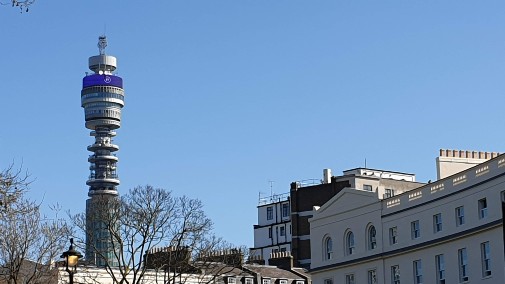
The research found that the combustion of natural gas in boilers accounted for 72 per cent of NOx emissions within a few kilometres radius of the BT Tower between 2021 and 2023.
Transport
The findings highlight the success of transport interventions, such as the London Low Emission Zone and the Ultra Low Emission Zone (ULEZ), in significantly reducing NOx emissions from vehicles.
NOx emissions - the name for a group of different nitrogen oxides - from vehicles in central London are estimated to have fallen by about 73 per cent between 2016 and 2025.
In addition, the increasing prevalence of Euro 6 vehicles and electric cars has also contributed to this decline.
The study, published in the journal Environmental Science & Technology, was led by Professor James Lee, professor of atmospheric chemistry at the University of York.
Air quality
He said: “Our research highlights how much NOx emissions from transport have improved, but also the task still ahead in getting combustion out of cities.
“Whilst talk of switching from gas to heat pumps is mainly framed around the decarbonisation benefits, it would be a major gain for air quality too.”
Dr Sam Cliff, who carried out the research while carrying out a PhD at York and is now based in the U.S, said: “Without action on gas boilers it could be hard for central London to meet the WHO (2021) guideline values for NO2, no matter how clean the vehicle fleet.”
The study pinpointed the source of pollution by analyzing the ratio of NOx to CO2 which differs between traffic and boilers, using measurements taken from the BT Tower.
Heat pumps
The researchers say while the decarbonisation benefits of switching from gas to heat pumps are widely discussed, the study emphasises the significant air quality improvements this transition could also deliver.
The researchers noted that industrial and non-domestic boilers, which are larger than those in private homes, are the main contributors in central London, which is not a highly residential area.
While lower emission boilers have been introduced, Professor Lee believes that a transition to heat pumps is likely the most effective long-term solution, although he acknowledges the current cost challenges associated with widespread adoption.


.jpg)