Digitalising essential services risk widening inequalities for minoritised ethnic communities, research study warns
Posted on Friday 14 March 2025
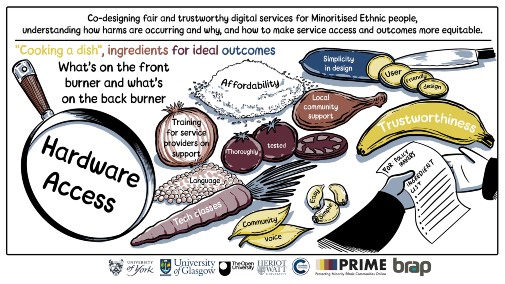
Without careful design, online services risk excluding those already facing digital exclusion, language barriers and systemic discrimination, according to the Protecting Minority Ethnic Communities Online (PRIME) study, which publishes a series of policy briefs, a Code of Practice and videos in multiple languages alongside a suite of free-to-use technological tools.
Impact
The interdisciplinary research team, which included Dr Siamak Shahandashti, Senior Lecturer in Computer Science at the University of York and the lead cyber security expert in the project, examined the impact of digitalisation on healthcare, housing, and energy services across the UK.
Conducted in four locations - Bradford, Manchester, Glasgow and the London Borough of Tower Hamlets - the study highlights the particular issues that minoritised ethnic communities face when essential services move largely online.
Researchers found that poorly designed digital platforms, combined with a lack of support and inadequate regulatory oversight, could further marginalise vulnerable groups.
Potential
Lead investigator, Professor Gina Netto, Professor in International Migration and Racial Justice, at Heriot-Watt University’s School of Energy, Geoscience, Infrastructure and Society, said: “While digital technology has enormous potential, it can also entrench existing inequalities,” said
“For those with limited English proficiency, digital literacy or access to adequate digital devices and internet connectivity, the barriers to navigating online systems can be insurmountable. And in areas like healthcare, where privacy and human interaction are crucial, over-reliance on digital services can actually create harm.”
The study points to major gaps in how digital services are designed and regulated. In all three sectors investigated, there is little regulatory oversight of how minoritised ethnic households engage with digital services.
In healthcare, for example, multiple regulatory bodies oversee digital systems, yet there is no clear framework to ensure fair access for minority ethnic communities. Many struggle to book appointments or access records online and there is little accountability for how digital inequalities affect health outcomes.
Privacy
Dr Shahandashti said: “In the spirit of Open Science, the project will release the extensive survey dataset collected from minoritised ethnic individuals in England and Scotland. State of the art techniques are employed to carefully and selectively release this dataset to ensure a minimum level of privacy for the participating individuals.
“This dataset will be a further source of insight into the attitudes and concerns of minoritised ethnic individuals for researchers, policy makers, and service designers.
The PRIME team has developed a Code of Practice for service designers, urging them to embed racial and linguistic inclusivity into their platforms. It has also published a series of policy briefs directed at the health, housing and energy sectors. New, multilingual videos — aimed at minoritised ethnic communities — will help to raise awareness of online harms and the actions that they can take to create safer online spaces.
The team has also created a suite of free-to-use technology tools, to counter discriminatory processes in digital services.
Regulation
As the UK and devolved governments push forward with digital transformation, researchers and community advocates are calling for urgent policy changes. Without robust regulation and inclusive design, the benefits of digital public services will remain out of reach for many.
“The shift online must not leave people behind,” Professor Netto said. “We need a fundamental change which puts digital inclusion at the heart of service design and actively uses digital services to address existing inequalities.”


.jpg)