Crop-killing pathogen found to disable plant ‘alarm system’
Posted on Monday 20 October 2025

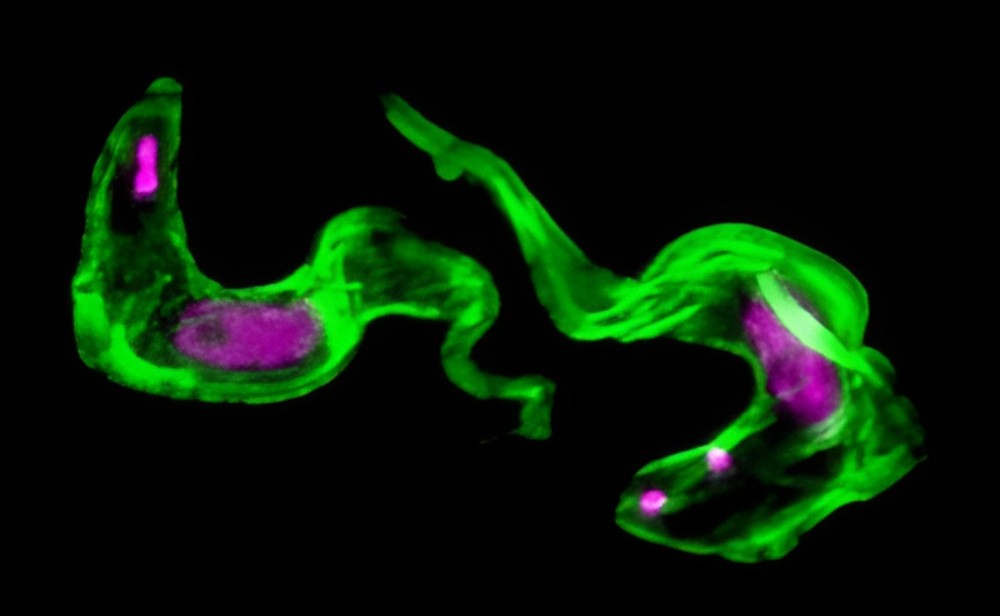
The new research, published in Nature Communications, describes a family of enzymes produced by a microorganism called Phytophthora infestans, the infamous causative agent of the Irish potato famine and a recurrent threat to potato and tomato crops worldwide.
Led by biologists and chemists from the University of York, in collaboration with The James Hutton Institute and Université Libre de Bruxelles, the international team discovered that this pathogen employs special enzymes, called AA7 oxidases, to disable the plants’ early warning system, weakening their defenses before they can respond.
The team also showed that disabling the genes that encode these enzymes rendered the pathogen incapable of infecting the host.
Alarm molecules
Dr Federico Sabbadin, from the Biology Department’s Centre for Novel Agricultural Products (CNAP), said: “It’s like burglars cutting the wires to your home alarm before breaking in. The trick is that the pathogen has evolved the same kind of enzyme activity that plants themselves use to keep their alarm signals under control.
“By attacking these alarm molecules, the pathogen switches them off before the plant can react - it’s as if the microbe has learned the plant’s own language and uses it against it. When we disabled the genes for these enzymes, the microbes became much weaker at infecting plants.”
As climate change fuels more extreme weather and disrupts farming, crops are left more vulnerable to pests and disease. With global demand for food rising, every lost harvest deepens the risk of shortages and higher prices.
Better strategies
By uncovering this hidden microbial strategy, scientists have opened the door to new ways of protecting crops. Blocking the AA7 enzymes could keep plants’ defenses switched on, helping farmers safeguard yields in an increasingly uncertain climate.
Dr Stephen Whisson, from The James Hutton Institute, said: “We need better strategies for protecting our food if we are to secure global food supplies in the future, and so this latest discovery is a real step forward in doing that. These enzymes are conserved across major plant pathogens, and their discovery paves the way for powerful new strategies in crop protection.”
The research is part of the project “Berberine bridge enzyme-like proteins as key virulence factors in plant pathogens” running from 2024 to 2027, and is supported with a £870k grant from the Biotechnology and Biological Sciences Research Council, part of UK Research and Innovation (UKRI).