Chemical replacement of TNT explosive more harmful to plants, study shows
Posted on Thursday 28 November 2024
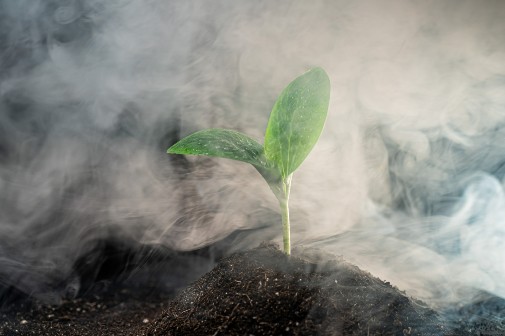
In recent years, TNT has started to be replaced with DNAN, but until now very little was known about how this substance impacts the environment and how long it can remain in the soil.
Researchers at the University of York have been studying the environmental impact of the explosive, TNT, for more than a decade. They have shown that the chemical compound, which is used by the military around the world, remains in the roots of plants where it inhibits growth and development.
Now a new study, led by Professor Neil Bruce at the University of York’s Department of Biology and Director of the Centre for Novel Agricultural Products (CNAP), however, has shown that DNAN has similar effects to TNT, but accumulates throughout the plant and lingers for longer.
Toxic effects
Professor Neil Bruce said: “Similarly to TNT, DNAN reacts with a key plant enzyme, generating reactive superoxide, which is highly damaging to cells. Over the course of our research we have genetically engineered plants to successfully detoxify land contaminated with munitions.
“Unfortunately DNAN is a very different story to TNT, as it accumulates in the above ground parts of the plant. While plants can use natural processes to reduce the toxicity of TNT, our studies found that plants appear to have no natural way of fighting off the toxic effects of DNAN, meaning that it persists in the plant and is toxic at much lower concentrations.”
Researchers warn that as DNAN is present throughout the plant and not just the root system, as is the case with TNT, there is a greater risk of animals eating the infected plant, introducing the toxin into the food chain.
Contaminated land
In previous studies by the York team, genetically modified grass was grown on land contaminated with military explosives, which successfully degraded contaminants to non-detectable levels in their plant tissues, but as yet there is currently no such method to remove or reduce DNAN.
The US is estimated to have over 10 million hectares of military land contaminated with constituents of explosives and the US government estimates that remediation of unexploded ordinances on US military training ranges alone will cost $16-165 billion.
Dr Liz Rylott, co-author of the study from the University of York’s Department of Biology, said: “Recent years have seen an escalation in military explosives due to global conflicts, and so we are potentially looking at vast scales of pollution, which means there is an urgent need, and interest in, developing sustainable plant-based remediation strategies.
“We also don’t know what the limits of DNAN toxicity are in humans, so our hope is that our latest research will highlight that more work is urgently needed to understand its effects.”


.jpg)