Digital puzzle games could be good for memory in older adults, study shows
Posted on Monday 14 August 2023
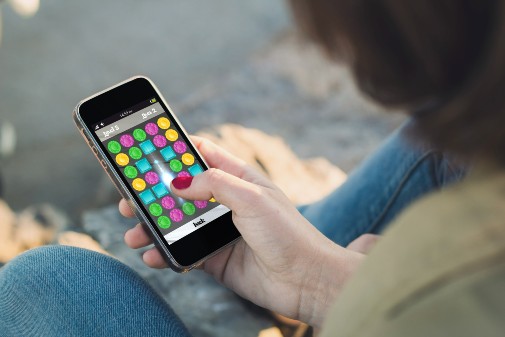
The study, from the University of York, also found that adults aged 60 and over who play digital puzzle games had a greater ability to ignore irrelevant distractions, but older adults who played strategy games did not show the same improvements in memory or concentration.
It is known that as humans age, their mental abilities tend to decrease, particularly the ability to remember a number of things at a single time - known as working memory. Working memory is thought to peak between the ages of 20 and 30 before slowly declining as a person gets older.
Previous research, however, has shown that the way we hold information in the brain changes as we get older, and so the York team looked at whether the impacts of particular types of mental stimulation, such as gaming, also had altered effects depending on age.
Action games
Dr Fiona McNab, from the University of York’s Department of Psychology, said: “A lot of research has focused on action games, as it is thought that reacting quickly, keeping track of targets and so on helps attention and memory, but our new analysis shows that the action elements do not seem to offer significant benefits to younger adults.
“It instead seems to be the strategy elements of the games - planning and problem solving for example - that stimulates better memory and attention in young people. We don’t see this same effect in older adults, however, and more research is needed to understand why this is. We can’t yet rule out that the strategy games played by older people are not as difficult as the games played by younger people and that the level of challenge might be important in memory improvement.”
Encoding distraction
The study included older and younger adults playing digital games that they would normally play in their ‘real lives’. This resulted in a wide range of games to be tested alongside a digital experiment that required participants to memorise images, whilst being distracted.
Dr Joe Cutting, from the University of York’s Department of Computer Science, said: “Generally people have a good ability to ignore irrelevant distractions, something we call ‘encoding distraction’. We would expect for example that a person could memorise the name of a street whilst being distracted by a child or a dog, but this ability does decline as we age.
“Puzzle games for older people had this surprising ability to support mental capabilities to the extent that memory and concentration levels were the same as a 20 year-olds who had not played puzzle games.”
Older people were however more likely to forget elements committed to memory whilst being distracted if they only played strategy games, and young people were less successful at focusing attention if they played only puzzle games.
The researchers say future study could focus on why there is a difference between impacts of types of games depending on the age of a player and if this is connected to how the brain stores information as people age.