York and Karazin Kharkiv National University sign partnership agreement
Posted on Tuesday 28 June 2022
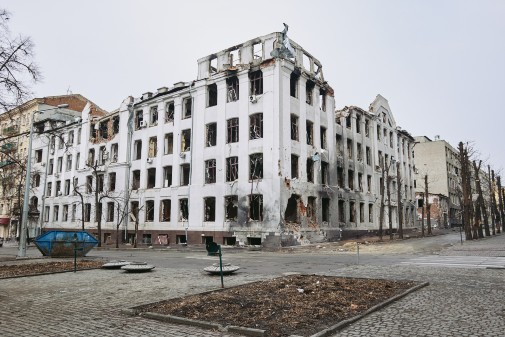
The signing of a Memorandum of Understanding (MoU) between the two institutions will lead to a number of initiatives, including:
- Staff fellowships
- Supporting Kharkiv in the management of their cultural heritage
- Summer schools and short courses
- Online access to books and teaching materials
- Longer-term academic links
- Online access to academic content
- Connections between the student unions
UK universities are being matched with Ukrainian institutions as part of a twinning initiative to offer support to academics, students and university leaders during the conflict.
Collaboration
The York/Karazin Kharkiv MoU was signed over Zoom on 21 June by the University of York’s Vice-Chancellor, Professor Charlie Jeffery, and Professor Tetyana Kaganovska, President of Karazin Kharkiv National University.
Professor Jeffery said: “It has been extraordinary to build a programme of collaboration with a University which has been under bombardment for months.
“That our colleagues in Karazin Kharkiv National University have been thinking even in those circumstances about how to work jointly with the University of York on staff and student exchange, accessing online learning materials, and preserving precious library collections has been inspirational.
“So it was both exciting and humbling to sign a Memorandum of Understanding that will shape our collaboration through and beyond the war.”
Networks
Professor Tetyana Kaganovska said the MoU had created an “umbrella framework encompassing new pilot programmes combining the knowledge, expertise, and networks of the two institutions.”
She said: “It will support the capacity-building for the restoration of the education process, creation of new methodological principles and practices as well as the agenda for sustainable development of our partnership despite the war. I am looking forward to the new actions that will be developed as a result of this mutual cooperation.”
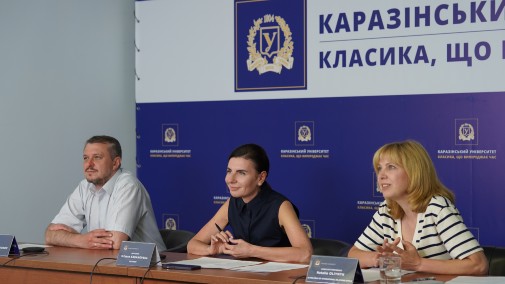
From left to right: Professor Anton Panteleymonov, Vice-President; Professor Tetyana Kaganovska, President, and Associate Professor Natalya Oliynyk, Acting Head of International Relations Office at Karazin Kharkiv National University. Pic credit: Karazin Kharkiv National University
York’s Deputy Vice-Chancellor Professor Saul Tendler added: “ We are immensely humbled to see so many colleagues from KKNU developing relationships with York staff, despite the terrible situation many find themselves in, and it is truly a testament to the character and resilience of Ukraine that many are still able to continue in this way.
“We will continue to deepen the relationship between KKNU and York, and look forward to seeing the partnership grow from strength to strength. We hope to one day meet our Ukrainian colleagues face-to-face and look forward to welcoming them to York. They continue to have our deepest support, and will do so long after the war ends.”


.jpg)