Project to provide new way of looking at St Paul’s iconic monuments
Posted on Monday 6 December 2021
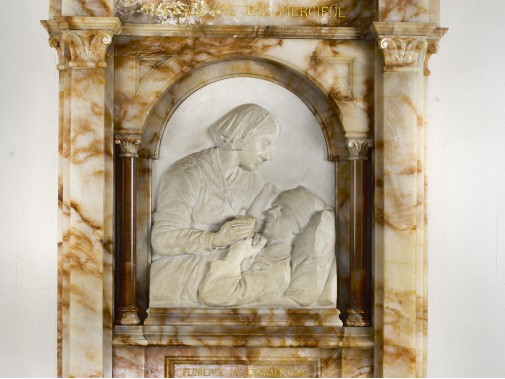
It’s hoped that the project - led by St Paul’s and the University of York - will give visitors new ways of interpreting and understanding the monuments - as pieces of art and commemorative objects.
The project called, 50 Monuments in 50 Voices, showcases thoughtful, individual responses to 50 monuments at St Paul’s Cathedral from artists, poets, musicians, theologians and academics.
Significant
Participants include poet Imtiaz Dharker, artist Victor Ehikhamenor, musician Adrian Utley of music group Portishead and historian Dr Janina Ramirez.
St Paul’s houses more than 200 monuments to significant figures throughout the ages. The project will present a series of audio, visual and musical works inspired by monuments including memorials to nurse Florence Nightingale, the Duke of Wellington, and polar explorer Captain Robert Falcon Scott.
The project is curated by Pantheons: Sculpture at St Paul’s Cathedral, c.1796-1916, a UKRI-funded collaboration between the Cathedral and the University’s Department of History of Art, centring upon a digital interpretation scheme of the monuments.
Thought-provoking
Professor Jason Edwards from the Department of History of Art and project lead on the Pantheons project, said: “We have been delighted by the enthusiastic response to our call for the 50 Monuments in 50 Voices project, which reveals how important, inspiring, challenging, and thought-provoking the cathedral’s monuments are to a broad spectrum of people, both as art objects and as commemorative objects.
“We hope that the Voices will give potential visitors new ways to engage with the monuments, new ways to see them, interpret them, think and feel about them, and understand them.”
Human experience
The Dean of St Paul’s, the Very Reverend Dr David Ison, said: “The many monuments and memorials at St Paul’s are a prominent feature of any visit to the Cathedral, and are a part of the Cathedral’s long history as a place of national mourning and reflection.
“Wanting those we love or honour to be remembered is a universal human experience. It matters that we should remember the past, including the stories we have not yet told, in order to know how to live together in the present and look to the future.
“50 Monuments in 50 Voices invites responses from people of many different backgrounds and perspectives, presented in a broad range of media. By reading, hearing and experiencing these responses, we hope to better understand the intellectual and emotional responses to these monuments in 21st century Britain.”
Each week for 50 weeks, the project will release a new response to a specific monument on the Pantheons project’s website and social media channels.
Further information
For more information and to view the weekly contributions to 50 Monuments in 50 Voices, visit the Pantheons project website at https://pantheons-st-pauls.york.ac.uk/ and on the Pantheons project Facebook, Twitter and Instagram channels.