One of the largest ever land mammals evolved into a dwarf elephant, study finds
Posted on Monday 21 June 2021
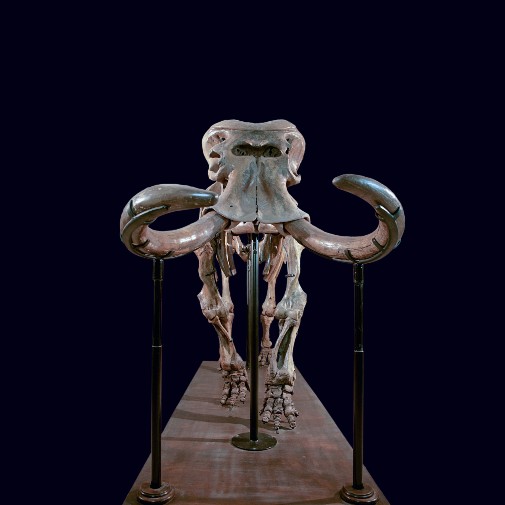
The research team, which included academics from University of York, found that the island-dwelling Sicilian dwarf elephant – thought to have become extinct about 19,000 years ago – was just 15% of its original body mass by the time its dwarfing process was complete.
The team found that the less than 2m tall dwarf elephant reduced in weight and height by a maximum 200kg and 4cm per generation.
By combining DNA and fossil evidence, the researchers were able to determine that this specific Sicilian elephant’s maternal lineage diverged from the straight tusked elephant Palaeoloxodon antiquus, which stood at almost 4m tall with a weight of ten tonnes.
Evolution
Because of their insular and isolated environments, evolution on islands is a process which can lead to a variety of extreme changes in a short timeframe, including dwarfism and gigantism and is often referred to as ‘evolution in action’. To put the extent of the size reduction of the dwarf elephant into context, it would be comparable to modern humans dwarfing to approximately the size of a Rhesus monkey.
For the project, the team successfully recovered ancient DNA from dwarf elephant remains from Sicily’s Puntali Cave, which had an estimated age of between 175,000 and 50,000 years.
Palaeoloxodon antiquus lived on the European mainland between 800,000 and 40,000 years ago and the team believes it will have colonised Sicily some time between 70,000 and 200,000 years ago. Colonisation probably occurred during periods of cold climate when sea levels were lower, exposing land bridges that the elephants could have utilised to colonise the islands.
It is thought that the dwarfing process at the earliest began once the Puntali elephant diverged from its mainland relative.
Using the estimated age of the Puntali elephant fossil, the size and mass of the straight-tusked elephant, and the estimated start of the dwarfing process, the team was able to calculate size and body mass reduction rate per year and per generation.
Tooth samples
As part of the study, researchers from York’s Department of Chemistry used a technique called intra-crystalline protein degradation (IcPD) dating. This technique assesses the breakdown of proteins and amino acids found in the elephants’ fossil tooth enamel, and uses this to estimate the age of the sample by comparing it to other elephant tooth samples from the region.
Dr Marc Dickinson, a postdoctoral researcher at the University of York, said “It was brilliant to be able to use IcPD analysis to help date these dramatic changes to elephant body size, and to contribute to such an exciting multidisciplinary study.”
The study, involving Nottingham Trent University, the University of Potsdam in Germany, the Natural History Museum, the University of Iceland, the University of Palermo and the University of Cambridge is published in Current Biology.
Dr Victoria Herridge, an evolutionary biologist based at the Natural History Museum London, said: “It’s such an achievement to successfully sequence an ancient mitochondrial genome from a Sicilian dwarf elephant, and to finally have DNA from a southern European straight-tusked elephant.”
“It opens the door for more studies of this kind, and with it the chance to finally crack one of the big mysteries of evolutionary biology: why elephants evolve to be so small on islands.”
Further information
The dating work undertaken at York by Dr Marc Dickinson and Professor Kirsty Penkman was funded by Natural Environment Research Council (NERC) and the Quaternary Research Association.
The dwarf elephant remains are kept in the Gemmellaro Museum (University of Palermo) where the specimens were sampled.