People fearful of taking part in vital clinical research
Posted on Friday 13 March 2020
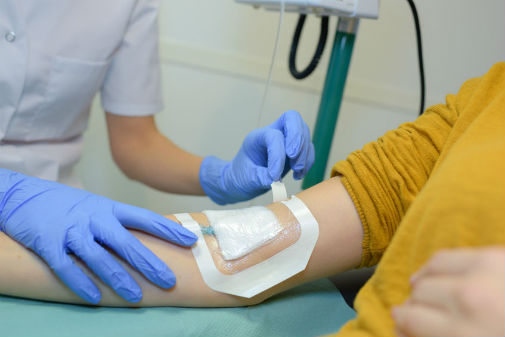
In the UK, up to two thirds of trials currently fail to recruit their target number of participants for vital medical research.
The review, led by researchers at the University of York and Hull York Medical School, found that fear about testing new treatments and possible side effects was the most common reason given by patients for not wanting to participate.
Confidentiality
The researchers looked at the results of more than 400 studies from around the world on the reasons behind recruitment to health and medical studies.
Concerns about privacy and confidentiality have also increased over the past decade, the study suggests.
Among black and minority ethnic (BAME) patients, distrust in research and medical professionals was also a common reason given for not wanting to participate.
The authors of the study are calling for the development of new schemes to increase participation in research, which address patient anxieties and motivations.
Side effects
Lead author of the study, Dr Peter Knapp, from the Department of Health Sciences at the University of York and the Hull York Medical School, said: “Clinical trials are an essential part of developing new medicines and improving healthcare, but recruiting patients to take part is one of the biggest challenges researchers face.
“Our review highlights how people are held back from taking part in research by their fears surrounding losing control of the treatments they receive and worries about possible side effects.
“Lack of trust was also identified as a common barrier for minority ethic patients around the world - perhaps a legacy of major historical violations of ethical standards in cases like the Tuskegee syphilis experiment.”
Helping others
The study found that on the other hand trust in doctors and clinical staff; a desire to help others, and the potential for improvements in their own health, were key factors that motivated patients to get on board with research.
Common methods that are currently in place in the NHS to increase patient participation in research are designed to prompt memory and raise awareness via schemes including phone reminders and personalised letters addressed to patients. The research highlights how these methods may have missed the mark as neither of these factors were identified in the study as a barrier to participation.
Patient concerns
Dr Knapp added: “Interestingly, we found quite a few gaps between the main reasons people gave for their reluctance to take part and the interventions currently in place in healthcare systems like the NHS to try to remove barriers to participation.
“There is a need for more research to identify effective recruitment strategies that draw on psychological theory and the facilitators and barriers identified in this overview.
“Feelings of fearfulness are clearly a key issue and so it would make sense to look at interventions focused on directly addressing patient concerns.
“A desire to help develop better healthcare for others also came up as a strong reason for taking part in research and trials, and so this – people’s sense of altruism - is another possibility that could be explored as a way of appealing to people.”