Putting the brake on our immune system’s response
Posted on Monday 4 March 2019
The scientists say the findings could lead to new treatments for life-threatening infections such a leishmaniasis, as well as autoimmune and chronic inflammatory diseases.
Our immune system protects us from invading pathogens but also has the capacity to over-react, causing irreparable damage to our own tissue. When fighting a long-lived infection, the spleen can become bigger as it attacks the invader.
Although this is necessary for an effective immune response, if the spleen becomes too big, as occurs in some infections, this can stop the immune system working properly, leading to serious clinical complications and even death.
Infection susceptibility
A study, funded by the Medical Research Council, led by researchers at the University of York and carried out in collaboration with Queen Mary University London, discovered a novel mechanism that specifically promotes immune responses to protect from infection.
At the heart of it all is a tiny part of our genome named miR-132. This belongs to a family of genes called microRNAs. The research revealed that miR-132 controls how immune cells respond to infection.
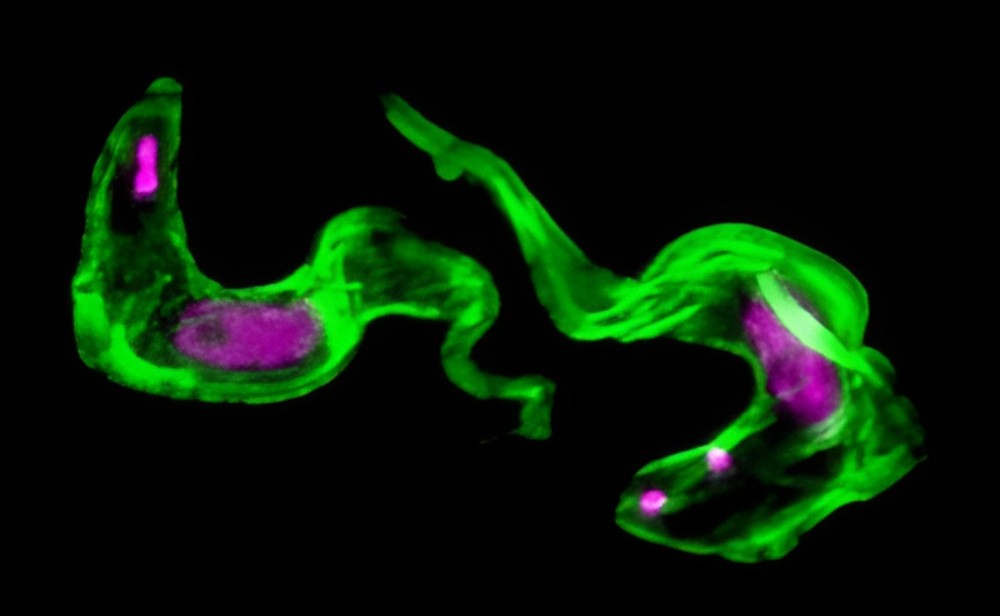
In a pre-clinical model of visceral leishmaniasis (a fatal parasitic disease) lack of miR-132 limits spleen enlargement but also the immune response. This leads to increased susceptibility to infection.
'Super engines'
The team discovered that although miR-132 is not a protein itself, it masters activation of immune cells by harnessing the protein-making super engines of the cell called ribosomes.
Through pacing these “enthusiastic engines”, miR-132 ensures that immune responses persist as long as is required for optimal parasite clearance.
Next stages
Dr Dimitris Lagos, Senior Lecturer in Immunology at Hull York Medical School, University of York said: “When you are responding to an infection your immune system protects you and keeps you alive, but it can also be the thing that makes you ill and getting that balance wrong is what usually leads to a chronic infection.
“We looked at which molecules help you and in particular the role of the miR-132. It is a very small part of your DNA but we discovered that it helps control how others molecules work.
“It acts as a pacer, making sure your immune system doesn’t go too fast and get exhausted. It seems like in this case driving with a handbrake on is the way our body protects us from infection.”
“This discovery opens novel routes of clinical intervention that aims to promote protective immunity and limit damage in life-threatening infections.”
Researchers say the next stage will be to develop drugs that promote the beneficial effects of miR-132 in the immune system.