Male birds sing less to females on antidepressants
Posted on Monday 6 August 2018
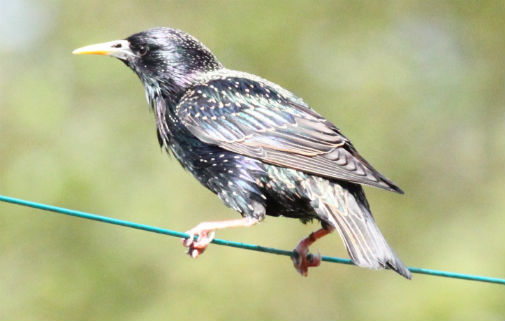
Dilute concentrations of Prozac similar to those measured at sewage works appeared to make female starlings less attractive to the opposite sex. Image credit: Liam Smith
The researchers studied the birds at sewage works where they flock to feed all year round. The worms, maggots and flies at sewage treatment plants have been found to contain many different pharmaceuticals, including Prozac.
The study showed that dilute concentrations of Prozac similar to those measured at sewage works appeared to make female starlings less attractive to the opposite sex.
Behavioural changes
In 2016, there were 64.7 million antidepressant items prescribed in the UK. Some of these compounds are stable in the environment and break down slowly once they’ve passed through our bodies and into sewage-treatment systems.
Dr Kathryn Arnold and Sophia Whitlock, from the Environment Department at the University of York, have been studying the effects of environmental levels of fluoxetine (commonly known as Prozac) on starlings for a number of years. They have discovered changes in the behaviour of these starlings that could put birds at risk in the wild.
Sophia Whitlock, researcher on the project, said: “Singing is a key part of courtship for birds, used by males to court favoured females and used by females to choose the highest quality male to father their chicks. Males sang more than twice as often and as long to untreated females compared to females that had been receiving low doses of Prozac.”
Aggression
Funded by the Natural Environment Research Council (NERC), the study also found increased male aggression towards females receiving the dilute dose of Prozac. Instead of courting them, males were more likely to chase, peck or claw the female starlings on Prozac.
Dr Arnold said: “Here is the first evidence that low concentrations of an antidepressant can disrupt the courtship of songbirds. This is important because animals that are slow to find a mate often won’t get to breed. With many wildlife populations in decline, we have to ask whether more could be done to remove chemical contaminants like pharmaceuticals from our sewage.”