
In memory of John Bone
Posted on Wednesday 8 July 2026
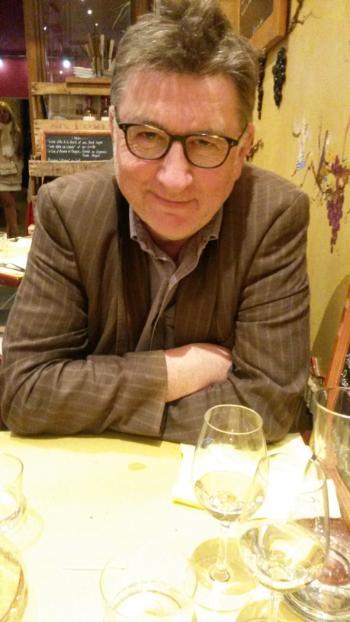
John Bone was a distinguished, well-regarded and extremely popular member of the Department of Economics and Related Studies for over 40 years. Since joining in October 1982, he has made an immense and long lasting contribution to shaping, developing and nurturing Economics and economists at York.
John graduated with first class honours from Jesus College, Oxford, from the then only programme in Philosophy, Politics and Economics in the country, taking the ‘Proxime Accessit’ Webb-Medley Senior Prize in Economics. Within the decade, he was involved in establishing the second such programme, here at York, which he continued to serve, and to cherish its inter-disciplinary nature, throughout his teaching career and on into his research.
That research, into public choice and decision-making, also helped establish York as the leading light in Experimental Economics. Working with York colleagues, John Suckling and John Hey (together known as the "3 Johns"), he produced five joint papers: "Do People Plan?" (appearing in Experimental Economics), "A Simple Risk Sharing Experiment" (Journal of Risk and Uncertainty), "Do People Plan Ahead?" (Applied Economics Letters), "Are Groups More (or Less) Consistent than Individuals?" (Journal of Risk and Uncertainty), and "What Price Compromise?" (Theory and Decision). These papers centered primarily on decision theory, a field where John’s expertise was unrivaled. Behind every publication lay his unique talent for isolating the essential feature of interest and crafting an experiment to examine it. He honed every design to its barest essentials, rendering them immune to the scrutiny of referees and fellow experimentalists. Co-authors describe working with him as “a genuine pleasure, though speed was never the goal; perfection was John’s sole criterion, leading him to caress every comma and cross every T.”
John’s mastery was equally evident in “The Acceptability of Accountability" (Constitutional Political Economy), which ventured into Social Choice. Co-authored with John Hey, this different domain revealed the true depth of his intellectual reach.
John’s research legacy stands not only in his published work but also in the many doctoral students whom he taught and mentored. His contribution to the success of EXEC, the Centre for Experimental Economics at York cannot be overstated and, thanks to John's efforts, many doctoral students went on to become Full Professors.
In addition to his research, John spent seven years as Deputy Head of Department and as Programme Leader for BSc Economics, in addition to numerous roles within the School of PPE. He held many roles in the wider University, including on the Student Life committee and University Teaching Committee demonstrating his concern for student welfare and education.
John’s teaching career was truly exceptional. He taught a wide range of material over his career, often focussed on Microeconomic Theory and Mathematical Methods, but he particularly enjoyed the engagement of teaching the inter-disciplinary PPE modules, Rationality, Morality and Ethics (with Professor Christian Piller) and The Democratic Economy (with Professor Neil Carter). Neil comments that John was “a brilliant teacher who was so clever that he could make even the most complex subjects appear clear to students while always bringing his distinctive wry sense of humour to the classroom.” Christian adds that “teaching with John helped me understand things better, such as Harsanyi’s Theorem. But he also taught patience, modesty and rigour. And it was all good fun, true intellectual enjoyment. A joint project remains incomplete; the bond of friendship carries forward.”
His dedicated and caring approach to module design and delivery was recognised by awards from our students on no fewer than six occasions. Just one such student speaks for the many, “John Bone is the best professor God ever put breath in. Absolutely loved those lectures, really good at explaining things, managed to make the module interesting, helpful and fun. Not a bad word to say.”
John will be greatly missed by all who had the pleasure of knowing and working with him. We extend our heartfelt condolences to his family and friends during this difficult time