

Case Studies
From current and former fellows in the department

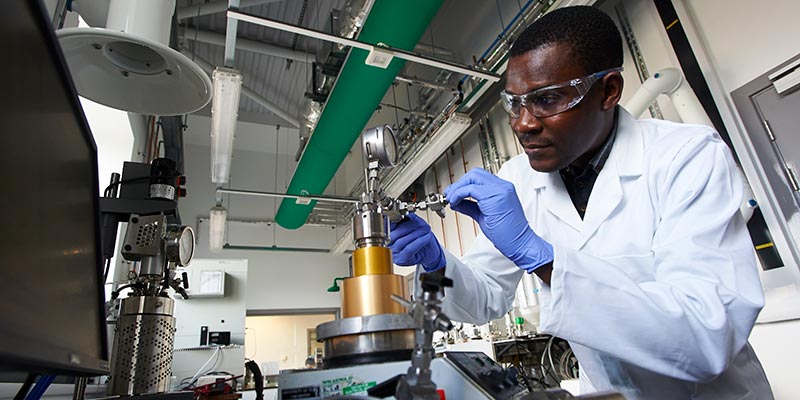
The Department of Chemistry is a large and successful department in an attractive University with an excellent reputation for research and teaching. The excellence of Chemistry at York has been recognised in our league table rankings - 6th in the Complete University Guide 2026 and 7th for 'Research Power' in the 2021 REF.
We have about 60 members of academic staff including five Fellows of the Royal Society and several national and international prize winners, contributing to a dynamic and thriving department. There are over 620 undergraduate students, over 160 graduate students (mostly studying for PhD degrees) and more than 70 postdoctoral researchers. We have a wide range of facilities and well-equipped laboratories, some very recently extended and modernised, providing an excellent environment for both teaching and research; £35M has been spent on new buildings and equipment in the last ten years.
We recognise the importance of equal participation, progression and success for all. The Department of Chemistry strives to provide a working, learning, social and living environment that will enable all our staff and students to contribute fully, to flourish and to excel.
The Department is committed to the Athena SWAN Charter which focuses on recognising advancement of gender equality. In particular, we recognise the importance of the equal participation of women at all levels in a subject that has traditionally been, and remains, male-dominated.
Chemistry at York was the first academic department in the UK to receive the Athena SWAN Gold award, held continuously since 2007, and in 2024 we received our most recent Gold award.
Please see the department's Equality and Diversity pages for more information.
The Department of Chemistry at York has significant experience and history in hosting research fellowships, and many of our former fellows have gone on to successful academic careers, here and elsewhere. The Department provides support for all categories of staff in their career development and encourages the take-up of training opportunities including those provided by the award-winning York Researcher Professional Development & Skills Programme.
The University's Research Fellowship Programme supports talented early-career researchers who would like to hold a fellowship at York. Once you join us as a fellowship holder, the programme will support your ongoing development, allowing your research career to flourish.
Key aspects of the Research Fellowship Programme include:
The University of York has been successful in retaining the European Commission (EC) HR Excellence in Research Award, reviewed after six years (one of eight UK Universities to do so). The award recognises an institution’s commitment to implementing the UK Concordat to Support the Career Development of Researchers.
The Researcher Development Concordat 2019 is structured around three Principles:
* The EoI deadline is reduced to 8 weeks before the funder deadline for specified postdoctoral fellowship schemes; see Application Deadlines below for more information.
There are many different fellowship schemes from different funders. Each scheme will have different eligibility criteria and application processes.
If you are interested in applying to a scheme that is not listed below please contact us.
|
Funder |
Scheme |
Duration | Eligibility |
|---|---|---|---|
 |
Independent Research Fellowships | 5 years | |
 |
BBSRC Fellowships | 3 years | |
 |
Future Leaders Fellowships | 4+3 years | (Please contact us directly if you are interested in this fellowship.) |
 |
Early Career Fellowships | 3 years | <4 years post PhD |
 |
University Research Fellowships | 8 years | 3-8 years post PhD |
| Dorothy Hodgkin Fellowships | 8 years |
<6 years post PhD need for flexible support |
|
 |
Early-Career Awards | 5 years | <3 years post PhD (some flexibility) |
| Career Development Awards | 8 years | independent researcher (usually already hold a fellowship at time of application or are within three years of your first academic appointment) | |
|
|
Research Fellowships | 3 years | <3 years post PhD |
 |
Daphne Jackson Fellowships | 2 years | after a career break of two or more years |
|
|
Marie Skłodowska-Curie Postdoctoral Fellowships | 2 or 3 years | |
| European Research Council Starting Grant | 5 years |
2-7 years post PhD
|
Other schemes
High quality fellowship applications require time to develop and to undergo vigorous peer review. Applicants must consider how their proposal aligns with our department research themes and explore how their research programme would be effectively supported at York.
We therefore require EoI applications to be submitted a minimum of 14 weeks before the external funder deadline**.
If you are considering applying for a fellowship in the next 12 months, then please contact us on chem-research@york.ac.uk to let us know. We can then provide additional support to you while you prepare your EoI application.
** Please note that the EoI deadline is reduced to 8 weeks before the funder deadline for the following postdoctoral fellowship schemes: MSCA Postdoctoral Fellowships, Royal Society Newton International Fellowships, Royal Society Career Development Fellowships, 1851 Research Fellowships, BBSRC Early Independence Fellowships (Outline stage).
| Fellowship Scheme | Funder Deadline | Proposal Length |
|---|---|---|
| Royal Society University Research Fellowships | Early September | 5-6 |
| Marie Skłodowska-Curie Postdoctoral Fellowships | Early-mid September | 2-3 |
| NERC Independent Research Fellowships | Mid June | 5-6 |
| Wellcome Early-Career Awards | July, November, April | 2-3 |
| ERC Starting Grant | October | 5-6 |
| Royal Society Dorothy Hodgkin Fellowships | October | 2-3 |
| Wellcome Career Development Awards | March, July, November | 5-6 |
| 1851 Research Fellowships (Postdoctoral) | Mid January | 2-3 |
| Leverhulme Trust Early Career Fellowships † | Late February | 2-3 |
| UKRI Future Leaders Fellowships†† | Mid June | 5-6 |
| BBSRC Fellowships (Outline) | April | 2-3 |
†Dependent on match funding availability
††Subject to institutional demand management; internal selection processes will take place earlier in the year.
Your expression of interest will be evaluated on the basis of:
The Department of Chemistry is committed to supporting our fellowship applicants at each stage of the application process.
Assistance from an experienced academic staff member will include:
Assistance from research support staff will include:
Letters of support from relevant staff (e.g. academic sponsor/mentor, Head of Department) will be provided.